Cette méthode autrefois réservée aux athlètes pourrait devenir essentielle face à la chaleur extrême

32 °C au marathon de Los Angeles, des protocoles de rafraîchissement aux JO de Paris 2024 : la chaleur redessine les conditions du sport de haut niveau. Et si s'entraîner dans la fournaise éta...

Futura

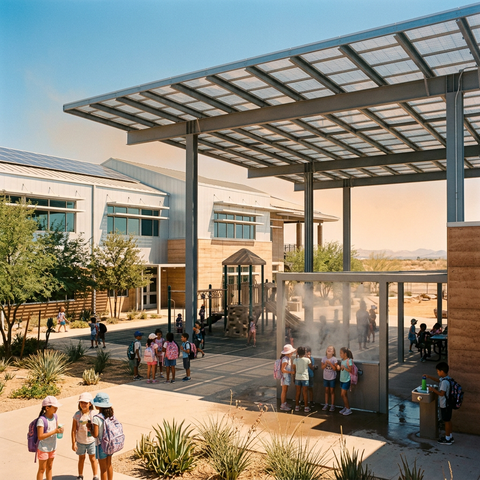
"“We coped then” is not a safeguarding standard" - What a debate about #schools and heat reveals about #climate, resilience, #safeguarding and #adaptation. Alistair Hamill and I take a look through a geographical lens.

#Heatwaves #Geography #SchoolLeadership

http://geogramblings.com/2026/06/29/we-coped-then-is-not-a-safeguarding-standard-heatwaves-schools-and-the-geography-of-risk/

“We Coped Then” Is Not a Safeguarding Standard: Heatwaves, Schools and the Geography of Risk

What a debate about schools and heat reveals about climate, resilience, safeguarding and adaptation – and why geography helps us move beyond the soundbite.

Geogramblings
"“We coped then” is not a safeguarding standard" - What a debate about #schools and heat reveals about #climate, resilience, #safeguarding and #adaptation. Alistair Hamill and I take a look through a geographical lens.

#Heatwaves #Geography #SchoolLeadership

“We Coped Then” Is Not a Safeg...
“We Coped Then” Is Not a Safeguarding Standard: Heatwaves, Schools and the Geography of Risk

What a debate about schools and heat reveals about climate, resilience, safeguarding and adaptation – and why geography helps us move beyond the soundbite.

Geogramblings

Improvements in life expectancy mask rising trends in heat-related excess mortality attributable to climate change

Abstract: Previous attribution studies of heat-related excess mortality have given limited attention to temporal trends in vulnerability and their non-climatic drivers. Here, we address this gap by combining counterfactual temperature data derived from multidecadal reanalysis series with time-varying warm-season temperature-mortality associations for the 15 most populous cities in Germany over 1993-2022. We find that declining vulnerability, associated with improvements in life expectancy, has led to decreasing trends in heat-related excess mortality in most cities despite summer warming. In contrast, if life expectancies had not improved, climate change would have induced increasing trends in the heat-related death burden. The growing anthropogenic fingerprint also emerges in the relative proportion of heat-related excess mortality attributable to climate change, which increased by 5.6% per decade (95% confidence interval: 2.6%, 8.6%), averaging 53.6 % (49.8%, 58.9%) across the study period. Our results underline the importance of accounting for evolving vulnerability when attributing human health outcomes to climate change.

Conclusion paragraph:

our study suggests that declining risks of heat-related mortality in the 15 most populous cities of Germany, associated with improvements in life expectancies, have so far overcompensated the increased heat exposure due to climate change. As a result, temporal trends in heat-related excess mortality were negative from 1993 to 2022. However, given the intense regional warming expected under current greenhouse gas emission trajectories, the trend may flip sign in the coming years. Strong efforts in adaptation, such as through heat-health action plans, urban greening, and the expansion of residential air conditioning, might lower the heat vulnerability of the population to keep up with the pace of increasing temperatures, which ultimately will depend on the stringency of mitigation undertaken.

Improvements in life expectancy mask rising trends in heat-related excess mortality attributable to climate change - Nature Communications

The study shows that rising life expectancy has masked the impact of climate change on heat-related mortality in Germany. It highlights the need to consider non-climatic factors underlying vulnerability in attribution studies of health outcomes.

Nature
Handicap et immobilier

Intégration et inclusion du handicap en matière immobilier - Normes de construction - Aménagement intérieur et extérieur

Handicap et immobilier

Intégration et inclusion du handicap en matière immobilier - Normes de construction - Aménagement intérieur et extérieur

On Summer Heat and Proper Hydration

Reading Time: 3 minutes

I was very sad to see that tomorrow’s evening storm is cancelled due to lack of interest. I am very interested in rain falling heavily from the sky. I want it to drench and cool the minergie building within which I live. I want the cool air to help make this building I live in liveable again.

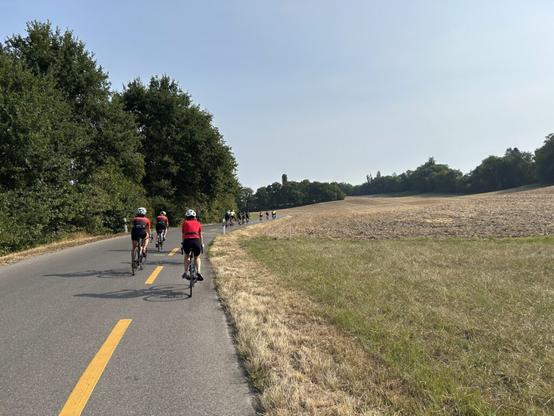
This morning I woke at 6am or so, to go for a group run at 0800 with Décathlon Chavannes and the conditions were good. It was around 23°c and felt like 25°c, so nice and fresh. We ran, and during the run the temperature rose a little. When we got to the forest it felt nice to be sheltered somewhere nice and cool. Evapotranspiration is fantastic for cooling down humans during a heat wave. It’s especially good that we could end the run in the shade.

The point of today’s blog post is that when I was about to start writing today I suddenly had a headache, so I tried to cool myself with a fan, but that didn’t remove the headache. I tried to drink but that didn’t help. After a few minutes I went to the freezer and removed a frozen bottle of coke filled with water.

I wrapped the bottle in a towel and then went to my bedroom, turned on the fan, and hugged the ice bottle to attempt to cool myself, and nap. It worked, to some extent and this is where we get to the point of my blog post.

We hear people say “Don’t run” and “Don’t stay in the sun too long” but the symptoms of heat stroke that I got today were while sitting in front of a laptop indoors, in the shade.

It’s worth highlighting that the building has reached 32°C in the living room and the bedroom, so it is now really warm. So warm that the fan doesn’t provide relief.

When I lived in a 1970s home, finished in the early 80s I would go for a bike ride, or a walk, in the heat, and I’d get home to the cool cavern of an old building. In contrast today I come home to the stifling heat of a Minergie building.

In the old building I came home to 21-23°c in summer and winter. With Minergie you come home to 25-32°c depending on how long the heat has lasted. When I lived in an apartment during the 2003 heatwave I opened windows on both sides, and when it was hot I let the draft cool me and it worked fantastically well.

The issue with a Minergie building is that if you do this, the structure will grab the heat, and store it. As soon as you close the windows at dusk, and until you open them at dawn the building actively radiates heat. This means that you have to keep windows and doors closed. You’re stuck in stale air.

Today, the symptoms of heat distress that I got were hours after the run finished, brought on by the sick building. In my eyes Minérgie is flawed and potentially deadly during a heat wave because it traps heat, and there is no way to get rid of it, except through heavy rainfall cooling the structure, and waking at dawn, to aerate for an hour or two, before sealing everything up for the rest of the day.

Ventilation works fantastically well. It gets the building to drop a degree or two, which, for comfort is great. The issue is that the stifling heat returns the moment you close everything to avoid more heat entering. If architects and engineers used common sense rather than greed, they would design buildings to be warm in winter, and cool in summer.

If you are cold, you can wear more clothes, but if you’re sweltering you can’t do anything except drink water, electrolytes and flee.

I suspect that the issue isn’t with the heat of my apartment, although it doesn’t help, or the Outside Air Temperature (OAT) but rather with the reflex to drink enough.

I stepped outside a few minutes ago. We’re heading towards 36°c and the wind is warm. We’re in perfect forest fire weather, and it’s especially important to hydrate well. It’s important to sip regularly, and ensure that we are hydrated.

This morning my “constant sipping” instinct failed me. I am now hydrated once again.

#adaptation #heat #hydration #running
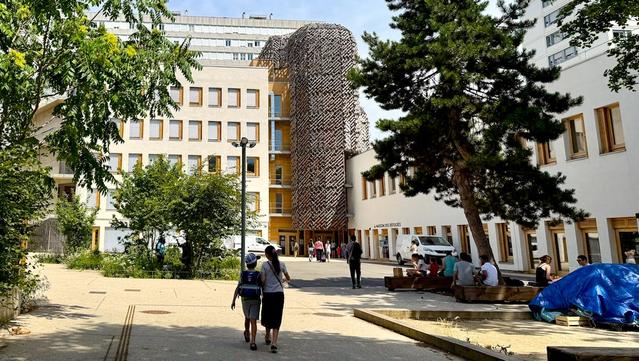
Je me réponds moi-même. À défaut de retrouver la vidéo, j'ai déniché un article détaillé qui donne le nom de l'architecte et les méthodes employées.
https://www.wedemain.fr/maison-responsable/fortes-chaleurs-cette-mediatheque-parisienne-mise-sur-la-low-tech-plutot-que-sur-la-clim-1153946

#lowtech #canicule #adaptation

Fortes chaleurs : cette médiathèque parisienne mise sur la low-tech plutôt que sur la clim

Face aux fortes chaleurs, tous les bâtiments publics ne se valent pas. À Paris, la médiathèque James Baldwin, conçue par Philippe Madec – pionnier d’une architecture écoresponsable –, dans l’ancien lycée Jean-Quarré, montre comment la low-tech peut aider à garder un lieu respirable : ventilation naturelle, patio, ombre, réemploi, bois et terre crue.

WE DEMAIN
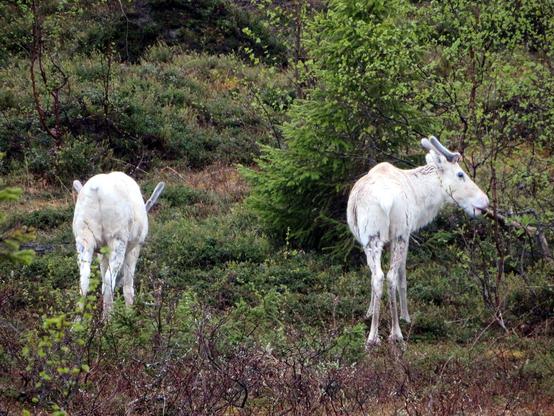
Rentiere besitzen eine besondere Anpassung an das arktische Klima: ihre Augen verändern im Jahresverlauf die Farbe. Ich bin fasziniert, zu lernen, dass das Innere der der Rentier-Augen im Sommer goldfarben erscheint und reflektiert viel Licht reflektiert, während es im dunklen Winter tiefblau wird, um selbst schwaches Licht besser nutzbar zu machen.
31.05.2026, #travel #Scandinavia #Sweden #Västerbotten #reindeer #wildlife #adaptation #biology #eye [1]
Handicap et immobilier

Intégration et inclusion du handicap en matière immobilier - Normes de construction - Aménagement intérieur et extérieur