Hackaday [Unofficial]
Three-Axis Camera Slider From 3D Printer Parts
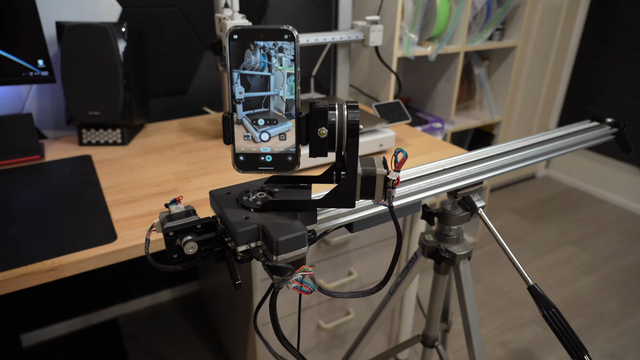
Three-Axis Camera Slider From 3D Printer Parts https://hackaday.com/2026/05/03/three-axis-camera-slider-from-3d-printer-parts/
#Digitalcamerashacks #3axis #3dprinter #Camera #ESP32 #Gui #Parts #Slider #Threeaxis #Wireless
#Digitalcamerashacks #3axis #3dprinter #Camera #ESP32 #Gui #Parts #Slider #Threeaxis #Wireless
 hackaday unofficial
We spend a lot of time thinking of how to create 3D objects, but what about being able to print full color graphics on the objects we create? This isn't just multicolor, this is full-color! Here's one elegant solution that uses ink jets to print full color images on 3D terrain models.
Admittedly we are very late to the party on this one as the technology was spotted on season 22, episode 7 of How It 's Made that aired way back in 2013. The segment shows terrain models -- think of the physical contour map under glass that you might see at a National Park or at the main lodge of a ski resort. It's easy enough to envision how the elevation is carved out of foam by a CNC. But the application of color printing to those surfaces is what caught our eye this time around. It's a custom rig that a company called Solid Terrain Modeling built for this purpose. Since the height at any point on the work material is already known from the milling process, four ink heads (black, cyan, magenta, yellow) have been added to individual Z-axis actuators, applying a raster image as they traverse the surface.
Part of what makes this work is the post-processing steps that follow milling. The model is very carefully cleared of debris before being sprayed with primer. Another coat of an undetermined material ("a specialty coating to receive the ink") gets the piece ready for the ink. The final step after printing is a protective clear coat. In the _How It 's Made _episode, buildings and other structures are then 3D-printed and added.
It seems like the trick is to get the heads to have as small of a footprint as possible for clearance when printing in sloped areas. We're not experts in all the available consumer ink-jet printers out there, but finding a setup where the heads are separated from the reservoirs would be key. Watching this segment made us so excited to think of the person/people who got to hack this rig together as part of their job.
Looking for other ways to abuse ink jet parts? [Sprite_TM] came up with a way to make them handheld so you print on anything from latte foam to your buddy's forearm. There's no better name for that than the Magic Paintbrush.
 petapixel (unofficial)
Moza Launches Pocket-Sized 4K Camera, Challenges the DJI Pocket 2
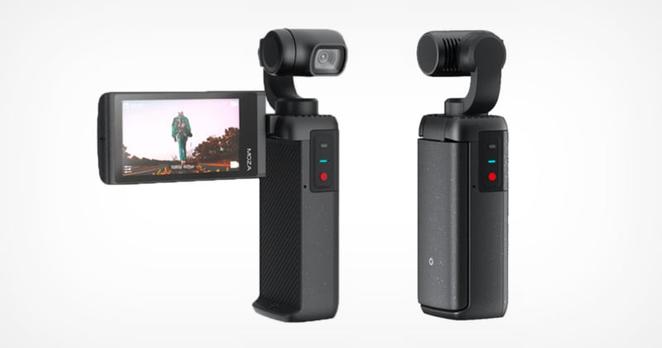
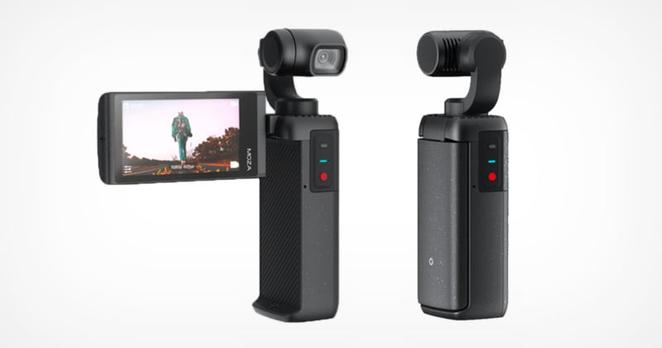
The Moin Camera, a new travel-friendly handheld device that has been announced by Moza looks to supplant DJI thanks to 4K video capture, articulating screen, 3-axis stabilization, and other features packed in a small and lightweight body for creators on the go.
As noted by DPReview, Moza -- a brand known for its smartphone and professional camera gimbals -- is venturing into the camera market with the release of the Moin Camera. The tiny device bears a strong resemblance to the DJI Pocket 2 -- previously known as Osmo Pocket in its first generation -- which was released in late 2020.
The Moin Camera has a 1/2.3-inch sensor and, using a full-frame equivalent 14mm f/2.2 lens with a 120-degree field of view, can capture 12-megapixel photos, 4K video footage at up to 60 frames per second, and also offers up to 8x slow-motion in its other video capture resolutions. From a stills perspective, the camera's shutter speed ranges from 60 seconds to 1/8000 of a second, while ISO ranges from 100 to 3200. Settings can be changed using the built-in 2.45-inch articulating touch screen.
Shooting options include single shot, panorama, static lapse, motion lapse, and hyperlapse. The camera also offers face tracking and fast continuous shooting which claims to deliver 9 images with one click.
Although the Moin Camera has a slightly wider angle of view and a larger touch screen compared to the Pocket 2, it also has a smaller sensor which may be a deal-breaker for those who want a camera with more robust capture potential.
That said, the long list of useful features that the Moin does offer comes packaged in a compact camera body that weighs only 176g (6.2 ounces) and is a scant 129mm × 37.8mm × 32mm (5 x 1.5 x 1.26 inches) in size, making it a travel-friendly option for photographers and videographers, especially considering the built-in stabilization that removes the need to pack an additional gimbal. The company claims the battery life of this camera lasts 145 minutes and takes 90 minutes to be fully charged using fast-charge.
Images can be processed or transferred using the Moza Artist app which accompanies the camera similar to smartphone gimbal apps on the market, such as Zhiyun's ZY Cami app. Users can choose to automatically import all footage stored on the camera, using Bluetooth and Wi-Fi to connect to the smart device. The app also offers quick edit options with various filters, effects, adding music, and more, with the ability to export the footage.
Moza is marketing this camera for audiences that are looking to record or vlog casual occasions, such as travel trips, lifestyle footage, outdoor events, and parties, making it appealing to those who want to upgrade from exclusively using their smartphones to record content. This camera is currently available for $299 in Moza's online store.
#equipment #news #products #3axis #4k #articulating #articulatingscreen #dji #djipocket2 #moincamera #moza #mozamoincamera #pocket #pocketcamera #pocketsized #vlog #vlogging