Viktor Tóth

@tothvito
0 Followers
14 Following
9 Posts
Limnology
limnology
macrophyte ecology
littoral zone
My latest research paper looked into the relationship between a pondweed with its epiphytic algae. These epiphytes hog the light that the pondweed needs for photosynthesis and mess with the way the pondweeds use the light.
https://www.frontiersin.org/journals/plant-science/articles/10.3389/fpls.2025.1561709/full
Frontiers | The impact of epiphytic algae on the foliar traits of Potamogeton perfoliatus

Frontiers

Our new paper has surfaced!
We took a deep dive into the bustling microbial metropolis of #LakeBalaton and used some fin-tastic technology to uncover its hidden secrets. Turns out, this lake is teeming with many tiny inhabitants!

So next time you're taking a dip in Lake Balaton, remember you're diving into a whole different kind of culture!

#LongReadSequencing
#Bacterioplankton
You can find more details in the paper:
https://doi.org/10.1038/s41598-025-96558-7

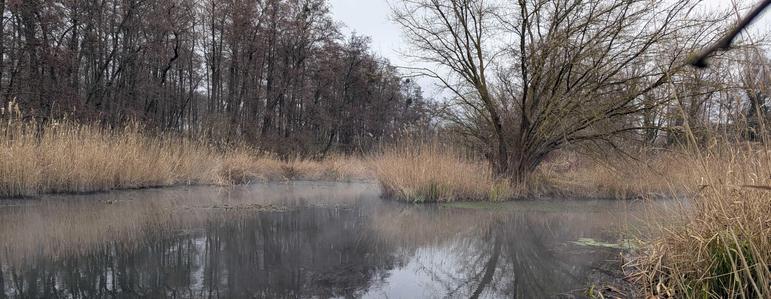
An outflow of a thermal lake (Hévíz, Hungary). Only invasive species in the stream water.
The results suggest that environmental degradation tends to decrease the average values of the traits studied, but definitely increases the plasticity of these traits. A similar pattern was observed for plant senescence.
What do you think?
Sharing my new research paper "Photosynthetic traits of Phragmites australis along an ecological gradient and developmental stages", which examines how photophysiological traits and their plasticity respond to different levels of environmental degradation and with season.
📖 Read the full article here: https://doi.org/10.3389/fpls.2024.1476142
#WetlandEcology #Phragmites #LakeFertő
Frontiers | Photosynthetic traits of Phragmites australis along an ecological gradient and developmental stages

Common reed (Phragmites australis) is a cosmopolitan species, though its dieback is a worldwide phenomenon. In order to assess the evolutionary role of pheno...

Frontiers
‪These findings may not rock your boat, but ... hey ... it could improve lake management if you think beyond catchments in a form of clustered management for neighbouring lakes.

- Hydrologically connected lakes show synchrony (yeah ... who knew?), although hydrologically disconnected lakes show higher synchrony of phytoplankton phenological events.

- Proximity matters: the closer the lakes, the more similar their biological processes, suggesting that regional factors (such as geology, geomorphology and mesoclimate) sometimes play a greater role than hydrological connectivity.

‪In my latest article I sum up investigation on the biological synchrony of neighbouring lakes in western Hungary using some satellite-derived chlorophyll data

https://link.springer.com/article/10.1007/s10750-024-05751-8

Here are some old trivia that everyone knows, but I manage to quantify:

Synchrony of algal blooms in neighbouring lakes: connectivity or territoriality - Hydrobiologia

The biological synchrony of neighbouring lakes in Central Europe was evaluated by analysing the concurrent time series of algal biomass variables using long-term (1999–2019) satellite (Landsat 7) derived chlorophyll-index data. The synchrony between the hydrologically connected and disconnected lakes was estimated and compared. Although the hydrologically connected lakes showed a low but significant synchrony (0.21 ± 0.07), the synchrony of phytoplankton phenological events in two hydrologically separated lakes was higher (0.50 ± 0.07). All data indicated a robust spatial correlation: the closer the compared lake regions were to each other, the higher the degree of similarity was. These data suggest that hydrological connectivity between lakes is not necessary and that the geological, geomorphological and mesoclimatic characteristics of the region may have a greater influence on the occurrence of biological processes in the lakes. Proximity of the lakes studied suggests that large-scale, integrating factors affecting all three studied lakes override the idiosyncrasies of these lakes, and therefore clustered management of neighbouring lakes may be useful to consider.

SpringerLink
Please help spread this article! Hopefully, I'm not the only one interested.
Cheers!
https://www.nature.com/articles/s41598-024-55824-w#citeas
Vertical optical complexity shaped by submerged macrophytes - Scientific Reports

The influence of macrophytes on the optical environment of the littoral zone was assessed by studying the effect of monospecific Potamogeton perfoliatus on the quantitative and qualitative properties of light and the response of plants to this altered environment. P. perfoliatus was shown to alter the optical environment and consequently its own architecture: in high-density pondweed patches, 67 percent of incident light was absorbed in the top 10 cm, while spectral properties of light was significantly altered. Leaf morphology and photophysiology adapted to these changes, with photosynthetically active biomass concentrated in the upper water layer and stem biomass increasing in the basal parts due to self-shading. This study highlights the importance of submerged macrophytes in shaping the optical environment and ecological dynamics of littoral zones. Not only do pondweed plants from different sites show very similar vertical patterns of morphological and physiological parameters, but they also contribute to similar vertical spatial variability in water optics, thus increasing habitat complexity. This added optical heterogeneity not only increases the diversity of the littoral zone, but also enriches the entire aquatic ecosystem of shallow lakes by providing additional optical ecological niches.

Nature