

1 Followers
0 Following
0 Posts
Says the Cheeto & Chief who used questionable AI images in official government announcements?
Trump's use of AI images pushes new boundaries, further eroding public trust

The Trump administration has not shied away from sharing AI-generated imagery online, embracing cartoonlike visuals and memes and promoting them on official White House channels. But an edited — and realistic — image of a civil rights attorney in tears after being arrested is raising new alarms about how the government is blurring the line between what is real and what is fake, especially with leaders mocking criticism of the edited image. Misinformation experts are concerned the spread of AI-generated or edited images could erode public perception of the truth and sow distrust.

AP News

It’s really worth reading: hntrbrk.com/demining-hormuz/ which TWZ references regarding the demining.

The ending is below as I just had to shake my head and slap my face.

The Washington Institute estimated years ago that clearing the Strait of Hormuz of mines could require “up to 16 MCM vessels.” The Navy has seven. Iran has an estimated 5,000 to 6,000 mines and, according to U.S. intelligence in conversations with CNN, still retains “80% to 90% of its small boats and miners.”

The brief covered a recent MCM Advanced Tactical Training program, the final pre-deployment mine warfare assessment for LCS crews. 

Some key findings: 

Unreliable unmanned systems. Each Fleet-class USV mission requires over four hours of “pre-mission maintenance” and “1.5 hours of GPS/sonar calibration once launched,” according to the presentation. Multiple hunt missions were conducted where the sonar simply failed to record data — and crews didn’t know until the post-mission analysis. This is especially damaging during reacquire-and-identify missions, exactly the kind of work needed to clear a minefield. 

Operators have responded by shortening mission times, which defeats the purpose of using unmanned vehicles in the first place. One pre-deployment exercise with the USS Tulsa off the coast of San Diego resulted in a runaway MCM USV near Mexico’s territorial waters that could not be recovered by the mothership LCS. “Literally, the practice minefield I use is 1 mile north of the US-Mexico maritime border, and there’s a good chance that that UUV drifts or decides to go off on its own. I’m going to get demarched by the Mexican government,” said the leader of the U.S. Navy’s Mine Countermeasures Technical Division. The USVs themselves act as a handicap to minesweeping, with a short bandwidth range forcing the mothership LCS to operate near or inside minefields to maintain visual range to the USV’s antennas. 

Visual identification doesn’t work. U.S. MCM doctrine requires a camera to visually confirm mines — the AQS-20 has to drive directly over a bottom mine. But even the relatively clear waters off Southern California have defeated this approach. In the turbid, shallow, current-swept waters of the Persian Gulf, the problem would be far worse. The officer’s conclusion: The Navy needs to adopt high-granularity sonar identification, as other navies already have. 

Critical single-point failures. The platform lift between mission bay and hangar, the BIT test laptops for the USV/ALMDS/AMNS, the twin boom extensible crane, and the payload handling systems are all single-point failures with no spares or redundancy aboard. If any one of these breaks, operations stop. When describing the deployment arm, the Navy mine countermeasures lead said, “It is a troubling system. It is highly complex for what it does, and when it breaks, I’m out of a job, I’m out of a mission.”

Multi-mission dilution. The LCS was designed as a multi-mission platform. The addition of Naval Strike Missiles and pressure to support visit, board, search, and seize operations means crews have less time to build and maintain MCM proficiency. “So now my ship with an LCS mission package may not necessarily be practicing MCM.” The LCS platform is also being experimented on as a long-range strike platform. The director’s own conclusion: The LCS will always struggle to match a dedicated MCM vessel.

The Michelangelo system uses sensors and predictive algorithms to detect suspicious activity early and enable the most effective response.

I hope they test their AI.

Commando Raid To Secure Iran's Enriched Uranium May Become A Very Risky Necessity
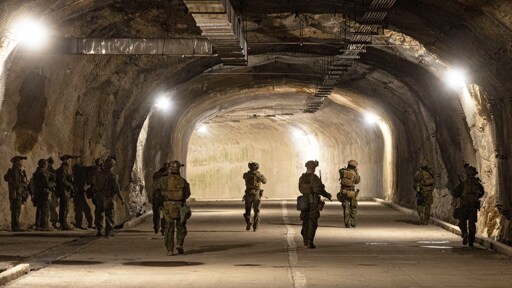
https://lemmy.world/post/44071735

Commando Raid To Secure Iran's Enriched Uranium May Become A Very Risky Necessity - Lemmy.World

> U.S. and Israeli authorities have reportedly been considering a special operations ground raid to extract or otherwise neutralize Iran’s stockpile of enriched uranium. TWZ previously explored this exact scenario [https://www.twz.com/nuclear/loose-nukes-in-iran-is-a-scenario-u-s-special-operators-have-been-training-for], given that this nuclear material is understood to be stored in deep underground bunkers, presenting challenges for attempting to achieve this objective from the air alone [https://www.twz.com/air/tunnel-entrances-to-irans-fordow-nuclear-site-likely-sealed-off-before-b-2-strikes]. U.S. and Israeli special operations forces have actively trained [https://www.twz.com/32209/americas-most-elite-special-operators-want-a-huge-mock-enemy-bunker-complex-to-train-in] for these kinds of missions [https://www.twz.com/37923/the-army-is-training-specialized-companies-of-green-berets-to-crack-hard-targets] for decades, and Israel has demonstrated its ability and willingness to carry out [https://www.twz.com/air/inside-israels-commando-raid-on-irans-underground-missile-factory-in-syria] complex raids on subterranean facilities, but any such operation would still face immense risks and uncertainties. > > Multiple outlets [https://www.bloomberg.com/news/articles/2026-03-08/iran-war-us-mulls-idea-of-special-operation-to-seize-tehran-s-uranium] have now reported [https://www.semafor.com/article/03/07/2026/trumps-iran-options-include-special-operations-raid-on-nuclear-sites] on deliberations [https://www.axios.com/2026/03/08/iran-ground-troops-special-forces-nuclear] within the U.S. and Israeli governments over a ground raid targeting Iran’s enriched uranium stocks this past weekend, citing unnamed sources. It is unclear whether the mission being considered would be carried out by U.S. or Israeli forces, or be conducted jointly by both parties. … > NBC News reported last week [https://www.nbcnews.com/politics/white-house/trump-privately-shown-serious-interest-us-ground-troops-iran-rcna262176] that President Trump had “privately expressed serious interest” in sending “a small contingent of U.S. troops that would be used for specific strategic purposes” into Iran. > > The U.S. government says that preventing Iran from developing a nuclear weapon is a core goal of its current operations targeting the country. If the Iranian government were to collapse, and do so suddenly, there would be additional concerns about the proliferation of the country’s nuclear material, including to regional proxies and terrorist groups, as well as other potential buyers on the black market.
“Mosaic defence” is an Iranian military concept most closely associated with the Islamic Revolutionary Guard Corps (IRGC), particularly under former commander Mohammad Ali Jafari, who led the force from 2007 to 2019.

The idea is to organise the state’s defensive structure into multiple regional and semi-independent layers instead of concentrating power in a single command chain that could be paralysed by a decapitation strike.

Under this model, the IRGC, the Basij, regular army units, missile forces, naval assets and local command structures form parts of a distributed system. If one part is hit, others keep functioning. If senior leaders are killed, the chain does not collapse. If communications are severed, local units still retain the authority and capacity to act.

The doctrine has two central aims: to make Iran’s command system difficult to dismantle by force, and to make the battlefield itself harder to resolve quickly by turning Iran into a layered arena of regular defence, irregular warfare, local mobilisation and long-term attrition.

That is why Iranian military thinking does not treat war primarily as a contest of firepower. It treats it as a test of endurance.

The Dow’s not over 50,000 now Kristi. You have to reap what you sow.

I think this graphics lacks context yes, but I don’t think it’s throughput. I think it’s average lifetime debt on credit cards. Although that doesn’t mean much either.

As you say what is this saying… And provide the why either. Cost of living, age group, why do people have more debt than other? Also what is the median period have credit card debt?

This is not a geographic map data point.

  • Too much news to early.
  • Can we get Spain’s leader to say Iran is Trump’s Epstein tax on the world. Or any leader? Chants even? Hell by now we should have a billboard top ten about this.

    www.anthropic.com/…/statement-department-of-war

    However, in a narrow set of cases, we believe AI can undermine, rather than defend, democratic values. Some uses are also simply outside the bounds of what today’s technology can safely and reliably do. Two such use cases have never been included in our contracts with the Department of War, and we believe they should not be included now:

    • Mass domestic surveillance. …
    • Fully autonomous weapons. …
    Statement from Dario Amodei on our discussions with the Department of War

    A statement from our CEO on national security uses of AI