1 Followers
0 Following
0 Posts

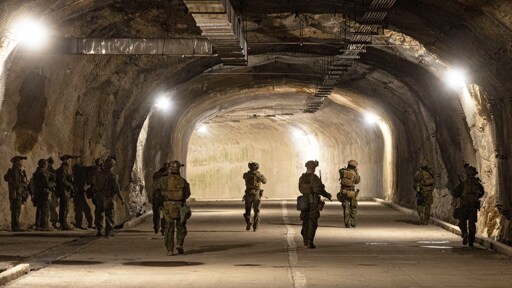
Commando Raid To Secure Iran's Enriched Uranium May Become A Very Risky Necessity

https://lemmy.world/post/44071735

Commando Raid To Secure Iran's Enriched Uranium May Become A Very Risky Necessity - Lemmy.World

> U.S. and Israeli authorities have reportedly been considering a special operations ground raid to extract or otherwise neutralize Iran’s stockpile of enriched uranium. TWZ previously explored this exact scenario [https://www.twz.com/nuclear/loose-nukes-in-iran-is-a-scenario-u-s-special-operators-have-been-training-for], given that this nuclear material is understood to be stored in deep underground bunkers, presenting challenges for attempting to achieve this objective from the air alone [https://www.twz.com/air/tunnel-entrances-to-irans-fordow-nuclear-site-likely-sealed-off-before-b-2-strikes]. U.S. and Israeli special operations forces have actively trained [https://www.twz.com/32209/americas-most-elite-special-operators-want-a-huge-mock-enemy-bunker-complex-to-train-in] for these kinds of missions [https://www.twz.com/37923/the-army-is-training-specialized-companies-of-green-berets-to-crack-hard-targets] for decades, and Israel has demonstrated its ability and willingness to carry out [https://www.twz.com/air/inside-israels-commando-raid-on-irans-underground-missile-factory-in-syria] complex raids on subterranean facilities, but any such operation would still face immense risks and uncertainties. > > Multiple outlets [https://www.bloomberg.com/news/articles/2026-03-08/iran-war-us-mulls-idea-of-special-operation-to-seize-tehran-s-uranium] have now reported [https://www.semafor.com/article/03/07/2026/trumps-iran-options-include-special-operations-raid-on-nuclear-sites] on deliberations [https://www.axios.com/2026/03/08/iran-ground-troops-special-forces-nuclear] within the U.S. and Israeli governments over a ground raid targeting Iran’s enriched uranium stocks this past weekend, citing unnamed sources. It is unclear whether the mission being considered would be carried out by U.S. or Israeli forces, or be conducted jointly by both parties. … > NBC News reported last week [https://www.nbcnews.com/politics/white-house/trump-privately-shown-serious-interest-us-ground-troops-iran-rcna262176] that President Trump had “privately expressed serious interest” in sending “a small contingent of U.S. troops that would be used for specific strategic purposes” into Iran. > > The U.S. government says that preventing Iran from developing a nuclear weapon is a core goal of its current operations targeting the country. If the Iranian government were to collapse, and do so suddenly, there would be additional concerns about the proliferation of the country’s nuclear material, including to regional proxies and terrorist groups, as well as other potential buyers on the black market.

The Perils of Militarizing Law Enforcement

https://lemmy.world/post/43299877

The Perils of Militarizing Law Enforcement - Lemmy.World

> In August 2025, residents of Washington, D.C., awoke to a sight familiar in much of Latin America but rare in the United States: uniformed military troops patrolling city streets as part of a federally directed campaign against crime. Although violent crime in the country’s capital had fallen that January to its lowest point in over 30 years, on August 11 President Donald Trump signed an executive order that declared a “crime emergency” in the city, arguing that extraordinary measures were necessary to restore control. But the subsequent deployment of the National Guard—a military reserve force that can serve at both the state and federal levels in response to domestic crises or international conflict—signaled something beyond a wish to address a public safety concern. It represented a transformation in how the United States governs itself. > > What unfolded in Washington was not an isolated episode. Over the course of Trump’s second term, his administration has sent or attempted to send units of the National Guard to major U.S. cities including Chicago, Los Angeles, Memphis, New Orleans, and Portland, framing each case as a response to crime, unrest, or threats to public order. Together, these cases mark the gradual erosion of the long-standing boundary between civilian policing and military force. > > For American observers, such a shift may feel unprecedented. In Latin America, however, it is a well-worn path. Across the region, politicians have deployed the armed forces to fight crime, promising that their presence will produce swift improvements in public safety and restore order. These policies often begin as temporary responses to emergencies, but they rarely remain so. Instead, military involvement in domestic law enforcement becomes normalized, power concentrates in the executive, civilian institutions weaken, and civil liberties erode. Democratic institutions hollow out, slowly but surely. > > The United States has long resisted this temptation. The separation of civilian policing from military force, deeply ingrained in both U.S. law and custom, has acted as a bulwark for American democracy. But the National Guard deployments, as sustained policing under federal command, challenge that separation. State governors can and have used National Guard troops to address local emergencies, but such operations are typically limited to assisting with natural disasters, riots, crowd control, and guarding buildings rather than participating in sustained law enforcement missions. And once the line between soldier and police officer is blurred, it is extraordinarily difficult to redraw. This is a reality Latin Americans know all too well, and one Americans may soon come to learn. …

Landmark trial accusing tech giants of harming children with addictive social media begins

https://lemmy.world/post/42942639

Landmark trial accusing tech giants of harming children with addictive social media begins - Lemmy.World

> LOS ANGELES (AP) — The world’s biggest social media companies face several landmark trials this year that seek to hold them responsible for harms to children who use their platforms. Opening statements for the first, in Los Angeles County Superior Court, began on Monday. > Instagram’s parent company Meta and Google’s YouTube face claims that their platforms deliberately addict and harm children. TikTok and Snap, which were originally named in the lawsuit, settled for undisclosed sums. > Jurors got their first glimpse into what will be a lengthy trial characterized by dueling narratives from the plaintiffs and the two remaining social media companies named as defendants. Opening arguments in the landmark case began Monday at the Spring Street Courthouse in downtown Los Angeles. > Mark Lanier delivered the opening statement for the plaintiffs first, in a lively display where he said the case is as “easy as ABC,” which he said stands for “addicting the brains of children.” He called Meta and Google “two of the richest corporations in history” who have “engineered addiction in children’s brains.” > At the core of the Los Angeles case is a 19-year-old identified only by the initials “KGM,” whose case could determine how thousands of other, similar lawsuits against social media companies will play out. She and two other plaintiffs have been selected for bellwether trials — essentially test cases for both sides to see how their arguments play out before a jury and what damages, if any, may be awarded, said Clay Calvert, a nonresident senior fellow of technology policy studies at the American Enterprise Institute.

White House eyes data center agreements amid energy price spikes

https://lemmy.world/post/42942262

White House eyes data center agreements amid energy price spikes - Lemmy.World

> The initiative, which the administration wants to roll out with a splashy White House event, has yet to be formally announced – and it remains unclear which companies have agreed to the compact or been invited to participate. > The compact would mark one of the most ambitious efforts to shape the footprint of AI infrastructure without imposing direct regulation, and comes a month after the White House made an unprecedented appeal to the mid-Atlantic energy grid operator [https://www.politico.com/news/2026/01/16/trump-tame-electricity-prices-00733422] to try to lower electricity prices. > Concerns have steadily risen that data centers’ enormous appetite for energy could drive prices up even more, which could become even more of a political liability for an administration that’s been all-in on the rapid, unbridled development of data centers. The compact is one way to try to tout work to blunt their impact ahead of the midterms. > “As President Trump announced weeks ago, top tech companies are working with the President to ‘pick up the tab’ for their power consumption as they build data centers. More to come soon!” White House spokesperson Taylor Rogers said in a statement. > A White House official said the draft is “is outdated and no longer accurate” without specifying which parts have changed. __ And much more in the article. More question than answers, but something is going on.

Senate passes $1.2T government funding deal — but a brief shutdown is certain

https://lemmy.world/post/42463556

Senate passes $1.2T government funding deal — but a brief shutdown is certain - Lemmy.World

> The $1.2 trillion package could face challenges in the House, especially from conservative hard-liners who have said they would vote against any Senate changes to what the House already passed. Many House Democrats are also wary of stopgap funding for DHS, which would keep ICE and Border Patrol funded at current levels without immediate new restrictions. … > If the Trump-blessed deal ultimately gets signed into law, Congress will have approved more than 95 percent of federal funding — leaving only a full-year DHS bill on its to-do list. Congress has already funded several agencies, including the departments of Agriculture, Veterans Affairs and Justice. … > Republicans agreeing to strip out the full-year DHS bill and replace it with a two-week patch is a major win for Democrats. They quickly unified behind a demand to split off and renegotiate immigration enforcement funding after federal agents deployed to Minnesota fatally shot 37-year-old U.S. citizen Alex Pretti last week. > Senate Minority Leader Chuck Schumer, who helped negotiate the final deal, took a victory lap after the vote, saying “the agreement we reached today did exactly what Democrats wanted.” > But Democrats will still need to negotiate with the White House and congressional Republicans about what, if any, policy changes they are willing to codify into law as part of a long-term bill. Republicans are open to some changes, including requiring independent investigations. But they’ve already dismissed some of Democrats’ main demands, including requiring judicial warrants for immigration arrests. > “I want my Republican colleagues to listen closely: Senate Democrats will not support a DHS bill unless it reins in ICE and ends the violence,” Schumer said. “We will know soon enough if your colleagues understand the stakes.” > Republicans have demands of their own, and many believe the most likely outcome is that another DHS patch will be needed. > Sen. Lindsey Graham (R-S.C.), for instance, wants a future vote on legislation barring federal funding for cities that don’t comply with federal immigration laws. Other Republicans and the White House have pointed to it as a key issue in the upcoming negotiations. > “I am demanding that my solution to fixing sanctuary cities at least have a vote. You’re going to put ideas on the floor to make ICE better? I want to put an idea on the floor to get to the root cause of the problem,” Graham said.

How Peaceful Protest by Just 3.5 Percent of Americans Could Force Major Policy Changes From the Trump Administration

https://lemmy.world/post/42134391

How Peaceful Protest by Just 3.5 Percent of Americans Could Force Major Policy Changes From the Trump Administration - Lemmy.World

Given all the events happening, this is a reminder that peaceful protests are the key to change. We are all angry, we are all sad for the people and families being violently attacked, and it is hard to stay cool and calm, but violence reciprocity is not the answer. Channeling Gandhi, and MLK, both who change nations by absorbing violence and standing in their way. Show how they lost the moral high ground, and DO NOT RECIPROCATE! Also it works: > There are key parameters to the 3.5 percent rule according to Chenoweth. The “figure is a descriptive statistic based on a sample of historical movements.” Thus, it is not necessarily a hard-and-fast law, but rather a solid predictor. Remarkably, most mass nonviolent movements that succeeded did so even without reaching the 3.5 percent threshold. Moreover, durable nonviolent movements are twice as likely to succeed as violent campaigns because people generally reject violence. The 3.5 percent rule does not rely on cumulative participation, but rather participation at a peak event, which usually means a mass nonviolent demonstration. And the demands for change must achieve success within one year as a result of the mobilization. > For everyday Americans wishing to actively object to the government’s slide toward authoritarian policies, the 3.5 percent rule is a motivational yardstick to measure the likely result of peaceful mobilization. > People-powered movements can increase the chances of pressuring the government to meet their demands, including by building broad, sustained public participation across diverse groups. This is especially true because authoritarian-minded governments try to divide the population and keep them afraid of defiance. When 3.5 percent of a population goes beyond protest to engage in peaceful civil disobedience and noncooperation, these actions disrupt the system and force governmental change. For example, general strikes that affect the economy, boycotts, sit-ins, walkouts, or shutdowns of parts of cities can put unavoidable pressure on political leaders to hear their constituents and resolve the matter. > Chenoweth also states that 3.5 percent participation strongly indicates that there is much deeper support of the movement across society and a sense of inevitability, which can translate into defections from key pillars on the government’s side. For example, leaders from the economic, business, political, cultural, and media sectors become more likely to shift their allegiance to the side of a broad nonviolent mobilization. Perhaps most importantly, effective mobilizations can cause vital defections from police and military forces as well as the members of the political party in power. So to reiterate: > …People-powered movements are more successful when they can strategically build a broad tent across the political spectrum, avoid violence, and remain relentlessly disciplined. Sharing the risks of defiance, Americans committed to pro-democracy principles can shift the current balance of power and change the trajectory of the nation.

The Situation: “Evident Clinical Symptoms”

https://lemmy.world/post/41952120

The Situation: “Evident Clinical Symptoms” - Lemmy.World

> In other words, to remove the president using the impeachment process, the forces of sanity would need to muster a two-thirds majority in the Senate. To remove the president under the 25th Amendment, they would need to do it in both houses. > Don’t kid yourself, folks: There is no magic bullet here. There is no constitutional magic bullet. There is no investigative or prosecutorial magic bullet—no Robert Mueller or Jack Smith. There is no combination of protests and elections or lobbying that can make this problem go away quickly. > There is, instead, a long hard slog ahead of us—a long hard slog of elections, advocacy, protest, litigation, and people fighting for their rights. > And there is a long hard slog ahead of Europe too in handling the disaster the United States has unleashed on the world. Because that is what managing a deranged person is like. > … This was long before George Conway wrote his famous Atlantic article about Trump’s malignant narcissism [https://www.theatlantic.com/ideas/archive/2019/10/george-conway-trump-unfit-office/599128/]. Trump’s mental health was not a subject it was considered appropriate to discuss—at least not in a serious way, and I’m not a clinician, and Lawfare is not a medical or psychological journal. And yet, even then—eight months before he was elected the first time—there was “the small matter of Trump’s—there’s no polite way to say this—evident clinical symptoms. I’m not a psychologist qualified to make a diagnosis, but it simply has to be significant that it’s hard to have a serious conversation about Trump without using words like egomania, grandiosity, or narcissism.” > There was no escaping it. He was deranged—grandiose, egomaniacal, narcissistic, the sort of man who would get obsessed with acquiring Greenland and blow up America’s most sacred international commitments to get it done. The sort of man who would respond to not getting the Nobel Peace Prize by declaring he was no longer solely interested in peace. The sort of man who would take the medal from its rightful winner and feel no shame at the theft.

Emergency alert for 2495 S Vine St?

https://lemmy.world/post/41783294

Emergency alert for 2495 S Vine St? - Lemmy.World

Anyone have any idea what’s going on? Looks like a good part of the city got the alert including people at the nuggets game, but the only report of what it might be is structure fire and that’s hearsay. Anyone have any solid reports?

Minnesota Can Prosecute Jonathan Ross—But It May Not Be Easy

https://lemmy.world/post/41760132

Minnesota Can Prosecute Jonathan Ross—But It May Not Be Easy - Lemmy.World

> Whether Minnesota ultimately prosecutes Ross remains to be seen, and state officials’ decisions will depend on careful legal and evidentiary analysis. Without predicting outcomes, however, it’s worth both clarifying the state of the law—especially in the face of false claims from the Trump administration—and identifying some of the key issues Minnesota prosecutors will have to consider. > First, let’s debunk claims that the state has no role to play here. The day before Moriarty and Ellison announced the state investigation, Vice President Vance claimed [https://www.cbsnews.com/video/jd-vance-says-ice-officer-who-shot-woman-minneapolis-protected-absolute-immunity/] that Ross has “absolute immunity,” suggesting that there are no circumstances under which the state could prosecute him. And Secretary of Homeland Security Kristi Noem claimed that the state has “no jurisdiction [https://www.cbsnews.com/minnesota/news/minnesota-ice-shooting-hennepin-county-collects-evidence-investigation/],” which is why, she said, it was shut out of the investigation. More recently, Deputy White House Chief of Staff Stephen Miller announced [https://x.com/dhsgov/status/2011213308968538361] that ICE agents “have immunity to fulfill their duties” and that “no one … can prevent you from fulfilling your legal obligations and duties.” In fact, Vance and Noem are completely wrong as a matter of law, and Miller’s claim holds water only insofar as ICE agents are in fact acting within their legal authority, which, as explained below, will be a central issue in any state prosecution.  > The notion that Minnesota cannot investigate or prosecute a violation of its criminal laws within its borders is flatly inconsistent with our federalist system. As the Supreme Court has recently reiterated, the states and the federal government each have a sovereign interest [https://supreme.justia.com/cases/federal/us/587/17-646/] in enforcing their own criminal laws. Sometimes that means that both a state and the federal government prosecute the same person for the same conduct, as happened with Derek Chauvin [https://www.ag.state.mn.us/Office/Communications/2022/07/07_Chauvin.asp]. When that happens, because of those separate sovereign interests, double jeopardy does not apply [https://supreme.justia.com/cases/federal/us/587/17-646/]. Here, double jeopardy is not the key question (although at some point in the future a different federal administration could presumably prosecute Ross regardless of what Minnesota does). Instead, “dual sovereignty [https://supreme.justia.com/cases/federal/us/587/17-646/]” in the present context means that the state has a legitimate interest in enforcing its laws even against federal actors. > Such cases are unusual, but they are not unprecedented. As Bryna Godar has documented [https://statedemocracy.law.wisc.edu/featured/2025/explainer-can-states-prosecute-federal-officials/], states have been bringing prosecutions against federal officials since at least the 19th century, including for crimes involving the use of force by law enforcement officials. These cases have involved charges of murder, attempted murder, assault, and other violent crimes, often brought against tax collectors or federal agents enforcing Prohibition. More recently, the state of Idaho brought murder charges against an FBI agent [https://caselaw.findlaw.com/court/us-9th-circuit/1430138.html] who shot and killed an unarmed woman during a lengthy stand-off known colloquially as “Ruby Ridge [https://www.britannica.com/event/Ruby-Ridge].” In other words, there is no question that Minnesota has jurisdiction to investigate and charge Ross with a crime and there is no automatic or absolute immunity because he is a federal officer. The administration’s claims otherwise are false. … > The inquiry into whether Supremacy Clause immunity applies in this case will thus likely include, for example, reviews of the federal government’s use-of-force policies [https://www.justsecurity.org/128498/dhs-doj-cbp-policy-force-vehicles/] to determine if Ross acted outside his authority and/or acted unreasonably. Those policies, for example, state that law enforcement officials (LEOs) “should … avoid intentionally and unreasonably placing themselves in positions in which they have no alternative to using deadly force”; they permit deadly force only “when the LEO has a reasonable belief that the subject of such force poses an imminent threat of death or serious bodily injury to the LEO or to another person”; they generally prohibit the use of deadly force “solely to prevent the escape of a fleeing subject”; and they specifically discourage LEOs from firing at “the driver of a moving vehicle.” The policies  [https://www.dhs.gov/sites/default/files/2023-02/23_0206_s1_use-of-force-policy-update.pdf]also require federal LEOs to “obtain appropriate medical care” after any use of force. If Ross violated these provisions, his immunity claim will be weaker. Likewise, the court will likely look at whether Ross used deadly force in violation of the Fourth Amendment, including whether his failure to warn [http://www.lauxlawgroup.com/wp-content/uploads/2022/06/Cole-v.-Hutchins_-959-F.3d-1127.pdf] Good before firing his gun was unconstitutional. > This immunity inquiry also overlaps with Minnesota’s state law authorizing peace officers to use deadly force [https://www.revisor.mn.gov/statutes/cite/609.066], described above. Under all of these inquiries, questions of whether Ross acted reasonably under the circumstances will play a central role. In other words, both the state prosecutors’ charging decisions and the immunity determination will depend on questions of fact about the details of what actually happened, as well as on questions of law as to the implications of those facts. For example, did Ross believe that he was in imminent danger of death or serious bodily injury when he fired the first shot? If so, was that belief reasonable? Did Ross prepare to draw his gun before or after Good’s car started moving, and if not, why did he shift his cell phone from his right to his left hand? Did Good’s car touch him at any point? What about Ross’s belief as to whether he was in danger when he fired the second and third shots? On what basis did he, and his colleagues, fail to provide assistance to Good after she was shot and prevent a physician [https://www.theguardian.com/us-news/2026/jan/09/federal-officers-blocked-medics-from-scene-of-ice-shooting-witnesses-say] who was on the scene from helping? All of these questions go to both whether Ross has Supremacy Clause immunity and to whether he is likely to be convicted if charged and tried. > Finally, whether Supremacy Clause immunity applies will almost certainly be decided by a federal court, even though any criminal charges would first be filed in Minnesota state court. That is because federal officials are able to remove both criminal and civil cases [https://www.law.cornell.edu/uscode/text/28/1442] from state court to federal court if those cases involve actions taken “under color of” their federal office. If charged, Ross would almost certainly choose to remove the case. Even in federal court, however, state criminal prosecutors would remain in charge of the prosecution, and any conviction would be a conviction under state law. And the president cannot pardon a state law crime [https://www.brookings.edu/articles/presidential-pardons-settled-law-unsettled-issues-and-a-downside-for-trump/]. …