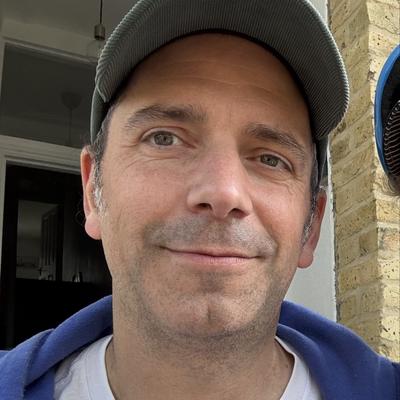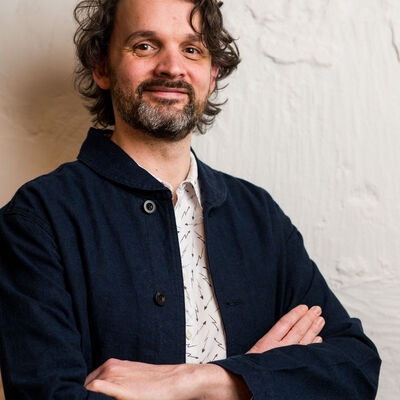
I do part-time parenting, threat modelling and software development.
I like to use open source software, build ugly prototypes, and feeding my neighbourhood squirrel.
| Languages | German, English |
| Languages | C, Rust, Python, Lua, Java |
| OSes | FreeBSD |

| Languages | German, English |
| Languages | C, Rust, Python, Lua, Java |
| OSes | FreeBSD |
"No" is a better privacy-enhancing technology than the state-of-the-art differential privacy techniques.
It's efficient! Not collecting data requires at most O(1) bandwidth, O(1) storage, and O(1) compute.
"No" is not "Maybe later".
"No" is not "Ask me again in 3 days".
"No" is not "Maybe after a few more beers", since many of the people that need to hear the first part of his message likely also needs the second.
At #RealWorldCrypto this year, there was a session on "privacy-enhancing technologies".
The first talk in the session was about a new encryption method for Tor.
The next two were painful examples of "a person cannot be convinced of something when their salary depends on them not knowing it".
Advertisers wants to collect signals about populations without being individually identifying. So let's talk about differential privacy techniques to let them do that.
One example was "Meta wants to know what percentage of its teneage users blocked a contact today".
At no point did they address the elephants in the room.
As tempting as it might be to hand wave it, and say "well yes but their business model depends on it", I say to advertisers, "then perish".
Overproduction
An Act of Resistance
How many people know that #WordPress was co-founded by a black man, Mike Little?
Or that he's from the north of England? A self-taught coder from #Stockport, just south of #Manchester? Or that he never received so much as a share, cent or job offer from the $7bn+ valued Automattic after spending five months working exclusively with Matt Mullenweg on the B2 fork?
After @bevangelist told me about @mikelittle I interviewed him for a documentary I never got round to making. Back then I was left with two certainties: he's Wozniak to Mullenweg's Jobs. Among other things he added the one-click upgrade that's been central to WP's bonkers 45%-of-the-web-success. And he's one of the nicest people I've ever interviewed, which is also bonkers given that he not only didn't share in WP's financial success, but that he's barely known.
But he should be - so, better late than never - please meet #MikeLittle, perhaps the most-influential-least-known person in #foss… https://25.netribution.co.uk/nic/mike-little-the-british-co-founder-of-wordpress-youve-probably-never-heard-of/
The best advice I have for new nerds: Refuse to pay rent.
Don't subscribe. Don't lease. Don't use their cloud. Don't slip down the freemium slope. Don't create accounts on their services.
Buy it once. Run it local. Avoid commercial software.
It'll be a huge pain and you'll be an outsider but it'll be endless, interesting, and hard fun that'll pay you back with a curious mind and an understanding of the fabric of our intellectual infrastructure that will make you light-years more capable, useful, and healthy than the "AI" zombies.
Looking for vulnerabilities is the last thing I do
There's a common misconception among developers that my job, as a (application) Security Engineer, is to just search for security bugs in their code. They may well have seen junior security engineers doing this kind of thing. But, although this can be useful (and is part of the job), it's not what I focus on and it can be counterproductive. Let me explain.
http://neilmadden.blog/2026/02/20/looking-for-vulnerabilities-is-the-last-thing-i-do/