 Christopher Kyba 🇨🇦🇪🇺
 M.S. Bellows, Jr.
I hope Canadians understand that if it actually came down to a war between Canada and the United States, half of us USians would be slashing the tires and putting sugar in the gas tanks of our vehicles heading north.

Rebecca Blood
- 129 Followers
- 82 Following
- 506 Posts
Smallholder in the North, Rebel Among Hipsters, former Goth Babe of the Week. Somewhat original.
@bruces Rogues gallery
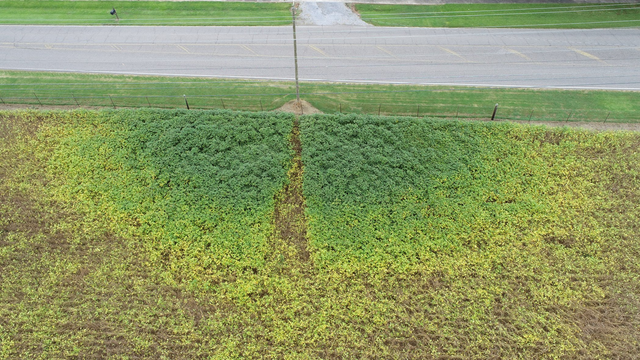
This is my favorite photo for demonstrating the impact of #LightPollution on physiology. The image was taken by shows a soybean field illuminated by a badly directed streetlight.
What's happening here is that soybeans are supposed to grow leaves in the early part of summer, and as nights get longer, they should make #soybeans and turn brown. In the green area, the plants don't understand what time of year it is, and it's therefore a complete loss for the farmer.
The reason I love the photo so much is because you can see the shadow of the light mast on the field.
The photo was taken by Dwaine Eddie McGriff & Ben Tankersley, and originally posted to Xitter (the post no longer exists).
The problem could be entirely solved by using a streetlight with strong backlight shielding (i.e. shining the light only on the roadway).
(4/17)
 Leilani Amorey
 Peter Gleick
The chairman of the Joint Chiefs and the Chief of Naval Operations were hired because they were superbly qualified, not because of DEI. But they were fired because they were black and a woman. That's racism and sexism.
Call it what it is.
Call it what it is.
 Annalee Newitz 🍜
In 1973, a brilliant critic named Stuart Hall created a diagram that changed the way we study media, and could help you survive this moment. Just dropped: the second letter in my series about how to analyze the media in a time of crisis. It's all about codes. https://buttondown.com/thehypothesis/archive/the-man-who-discovered-media-codes-and-how-to/ #media #stuarthall #mediastudies #discourse


@danhon I'm sorry to hear this. This really is a tough time. You and I haven't met, but I look forward to seeing your daily pictures of taking a stupid walk for your stupid mental health, and every day they remind me to take care of myself. Thank you!
@benbrown I don't know what that is, but I don't think so
 Matthew Haughey
Serious product recommendation: the Franklin Sensors iLevel. It's so obvious and useful in the week I've had it while hanging picture frames that I wonder why no one made this years ago. The "green" level is accurate to within less than 0.4º, better than a normal bubble level visually

Franklin Sensors iLevel Official Video
 Chu 朱
Chu 朱Some media tips for scientists amidst this craziness.
Do not let the interviewer throw you off course. Keep on your message regardless of what the question is. You're not a professor giving a lecture, you're not in front of a committee of peers. You do not need to be fully accurate or entirely correct or hedge your answer. Stay on message.
Whatever your message is, this needs to resonate. Keep it simple. Whatever you do, do NOT get into risks or numbers or anything with nuance. "People will die of contaminated water". PERIOD. NO risk factors. No "there is a possibility". Say it out loud, no nuances.
Do what we Chinese call "patting the horse's butt". In other words, use flattery. "That's a great question. Let me rephrase it this way".
Rephrase questions in harsh, but easy to understand terms. DO NOT get drawn into details. Stop yourself. I know it's hard. "This is getting really complicated. It's just important to understand that we are talking about children who will die of..."
If they don't get muzzled, media will be interested in interviewing you.
Swing that door hard into their asses on your way out.
Any scientist who get a media request but feels uneasy, I am more than happy to give you a 101 as a public service. We can go over how to stay on message and even come up with a good message that will resonate.
We are in this together.