@reactome

45 Followers
50 Following
54 Posts
Reactome is an open source curated pathway database that provides pathway and network analysis tools for life science researchers.
Reactome Websitehttps://reactome.org/
Twitterhttps://twitter.com/reactome
Google Scholarhttps://scholar.google.ca/citations?hl=en&user=gtB1MLcAAAAJ&view_op=list_works
HelpDesk Email[email protected]

Let's play 20 questions!

If Reactome has touched your work or helped you save valuable time, please consider giving us 5 minutes of your time through our user survey, reachable at our home page, or at the following link: https://docs.google.com/forms/d/e/1FAIpQLSdgKOPoGm3nDHckrdJb9D0Gg5JJOEFkfp0jZE3DXsC6hcPzUg/viewform
#openscience #pathway #biology

Reactome User Survey

Thank you for participating in the Reactome User Survey 2024! Your feedback is valuable in helping us improve our resources and services. We are committed to maintaining the privacy of your data. All responses are anonymous and will be used solely for the purpose of enhancing Reactome's tools and services. Participation in this survey is completely voluntary. Please email [email protected] if you have any questions or additional feedback!

Google Docs

Going to#ASHG2024🏔?

Reactome is coming to Denver, CO! Come talk to Nancy Li in the #OmicsTechnology session about the #Reactome knowledgebase, and how you can use our data and analysis tools in your research!

Please reach out if you'd like to chat!

Release News: V89 of hashtag#Reactome is live! 🥂 🎉

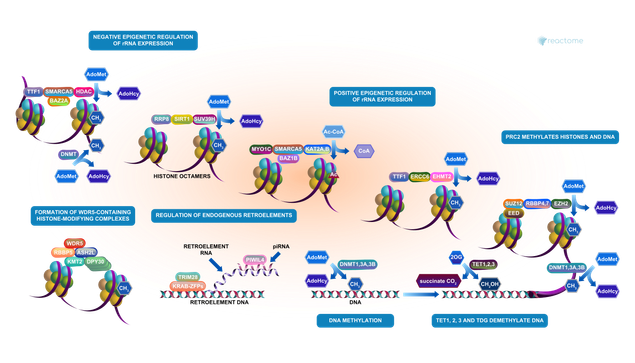
We have numerous new and updated topics and pathways in this release, including an exciting update to the "epigenetic regulation of gene expression" pathway. which you can read about at this link: https://reactome.org/about/news/251-v89-released

If you have a question, want to provide feedback, or are interested in collaborating with us to annotate a topic, please contact us at [email protected].

V89 Released - Reactome Pathway Database

Reactome is pathway database which provides intuitive bioinformatics tools for the visualisation, interpretation and analysis of pathway knowledge.

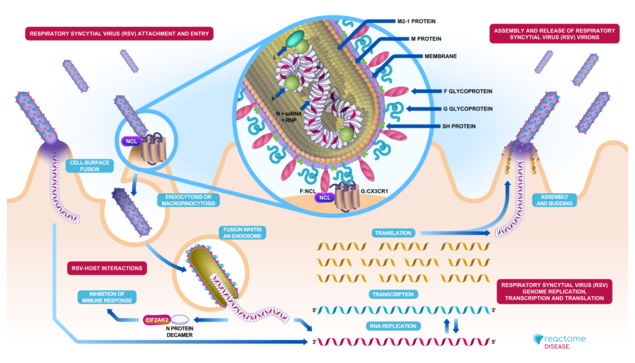
We are so excited about our new release (V87), including a brand new respiratory syncytial virus (RSV) pathway. Visit reactome.org and learn more!
We are so excited to be attending the Genome Informatics meeting at Cold Spring Harbor Laboratory! Come visit us!
#GI2023 #CSHL #Bioinformatics #opendata
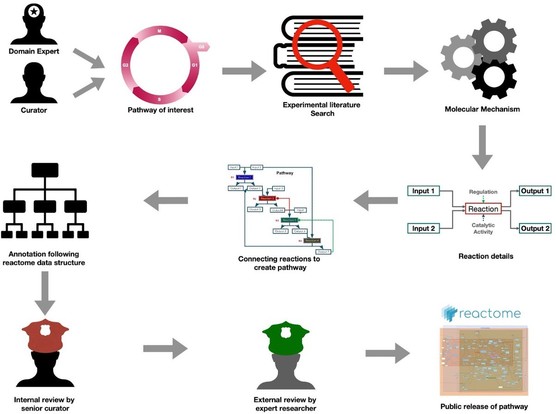
Exciting news for Reactome users: we have begun to study how ChatGPT/GPT4 could improve our curation process! See our pre-print here: https://tinyurl.com/ChatGPTReactomePreprint, or an audio summary here: https://tinyurl.com/ChatGPTReactome

Join us in celebrating #OpenAccessWeek 🎉We would like to remind #reactome users that all our tools, including the analysis, are open access! #OpenScience #OpenData

Find us at: reactome.org

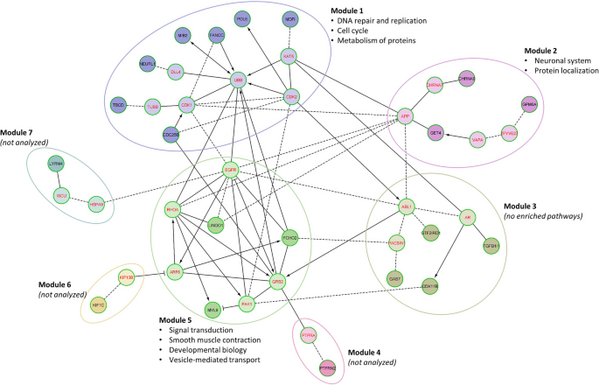
#ReactomeFI was used to create an interaction diagram of respective genes, identifying top-level pathways that were significantly enriched. (Figure 6 https://tinyurl.com/RRS1023 )
DNA methylation and 28-year cardiovascular disease risk in type 1 diabetes: the Epidemiology of Diabetes Complications (EDC) cohort study - Clinical Epigenetics

Background The potential for DNA methylation (DNAm) as an early marker for cardiovascular disease (CVD) and how such an association might differ by glycemic exposure has not been examined in type 1 diabetes, a population at increased CVD risk. We thus performed a prospective epigenome-wide association study of blood leukocyte DNAm (EPIC array) and time to CVD incidence over 28 years in a childhood-onset (< 17 years) type 1 diabetes cohort, the Pittsburgh Epidemiology of Diabetes Complications (EDC) study (n = 368 with DNA and no CVD at baseline), both overall and separately by glycemic exposure, as measured by HbA1c at baseline (split at the median: < 8.9% and ≥ 8.9%). We also assessed whether DNAm-CVD associations were independent of established cardiometabolic risk factors, including body mass index, estimated glucose disposal rate, cholesterol, triglycerides, blood pressure, pulse rate, albumin excretion rate, and estimated glomerular filtration rate. Results CVD (first instance of CVD death, myocardial infarction, coronary revascularization, ischemic ECG, angina, or stroke) developed in 172 participants (46.7%) over 28 years. Overall, in Cox regression models for time to CVD, none of the 683,597 CpGs examined reached significance at a false discovery rate (FDR) ≤ 0.05. In participants with HbA1c < 8.9% (n = 180), again none reached FDR ≤ 0.05, but three were associated at the a priori nominal significance level FDR ≤ 0.10: cg07147033 in MIB2, cg12324048 (intergenic, chromosome 3), and cg15883830 (intergenic, chromosome 1). In participants with HbA1c ≥ 8.9% (n = 188), two CpGs in loci involved in calcium channel activity were significantly associated with CVD (FDR ≤ 0.05): cg21823999 in GPM6A and cg23621817 in CHRNA9; four additional CpGs were nominally associated (FDR ≤ 0.10). In participants with HbA1c ≥ 8.9%, DNAm-CVD associations were only modestly attenuated after cardiometabolic risk factor adjustment, while attenuation was greater in those with HbA1c < 8.9%. No pathways were enriched in those with HbA1c < 8.9%, while pathways for calcium channel activity and integral component of synaptic membrane were significantly enriched in those with HbA1c ≥ 8.9%. Conclusions These results provide novel evidence that DNAm at loci involved in calcium channel activity and development may contribute to long-term CVD risk beyond known risk factors in type 1 diabetes, particularly in individuals with greater glycemic exposure, warranting further study.


BioMed Central