
- 0 Followers
- 0 Following
- 1 Posts
It’s also a very arbitrary, Eurocentric, and not grounded in actual biological or physical fact. It’s not „sounds that sound good universally across humanity“, despite how its adherents present it.
Most of the queer characters in Life is Strange are bi, which is really not that silly.
This guy is clearly speaking from a place of technical ignorance. It can’t do any of that because it’s a screen-space post-processing effect that only works on final pixel colours and motion vectors. It does not have depth, material, or lighting information. It is purely a generative AI filter and in the demo gets so much wrong with the lighting and material properties. There’s one scene from the Hogwarts game where it turns a cast-iron cauldron into flat ceramic or plastic. It makes up reflections that are effectively screen-space because it can’t „see“ detail off screen and overrides actual RT reflections with them. It’s bad for faces and bad for backgrounds.
They already have the RTX Remix stuff but it’s a manual process because at least back when that technology launched, people at NVIDIA realised it needed a lot of human intervention.
Unless you’re a Berliner, but then you have to wonder why your baked goods are talking, and why they insist on being called Pfannkuchen instead.
It was also a work in progress. This was just meant to be colour blocking before details were added.
A tech YouTuber ended up following up with Nvidia engineers directly and it’s exactly like I said. Not even the depth buffer is part of the inputs.
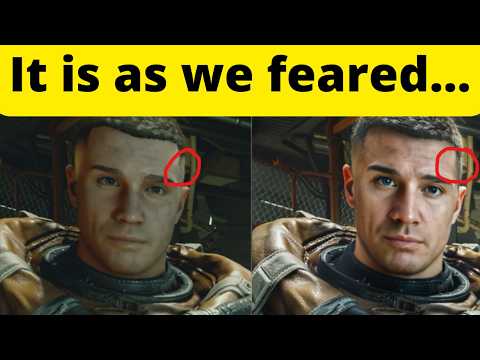
Nvidia Answers my DLSS 5 Questions
ShotCut is my personal favourite of those. Simple but powerful, though the UI is admittedly clunky.
The inputs from everything Nvidia has said, are simply the final pixel colour values and motion vector information. It’s meant to sit in the same post-processing stack as the upscale. It’s effectively a screen-space post-processing filter over the final image. Nvidia have said that the artist controls are masking (blocking certain areas from it), intensity (so a slider value), and some kind of colour re-grading (since it destroys the original grading). It’s extremely limited.