Matthew L. Jones

@nescioquid
550 Followers
1,015 Following
23 Posts
“How Data Happened” with Chris Wiggins out now from Norton; SIGINT book a-brewing as well. history of science and technology, Princeton University
Websitewww.nescioquid.org
Bookwwnorton.com/books/how-data-happened
Join us on April 12th at the American Library in Paris and online as @nescioquid and I discuss our new book "How Data Happened: A History from the Age of Reason to the Age of Algorithms" ( https://www.amazon.com/How-Data-Happened-History-Algorithms/dp/1324006730 ), "Wide-ranging... An informative dive into the history of statistics and data, providing context for the debate over information and who controls it."
(Kirkus reviews). 19:30-20:30 Paris time. Tickets and livestream info available via: https://americanlibraryinparis.org/event/wiggins-jones23/
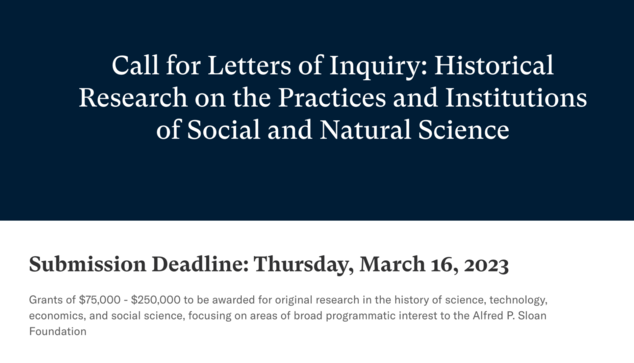
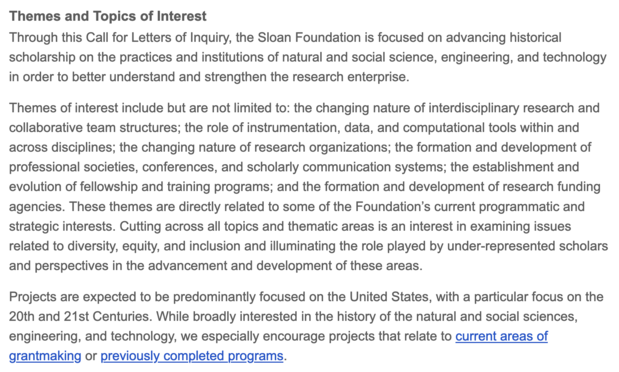
🚨*Extraordinary* funding opportunity from Sloan Foundation for history of science, technology, econ; major support for faculty projects and graduate students. Letter of intent due 16-3-2023.

https://sloan.org/grants/open-calls/history-loi

Call for Letters of Inquiry: Historical Research on the Practices and Institutions of Social and Natural Science | Alfred P. Sloan Foundation

Our mission is to make the world a better place through the advancement of scientific knowledge.

News publishers are bemoaning the drop in Twitter traffic referrals under Musk. But they have a plan: They'll put more of their stuff on Facebook and LinkedIn.

Because they're monumentally oblivious to the lesson they've (again) failed to learn. Namely: Do not trust or rely on centralized systems you don't control.

https://digiday.com/media/publishers-lament-the-removal-of-twitter-moments-as-referral-traffic-dips/

Publishers lament the removal of Twitter Moments as referral traffic dips

Under the leadership of Elon Musk, Twitter’s role as a traffic referral source to publishers’ sites is declining. Publishers mostly blame the removal of Twitter Moments.

Digiday

Finally got around to asking ChatGPT one of the classic history general exam questions.

What are the effects of the French Revolution on the American Revolution?

The French Revolution, which took place from 1789 to 1799, had a significant influence on the American Revolution, which took place from 1775 to 1783. The ideals of the French Revolution, such as liberty, equality, and democracy, were influential on the ideas and principles that guided the American Revolution. ....

A little viz to browse HathiTrust resources that are flipping to public domain today. Narrow the 58K by LCC and then scroll for the list of titles.
https://thisismattmiller.github.io/hathi-pd-2023/
#publicdomain
Over many years, I have been gradually replacing all of the paragraphs in the Ship of Theseus Wikipedia article.
@dangillmor The op-ed's complaint seems to be that Signal doesn't gratuitously log everyone's communications content in case law enforcement wants it in the future. But neither does virtually any other real-time communications system - voice telephony, SMS, tin-can-and-string, or conversations in parks. Real-time communication is, by definition, ephemeral, whether encrypted or not.
"Nobody cares about your blog!"

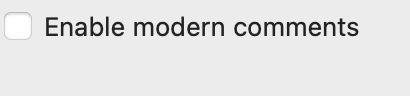
I was this many years old when I learned that one can turn off the horrific "modern comments" format in Word, where one is ever lost amid the text, and return to the Elysian Fields of the older comment system. For those rare moments you're not using vi.
Happy to share that @bigdata 's Gradient Flow has selected our new book "Data Science in Context" ( with Alfred Spector, Peter Norvig, and Jeanette Wing) as Top Book Pick for 2022: https://gradientflow.substack.com/p/2023-book-of-the-year?utm_campaign=post&utm_medium=web Thank you Ben I'm glad you enjoyed it!
Our Top Book Pick for 2022

Subscribe • Previous Issues Data Science in Context Our book of the year is a collaboration between a team of highly regarded experts in the fields of AI and data science. This book provides a comprehensive overview of what students and practitioners need to know to use data science more effectively and ethically. Filled with practical, real-world advice, it offers valuable insights and guidance on data science, drawing on the authors' extensive experience in the field. This book complements other books that focus on specific techniques and algorithms, and I believe it will be essential reading for all data scientists and data teams in the coming years.

Gradient Flow