Only when I run so hard, I feel the wind against my face,
Only when it's crowded and loud, I find a fleeting sense of place.
You're the reason my nights are restless, my mind won't let me sleep,
And every friend around me wonders what secrets I silently keep.
Rolling through the night, no control, no end in sight,
Pouring all my strength into the void of fading light.
In moments like these, you become a shadow in my chest,
A memory too vivid to forget, too haunting to let rest.
I write, "I miss you," but the words stay unsent,
I wonder where you are, and what your silence meant.
It’s 3 a.m., I call every name my phone can hold,
Their voices feel distant, the night is bitter and cold.
Is anyone still awake? I’m alone, it’s 3 a.m.,
Fighting the urge to dial the one name I can't condemn.
I step into the crowd, I crave air in my lungs,
Searching for the dazzling, the rapid, the songs.
I laugh too loud, speak too much, the center of the round,
But it's fear, not joy, that keeps my voice unbound.
I write, "I miss you," but the words stay unsent,
I wonder where you are, and what your silence meant.
So, while I was in Austria, I was talking to someone and the topic happened to be about the role of families in psychological health. Come to think of it, when they find out that I'm a psychologist, this coincidence often happens. Anyway...
That man used a very interesting sentence.
He said that my family was a very good family, but they did some things very badly, they made mistakes against me, which hurt me and left wounds that will not heal.
The meaning and beauty of this sentence is that this person does not approach events in black and white. "Something is either good or bad." This does not make sense. He says that his family is good, but he made some mistakes. This is a very normal and true statement. Because our families, friends, loved ones, teachers and other people in our lives can be good or make mistakes, can be good or hurt us.
At this time, if we think badly about them, we make an irrational belief, which we call a devaluation belief in psychology. Which is not true at all. Therefore, while loving the people around us and not resenting them, we need to understand, accept and, if possible, explain to them their mistakes. It is also a path to human perfection.
Fuad Asadov
If love is shown without expecting anything in return, it is love. Otherwise, it is just a strategic move. Unrequited love is a deep feeling of attachment and care that comes from within – as if the person who loves finds spiritual nourishment in the happiness of the other person. This type of love is a feeling where one is free from expectations and only wishes to offer kindness and support to the person they love. On the other hand, if a feeling of love is shown with the expectation of something in return, it is no longer love but rather a 'strategic move' aimed at fulfilling emotional needs. In such cases, the person is not thinking about the other, but rather their own desires, acting based on their expectations. Love, in its true form, finds its real value in being unrequited; it becomes the most noble feeling when one moves away from their ego and enriches their soul.
Raindrops on a spider web in my garden this week.
#macro #photographyOne day, a professor comes to class with a closed box. Inside the box, there is a small mouse. The professor tells the students that he will leave the mouse in the box for a whole day, and the next day, they will open the box together to see what the mouse has done. The students eagerly wait to find out what will happen.
The next day, when the students return to class, many of them expect the mouse to have chewed its way out of the box and escaped. However, when they open the box, they are met with a surprising sight: the mouse is dead inside the box. Shocked and confused, the students start discussing what could have caused this.
Some students suggest that the mouse died of hunger. Others think it suffocated from lack of air. A few even believe that the mouse died out of fear. Each student has their own theory, but no one is entirely sure.
The professor listens to their explanations and finally reveals the truth: "The mouse didn't die from hunger, suffocation, or fear. It died because it lacked focus. Instead of concentrating on one spot to escape, it panicked and frantically scratched at every corner of the box, spreading its energy thin. If it had focused on one area and been patient, it might have found a way out. But by scattering its energy everywhere, it lost hope and exhausted itself, and eventually, this hopelessness consumed it."
This lesson is not just about the mouse but also a valuable life lesson for people. To reach our goals, we need to stay focused, be patient, and not lose hope. If we spread ourselves too thin or give up too easily, failure becomes inevitable.
Please note: Due to Hurricane Helene's impact in our area, you may experience a delay in reaching our customer service and technical support teams. We appreciate your patience and understanding.
A professor in a classroom is trying to challenge the belief in God's existence by questioning his students.
Professor: “Does God exist, children?”
The class remains silent, but the professor asks again, “Who believes in God?”
A few students raise their hands.
Professor: “If God exists, who created evil? Is there evil in the world? For example, greed, hatred, and wars. These are evil things, aren’t they?”
The students nod.
Professor: “If God is good, then how could there be so much evil in the world? Didn’t God create everything? So, if God created everything, then God must be evil!”
The students fall silent, unsure of how to respond. The professor is very happy to prove his idea to the students. But a young student speaks up:
Student: "Professor, may I ask you a question? Does cold exist?"
Professor: "Of course, it exists. Have you never felt cold before?"
Student: "Actually, sir, cold doesn’t exist according to physics. What we call cold is only the absence of heat. Every object is measurable by its heat. Absolute zero (-273.15°C) is the total absence of heat. At that point, matter becomes inert and incapable of reaction. We cannot make something colder than absolute zero because cold, in itself, doesn’t exist—it’s just the absence of heat." The professor is stunned and surprised at what he has come across.
the student continues: "What about darkness? Does darkness exist?"
Professor: "Yes, darkness exists."
Student: "No, sir, darkness doesn’t exist either. Darkness is merely the absence of light. We can measure light, but we cannot measure darkness. Darkness is simply a term used to describe what happens when there is no light."
Student: "In the same way, sir, evil does not exist. Evil is simply when the God's absent, just like darkness is the absence of light and cold is the absence of heat. Evil is a concept that arises when humans are not feeling God’s love and presence. It’s not something that God created, but what happens when there’s a lack of goodness in people."
This student was Einstein, the world's best physicist, who went against the traditional learning ways and rules of his time and was always in pursuit of newer and better things.
Disability isn't an exclusive club. It doesn't discriminate based on age, race, or socioeconomic status.
An accident, an illness, or simply the passage of time can change anyone's abilities.
So, when we push for accessibility and inclusion, we're not just thinking about ourselves—we're thinking about you, your loved ones, and generations to come.
#Disability #Accessibility #SDGs #HumanRights #Poverty #Technology
10 records from what I read and researched this week.
1. Pay attention to your thoughts, because they become your words. Pay attention to your words, because they become your actions. Pay attention to your actions, because they become your habits. Pay attention to your habits, because they form your character.
2. Never point out someone’s mistake directly to their face in front of others; explain the mistake by using someone else as an example when you both are alone.
3. It is not important to be superior to others. What matters is being superior to your past self.
4. Be open to innovations, aim to continuously improve yourself.
5. Do not trust people until you see how they act when they are angry.
6. Remember, four things never come back: the spoken word, the shot arrow, the past time, and the missed opportunity.
7. Never slam the door on your way out; you may want to return.
8. Be mindful of your book choices, read more informational books: History, Science, Self-development, General culture, and Psychology. Prefer accurate and trustworthy authors.
9. Control your anger. Do not speak when you are angry; if you do, you may regret it. Swallow your anger, as anger is a temporary madness; sometimes, silence is the best option.
10. Appreciate these five things before these other five come: Youth before old age, Free time before being busy, Health before illness, Wealth before poverty, Life before death.
Make friends with whom you can chat, argue, even fight, talk nonsense, when necessary hug, and be yourself without pretending when you are with them. This way you stay healthy.

 Rachel Burch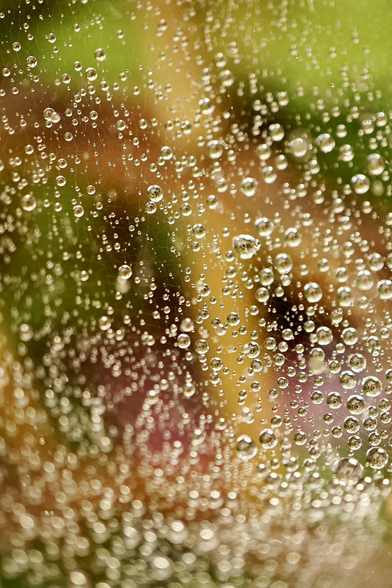
 Freedom Scientific / Vispero
 Puneet Singh Singhal