Also, I cant remember if my toots go back into bsky or not…
Physicist with research interest in musical acoustics, two-year college professor - author of https://asa.scitation.org/doi/10.1121/10.0011618?via=site
Blog:
https://blog.drewsday.com
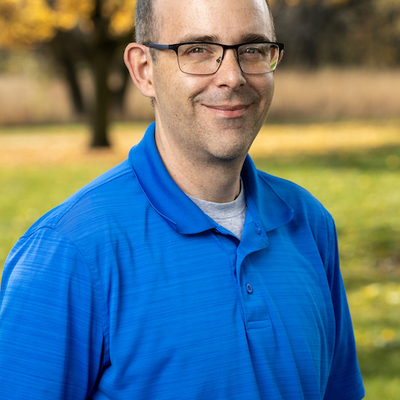
Physicist with research interest in musical acoustics, two-year college professor - author of https://asa.scitation.org/doi/10.1121/10.0011618?via=site
Blog:
https://blog.drewsday.com
More testing of brid.gy
https://web.brid.gy/r/https://blog.drewsday.com/2024/12/more-testing-of-bridgy.html
I just caught this post on arXiv: “A Lip Vibration Model Using Mechanical Properties of Flesh”. #MusicalAcoustics

The mechanical properties of the human lip between relaxed and fully contracted are not enough to explain the full range of professional brass players. Brass players manipulate their mouth cavity and vocal tract which act as Helmholtz resonators driving the lips. Brass players increase their upper ranges by reducing the amount of lip mass that vibrates using upstream or downstream techniques. In addition, it was found that the cup of the mouthpiece is a separate resonating cavity: not just an extension of the instrument funneling air down the length of tube. For the lowest three octaves of the range, the trombone does not act as a tube with a standing wave resonance, but as a transmission line responding to a string of pulses produced by the lips.
 Andrew Morrison
 Drew's Day