
Martin Fenner

@mfenner
1 Followers
321 Following
312 Posts
Martin Fenner is the Founder of Front Matter, an organization that provides custom software development and hosting for the scholarly community. Martin has a medical degree from the Free University of Berlin and is a Board-certified medical oncologist.
ORCIDhttps://orcid.org/0000-0003-1419-2405
GitHubhttps://github.com/mfenner
Bloghttps://blog.front-matter.io

Today for #projects is my biggest one: Datasette! https://datasette.io

Datasette is "an open source multi-tool for exploring and publishing data" - but recently I've started thinking of it as "WordPress for data"

It's a Python web application that provides an interface and API for any structured data that can be represented in a SQLite databases - and since SQLite also includes support for both binary and JSON data that's effectively anything at all

The project just had its 5 year birthday

Datasette

Datasette is a tool for exploring and publishing data. It helps people take data of any shape, analyze and explore it, and publish it as an interactive website and accompanying API.

Here at DOAB we're pleased to announce the launch of PRISM: a new service provided as part of the OPERAS service portfolio.

PRISM aims to further build trust in peer review and OA academic book publishing

#DOABPRISM #OAbooks

https://doabooks.org/en/doab/article/doab-officially-launches-its-new-service-to-further-build-trust-in-peer-review-and-open-access-academic-book-publishing

Directory of Open Access Books

@mike @brembs We love working with @scedmunds and his team, as well as Code Ocean and Stencila for the Executable Research Article. @GigaByte deserved to win the ALPSP innovation award 2 months back. I am not biassed of course. 😂

https://bit.ly/3EdzQEK#_ALPSP_award

River Valley Technologies on LinkedIn: River Valley Director, Kaveh Bazargan takes to the stage with Scott

River Valley Director, Kaveh Bazargan takes to the stage with Scott Edmunds and Laurie Goodman of Gigabyte Journal (developed in partnership with River...

RT @PeerJCompSci
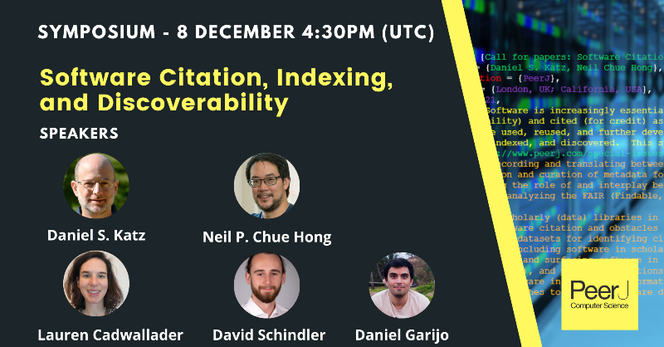
Register now for a @PeerJCompSci symposium on “Software Citation, Indexing, and Discoverability”, featuring @danielskatz, @npch, Lauren Cadwallader (@PLOS), David Schindler (Universität Rostock) and @dgarijov. December 8th, 4.30pm UTC.
https://zoom.us/webinar/register/WN_FSMixpKOQkK3bJLL5367cQ
Join a PeerJ Computer Science Symposium: Software Citation, Indexing, and Discoverability.

Daniel S Katz and Neil Chue Hong, Editors of the PeerJ Computer Science Special Issue “Software Citation, Indexing, and Discoverability” discuss research and issues raised in the Special Issue, along with authors Daniel Garijo, David Schindler, and Lauren Cadwallader. Lauren Cadwallader presents ‘A survey of researchers’ code sharing and code reuse practices, and assessment of interactive notebook prototypes’. Daniel Garijo presents 'Nine best practices for research software registries and repositories'. David Schindler presents ‘The role of software in science: a knowledge graph-based analysis of software mentions in PubMed Central'. Daniel S. Katz and Neil Chue Hong discuss research on recognizing the value of software, and key principles in software citation.

Zoom
I’ve noticed increasing developer interest in #ActivityPub and the #fediverse in the post-Musk social media universe, so I wrote it up for The New Stack. https://thenewstack.io/devs-are-excited-by-activitypub-open-protocol-for-mastodon/
Devs Are Excited by ActivityPub, Open Protocol for Mastodon

Developer interest in ActivityPub, the open protocol behind Mastodon, has been sparked as Twitter turmoil continues. Is this a tipping point?

The New Stack

I'm really not worried about Mastodon scaling issues at all.

When I left Twitter in 2008, we had roughly twice as many users as the current combined Mastodon network, all running on one MySQL server that had the same specs as a high-end 2013 MacBook Pro, plus roughly 10 web servers and 5 queue servers.

To be fair, growth wasn't as rapid, and we had local-infra advantages over federated systems, but these problems are solvable and I have no doubt will be fixed soon.

*Hugops to all admins!*

Update on open access publishing in Quantitative Science Studies https://www.issi-society.org/blog/posts/2022/november/open-access-publishing-in-quantitative-science-studies-an-update/. The APC of our journal will increase as of January 1, 2023. We remain committed to keep our APC as low as possible, and our APC will remain substantially below the APCs of many other journals in our field. Our policy for waiving APCs will also be revised. @ludowaltman @themitpress @tibhannover
Open access publishing in Quantitative Science Studies – An update | International Society for Scientometrics and Informetrics

International Society for Scientometrics and Informetrics
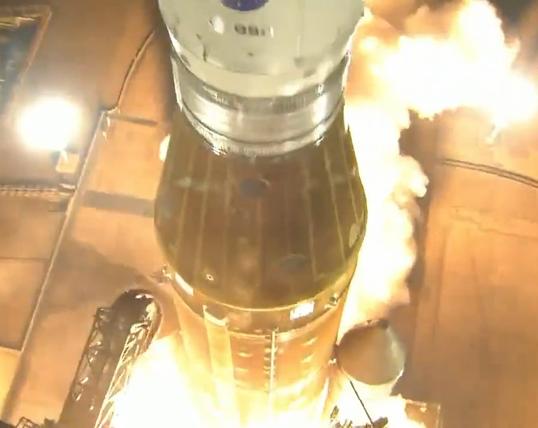
Here's our story on the new chapter in Moon exploration that opens today, no matter how the rest of the #Artemis1 flight transpires: https://www.nature.com/articles/d41586-022-02310-w
Lift off! Artemis Moon rocket launch kicks off new era of human exploration

NASA's Artemis I has entered Earth orbit. It will test a rocket and capsule that could return astronauts to the Moon after 50 years.

Younger kid woke up right before the #Artemis launch so she got to watch it. Now comes the fun part: getting a 4 year old back to sleep after hyping up a rocket going to the moon.
Wow, what a beautiful launch! Congratulations to everyone involved. #nasa #artemis #tothemoon