I think about this a lot, especially when building scripts that push to prod.
TIL how to add a y/n confirmation to a Bash script 😀

I think about this a lot, especially when building scripts that push to prod.
TIL how to add a y/n confirmation to a Bash script 😀
Fellow fedizens! As decreed by https://xkcd.com/843/ some fifteen years ago, it is once again time to spend the morning reading through the Wikipedia article https://en.wikipedia.org/wiki/List_of_common_misconceptions.
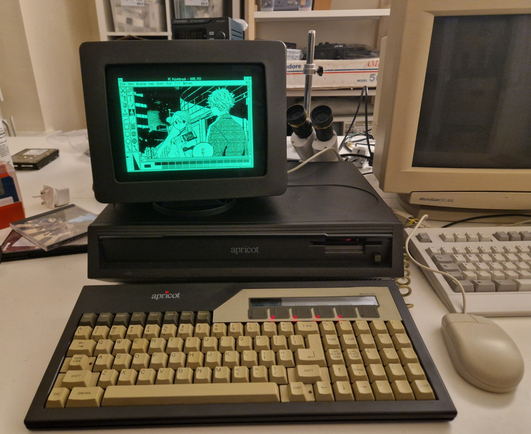
I bought my first Apricot PC about three years ago, when I realised I wanted an 8086-based computer. At the time, I knew nothing about it and simply bought it because it looked rad and the price was low. I had no idea that it was not IBM PC-compatible, and that there were very few programs available for it.
I have been on a quest to get a modern-ish word processor and spreadsheet program for it ever since. Which eventually made me "port" Windows 2 on it. In this post, I share the story of the port. Many photos inside!
A Brief, Incomplete, and Mostly Wrong History of Programming Languages
James Iry; Thursday, May 7, 2009
1801 - Joseph Marie Jacquard uses punch cards to instruct a loom to weave "hello, world" into a tapestry. Redditers of the time are not impressed due to the lack of tail call recursion, concurrency, or proper capitalization.
1842 - Ada Lovelace writes the first program. She is hampered in her efforts by the minor inconvenience that she doesn't have any actual computers to run her code. Enterprise architects will later relearn her techniques in order to program in UML.
1936 - Alan Turing invents every programming language that will ever be but is shanghaied by British Intelligence to be 007 before he can patent them.
1936 - Alonzo Church also invents every language that will ever be but does it better. His lambda calculus is ignored because it is insufficiently C-like. This criticism occurs in spite of the fact that C has not yet been invented.
1940s - Various "computers" are "programmed" using direct wiring and switches. Engineers do this in order to avoid the tabs vs spaces debate.
1957 - John Backus and IBM create FORTRAN. There's nothing funny about IBM or FORTRAN. It is a syntax error to write FORTRAN while not wearing a blue tie.
1/6


 Fabien
 cheetah_spottycat
 Lucas Werkmeister
 Nina Kalinina
 DougMerritt (log😅 = 💧log😄)
 BasicAppleGuy