NGC 1333 - The Embryo Nebula
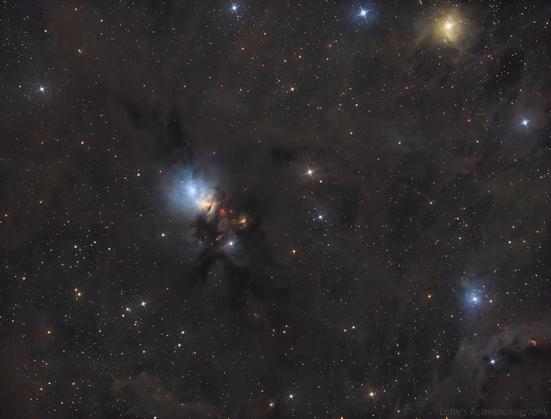
Finally going through my processing backlog! I tried to get some Ha on this from home, but I had too many obstructions to shoot at this declination. Decided to keep this as a wider crop since most the images of this I see are cropped in on just the nebula itself. Captured captured on November 23rd, 2025 from a Bortle 3 zone (deerlick astronomy village).
Places where I host my other images:
TPO 6" F/4 Imaging Newtonian
Orion Sirius EQ-G
ZWO ASI1600MM-Pro
Skywatcher Quattro Coma Corrector
ZWO EFW 8x1.25"/31mm
Astronomik LRGB+CLS Filters- 31mm
Astrodon 31mm Ha 5nm, Oiii 3nm, Sii 5nm
Agena 50mm Deluxe Straight-Through Guide Scope
ZWO ASI-290mc for guiding
Moonlite Autofocuser
Acquisition: 10 hours 12 minutes (Camera at unity gain, -15°C)
L - 97x180"
R - 37x180"
G - 36x180"
B - 34x180"
Darks- 30
Flats- 30 per filter
Capture Software:
PixInsight Preprocessing:
BatchPreProcessing
StarAlignment
Blink
ImageIntegration per channel
The luminance data was split into 3 stacks and combined to use the single channel DeepSNR method
DrizzleIntegration (2x, Var β=1.5)
Dynamic Crop
Luminance linear:
MultiscaleGradientCorrection using MARS Project data
BlurXterminator
StarXterminator to completely remove stars (extracted stars processed separately)
STF applied via HistogramTransformation to stretch nonlinear
RGB Linear:
Channelcombination to make color image from RGB stacks
MultiscaleGradientCorrection
SpectrophotometricColorCalibration
BlurX (correct only mode)
StarX to remove stars (to be used for star addition later)
StarX to extract a stars only image
ArcsinhStretch + HistogramTransformation to stretch nonlinear
Slight curves saturation boost and histogram adjustments
Stars only image:
HSV repair
ArcsinhStretch + HistogramTransformation to stretch nonlinear (less aggressive stretch)
Slight curve adjustments
Nonlinear Processing
LRGBCombination to combine stretched RGB and L images
DeepSNR Noise reduction
Shitloads of curve transformations to adjust luminance, contrast, saturation, etc
More curves
NoiseXTerminator for some small scale chrominance noise reduction
LocalHistogramTransformation
Even more curves
ColorSaturation adjustments (get rid of some background greens)
Pixelmath to add in the stretched stars only image from earlier
This basically re-linearizes the two images, adds them together, and then stretches them back to before. More info on it here)
mtf(.005,
mtf(.995,Stars)+
mtf(.995,Starless))
Resample to 60%
Annotation
WR-134 is the purple looking star in the middle. Don’t think the purple color itself is ‘natural’ but I thought it looked neat and decided to keep it like that. The nebulosity in this image is false color (although the HOO palette is kinda close to true color), and the stars themselves are RGB true color. Even though I was able to get some of the entire Oiii shell around WR134, I decided not to push it too much in processing. At some point I’ll shoot it again from darker skies. Captured over a bunch of nights in November 2025 from a Bortle 9 zone.
Places where I host my other images:
TPO 6" F/4 Imaging Newtonian
Orion Sirius EQ-G
ZWO ASI1600MM-Pro
Skywatcher Quattro Coma Corrector
ZWO EFW 8x1.25"/31mm
Astronomik LRGB+CLS Filters- 31mm
Astrodon 31mm Ha 5nm, Oiii 3nm, Sii 5nm
Agena 50mm Deluxe Straight-Through Guide Scope
ZWO ASI-290mc for guiding
Moonlite Autofocuser
Acquisition: 28 hours 20 minutes (Camera at unity gain, -15°C)
Ha - 51x600"
Oiii - 113x600"
R - 32x60"
G - 30x60"
B - 30x60"
Darks- 30
Flats- 30 per filter
Capture Software:
PixInsight Preprocessing:
BatchPreProcessing
StarAlignment
Blink
ImageIntegration per channel
DrizzleIntegration (2x, Var β=1.5)
Dynamic Crop
Narrowband linear:
MultiscaleGradientCorrection using MARS Project data
BlurXterminator
StarXterminator to completely remove stars (extracted stars processed separately)
STF applied via HistogramTransformation to stretch nonlinear
RGB Linear:
Channelcombination to make color image from RGB stacks
MultiscaleGradientCorrection
SpectrophotometricColorCalibration
BlurX (correct only mode)
HSV Repair
StarX to extract a stars only image
ArcsinhStretch + HistogramTransformation to stretch nonlinear
Slight curves saturation boost
Nonlinear Processing
PixelMath to combine stretched Ha and Oiii images into a color image (HOO --> RGB)
Shitloads of curve transformations to adjust luminance, contrast, saturation, etc
DeepSNR Noise reduction
ColorSaturation adjustments (with Oiii mask)
More curves
LocalHistogramTransformation
Even more curves
NoiseXTerminator for some small scale chrominance noise reduction
Guess what more curves its the best tool in pixinsight 10/10
Pixelmath to add in the stretched stars only image from earlier
This basically re-linearizes the two images, adds them together, and then stretches them back to before. More info on it here)
mtf(.005,
mtf(.995,Stars)+
mtf(.995,Starless))
Resample to 70%
Annotation
Not to be confused with the butterfly planetary nebula, this is the one in Cygnus next to Sadr. I shot this thing years ago in SHO palette, but decided to shoot it again in Ha/Sii since there’s very little Oiii in this region. Captured over a bunch of nights in November 2025 from a Bortle 9 zone.
Places where I host my other images:
TPO 6" F/4 Imaging Newtonian
Orion Sirius EQ-G
ZWO ASI1600MM-Pro
Skywatcher Quattro Coma Corrector
ZWO EFW 8x1.25"/31mm
Astronomik LRGB+CLS Filters- 31mm
Astrodon 31mm Ha 5nm, Oiii 3nm, Sii 5nm
Agena 50mm Deluxe Straight-Through Guide Scope
ZWO ASI-290mc for guiding
Moonlite Autofocuser
Acquisition: 22 hours 10 minutes (Camera at -15°C)
Ha - 59x600"
Sii - 74x600"
Darks- 30
Flats- 30 per filter
Capture Software:
PixInsight Preprocessing:
BatchPreProcessing
StarAlignment
Blink
ImageIntegration per channel
DrizzleIntegration (2x, Var β=1.5)
Dynamic Crop
Narrowband linear:
MultiscaleGradientCorrection using MARS project data (had to do good ol fashioned DBE for the Sii channel)
BlurXterminator
StarXterminator to completely remove stars (extracted stars processed separately)
STF applied via HistogramTransformation to stretch nonlinear
Stars Only:
Channel combination to combine stars images into color image
SpectrophotometricColorCalibration (Narrowband working mode)
HSV Repair
ArcsinhStretch + Histogram transformation to stretch nonlinear
Slight saturation curve boost
Stars only image saved for later addition
Nonlinear processing:
Pixelmath to combine stretched narrowband images into color image (HSS palette)
SCNR > Invert > SCNR > Invert to remove some greens and magentas
DeepSNR
Shitloads of curve transformations to adjust luminance, contrast, saturation, etc
LocalHistogramEqualization
more curves
NoiseX for some small scale chrominance noise reduction
Pixelmath to add in the stretched stars only image from earlier
This basically re-linearizes the two images, adds them together, and then stretches them back to before. More info on it here)
mtf(.005,
mtf(.995,Stars)+
mtf(.995,Starless))
Slight SCNR
Resample to 65%
Annotation
It actually looks like it’s namesake!
This is a combo of SHO hubble palette + true color RGB for the stars. Captured in October 2025 from a Bortle 9 zone.
Places where I host my other images:
TPO 6" F/4 Imaging Newtonian
Orion Sirius EQ-G
ZWO ASI1600MM-Pro
Skywatcher Quattro Coma Corrector
ZWO EFW 8x1.25"/31mm
Astronomik LRGB+CLS Filters- 31mm
Astrodon 31mm Ha 5nm, Oiii 3nm, Sii 5nm
Agena 50mm Deluxe Straight-Through Guide Scope
ZWO ASI-290mc for guiding
Moonlite Autofocuser
Acquisition: 49 hours 56 minutes (Camera at -15°C)
Ha - 63x600"
Oiii - 122x600"
Sii - 102x600"
R - 63x60"
G - 63x60"
B - 63x60"
Darks- 30
Flats- 30 per filter
Capture Software:
PixInsight Preprocessing:
BatchPreProcessing
StarAlignment
Blink
ImageIntegration per channel
DrizzleIntegration (2x, Var β=1.5)
Dynamic Crop
Narrowband linear:
MultiscaleGradientCorrection using MARS project data (had to do good ol fashioned DBE for the Sii channel)
BlurXterminator
StarXterminator to completely remove stars
STF applied via HistogramTransformation to stretch nonlinear
RGB Linear:
Channelcombination to make color image from RGB stacks
MultiscaleGradientCorrection (this is some seriously impressive shit!)
SpectrophotometricColorCalibration
BlurX (correct only mode)
HSV Repair
StarX to extract a stars only image
ArcsinhStretch + HistogramTransformation to stretch nonlinear
Slight curves saturation boost
Nonlinear processing:
Pixelmath to combine stretched narrowband images into color image (SHO/Hubble palette)
SCNR > Invert > SCNR > Invert to remove some greens and magentas
DeepSNR
Shitloads of curve transformations to adjust luminance, contrast, saturation, etc
HistogramTransformation to further stretch the red channel a little
more curves
NoiseX for some small scale chrominance noise reduction
Pixelmath to add in the stretched RGB stars only image from earlier
This basically re-linearizes the two images, adds them together, and then stretches them back to before. More info on it here)
mtf(.005,
mtf(.995,Stars)+
mtf(.995,Starless))
Slight SCNR
Resample to 65%
Annotation


