Leapter

@leapter
1 Followers
7 Following
66 Posts

AI-generated code is great. But only if we can trust it. At Leapter, we want to reinvent how software is delivered, from prompt to production.

Read more about how we're approaching the problem on our blog: www.leapter.com/blog/

If you’re curious, don’t overthink it. Build one blueprint, and you’ll understand the model.

https://docs.leapter.com/get-started/quickstart

Quickstart - Leapter Documentation

Leapter Documentation

AI agents are great at natural language. They are less reliable when the same input must produce the same output every time.

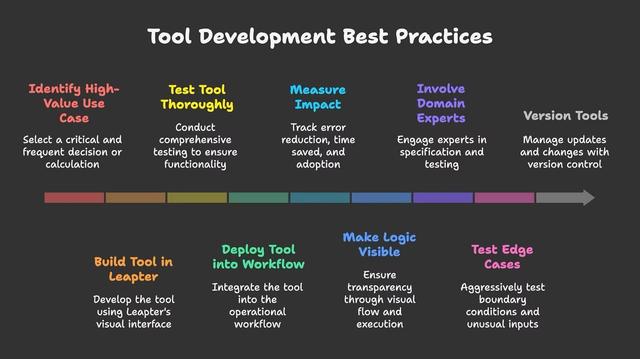
We documented a simple pattern for deterministic tools without writing code: spec → visual review → boundary testing → export to n8n, MCP, API, or code.
https://www.leapter.com/post/deterministic-tools-for-ai-agents-without-writing-code

If you prefer to learn by clicking around: Leapter docs home is the best starting point.

https://docs.leapter.com/

What is Leapter - Leapter Documentation

Leapter Documentation

The “face vs brain” split for agents: natural language on one side, deterministic business rules on the other.

https://www.leapter.com/post/using-leapter-with-langflow-giving-ai-agents-a-logic-layer-they-can-trust

Using Leapter with Langflow: Giving AI Agents a Logic Layer They Can Trust

In this demo we combine Leapter with Langflow to automate a pizza ordering service!

Leapter

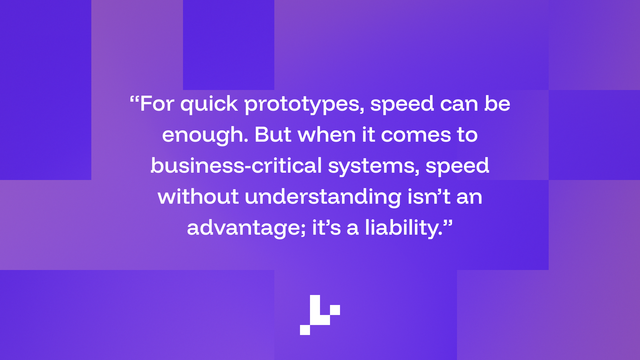
“For quick prototypes, speed can be enough. But when it comes to business-critical systems, speed without understanding isn’t an advantage; it’s a liability.”

That’s the trust gap behind “vibe coding.” It runs, but nobody can confidently explain it, change it, or debug it when the real world gets messy.

Leapter’s take: assistive AI should output verifiable system logic (blueprints) that humans can review together before deployment.

https://www.leapter.com/post/ai-helped-me-build-it

When “mostly right” is unacceptable (pricing, eligibility, compliance), agents need deterministic tools, not vibes.
https://www.leapter.com/post/why-agents-fail-at-logic-and-how-to-fix-it
Why Agents Fail at Logic (and How to Fix It)

AI agents are great at reasoning, but terrible at executing logic. Learn why they drift, where they fail, and how Leapter’s visual blueprints give them reliable, human-verified logic to run safely.

Leapter

If your agent workflow includes pricing, eligibility, routing, or policy decisions, you need a trust boundary.

Leapter is that layer: deterministic execution + inspectable logic + reproducible outcomes.

https://www.leapter.com/post/introducing-leapter-the-logic-layer-every-ai-agent-needs

Introducing Leapter: The Logic Layer Every AI Agent Needs

AI agents are powerful but unreliable without a logic layer. Learn how Leapter’s human-verified blueprints give agents the structure and trust they need to automate safely.

Leapter

Most AI agent demos look great until you ask: can we reproduce this outcome?

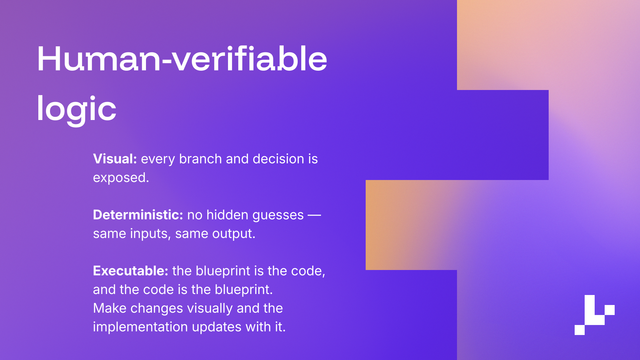
Human-verifiable logic = visual + deterministic + executable. You can inspect each branch, run test inputs, and only then publish it as a tool.

Example in the post: “>€500 + new customer => 10% else 5%.” The ambiguous parts become explicit nodes you can verify.

https://www.leapter.com/post/what-does-human-verifiable-logic-actually-look-like

“We shipped the ticket” isn’t the same as “we shipped the intent.”

Leapter exists to close that gap by making logic visible and verifiable earlier. https://www.leapter.com/post/what-is-leapter

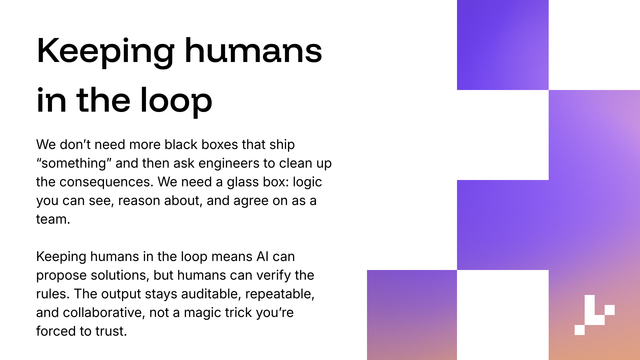
Keeping humans in the loop isn’t a vibe. It’s the difference between “AI shipped something” and “we can verify what actually runs.”

We don’t need more black boxes that dump the cost into review + incident response. We need a glass box: logic you can inspect, test, and repeat.

Read: https://www.leapter.com/post/mind-the-gap-why-we-don-t-trust-ai-generated-code-yet