 eLife
eLifeHere are 22 persuasive communication devices that you should watch out for when writing a research article. https://elifesciences.org/articles/88654?utm_source=mastodon&utm_medium=social&utm_campaign=organic_features

Great piece of anatomy recently published in Sci Adv:
https://www.science.org/doi/10.1126/sciadv.adf9445
...from the abstract: "We combine sulcal pattern analysis with resting-state functional magnetic resonance imaging and cytoarchitectonic analysis to show that old-world monkey brains have the same principles of organization as hominid brains, with the notable exception of sulci in the frontopolar cortex."
#neuroscience #anatomy #evolution #frontalcortex
*The image depicts the phylogenetic emergence of the paraintermediate frontal sulcus and the vertical ramus of the intermediate frontal sulcus*
Beautiful tribute to a pioneer.
Retrospective: Patricia S. Goldman-Rakic, pioneer in neuroscience and co-founder of the journal, Cerebral Cortex
https://doi.org/10.1093/cercor/bhad159
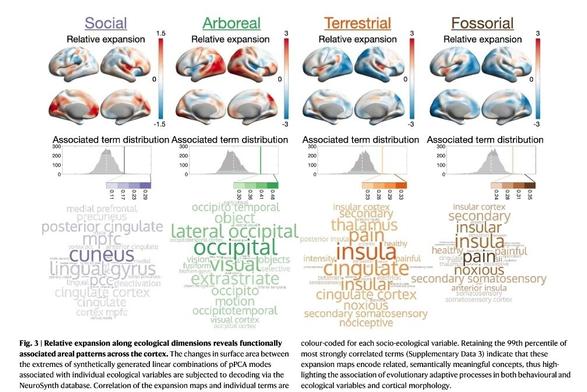
A short tutorial on getting started with segmentation using ITKSNAP: https://youtu.be/YV2ssizz9gQ
Particularly, I am segmenting the LGN (lateral geniculate nucleus) of a living human brain using our publicly available 0.35 mm isotropic 7 T dataset.


At the group level, antidepressant efficacy of rTMS targets is inversely related to their normative connectivity with subgenual anterior cingulate cortex (sgACC). Individualized connectivity may yield better targets, particularly in patients with neuropsychiatric disorders who may have aberrant connectivity. However, sgACC connectivity shows poor test–retest reliability at the individual level. Individualized resting-state network mapping (RSNM) can reliably map inter-individual variability in brain network organization. Thus, we sought to identify individualized RSNM-based rTMS targets that reliably target the sgACC connectivity profile. We used RSNM to identify network-based rTMS targets in 10 healthy controls and 13 individuals with traumatic brain injury-associated depression (TBI-D). These “RSNM targets” were compared with consensus structural targets and targets based on individualized anti-correlation with a group-mean-derived sgACC region (“sgACC-derived targets”). The TBI-D cohort was also randomized to receive active (n = 9) or sham (n = 4) rTMS to RSNM targets with 20 daily sessions of sequential high-frequency left-sided stimulation and low-frequency right-sided stimulation. We found that the group-mean sgACC connectivity profile was reliably estimated by individualized correlation with default mode network (DMN) and anti-correlation with dorsal attention network (DAN). Individualized RSNM targets were thus identified based on DAN anti-correlation and DMN correlation. These RSNM targets showed greater test–retest reliability than sgACC-derived targets. Counterintuitively, anti-correlation with the group-mean sgACC connectivity profile was also stronger and more reliable for RSNM-derived targets than for sgACC-derived targets. Improvement in depression after RSNM-targeted rTMS was predicted by target anti-correlation with the portions of sgACC. Active treatment also led to increased connectivity within and between the stimulation sites, the sgACC, and the DMN. Overall, these results suggest that RSNM may enable reliable individualized rTMS targeting, although further research is needed to determine whether this personalized approach can improve clinical outcomes.
bioRxiv
Connectomes for 40,000 UK Biobank participants: A multi-modal, multi-scale brain network resource
https://www.biorxiv.org/content/10.1101/2023.03.10.532036v1
RT @NeuroPolarbear
Fantastic talk by @MillerLabMIT on Learning Salon. Highly recommended. (And the talk is not really 2+ hours, even though it looks like it will be)
https://www.youtube.com/watch?v=fycWsa9xph8
A few thoughts below:


 Alessandro D'Ausilio
 Earl K. Miller
 CLaE
CLaE
 Andreas Horn
 Nils Kolling
 Faruk Gulban