katch wreck
@katchwreck
- 408 Followers
- 1,060 Following
- 10.2K Posts
partially-recovered workaholic ;) being myself and helping to build the world i want to see. contributing to human knowledge, and scientific knowledge in particular. problem-solving in biomedicine (e.g. noninvasive biomarker identification) is my career focus. i am in san francisco (cental richmond district) and i enjoy going to ocean beach and the presidio. i'm learning jazz bass and i also DJ once in a while, see https://mixcloud.com/katchwreck
 Etienne Jacob
 Curtis Smith
Last night's #Jazz Roulette #Radio Show on #KUZU 92.9 FM in #Denton TX. Saturdays at 5:00 PM CDT (22:00 UTC) streaming at kuzu.fm
Stan Getz - Nice Work If You Can Get It
Ella Fitzgerald - It's a Blue World
Louie Bellson - I Remember Bird
The Oscar Peterson Trio - All the Things You Are
Charlie Byrd/Barney Kessel/Herb Ellis - Charlie's Blues
Ralph Towner/Eddie Gomez/Jack DeJohnette - Waterwheel
Kenny Wheeler/Keith Jarrett/Dave Holland/Jack DeJohnette - Gnu Suite
John McLaughlin - Peace One
 WiseGreyOwl 🌍 🦉
 Undiscovered Scotland
The Dunmore Pineapple, one of Scotland's most remarkable buildings. Perhaps the largest stone pineapple anywhere, its top stands 45ft above the level of the walled garden to its south. It was built as a birthday present in 1761. More pics and info: https://www.undiscoveredscotland.co.uk/airth/thepineapple/index.html

 The Tonearm
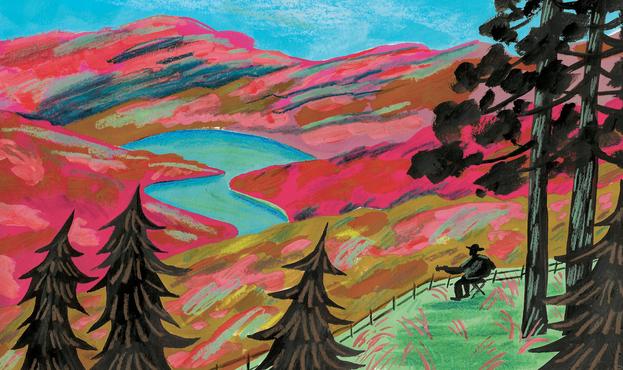
"Music from the area spans many genres and territories. It’s more of a relaxed mood, a naturalistic calm that only makes itself felt outside of the city, in the changing seasons and the steady, inexorable flow of the great river that divides the eastern and western parts of the state."
The Hudson Valley Scene:
https://daily.bandcamp.com/scene-report/the-hudson-valley-scene-report?ref=thetonearm.com
 Sarah Finch
Let's hold the Government to its promise! No new oil and gas in our seas. Offshore drilling causes toxic spills, deafens whales, and won't even lower our energy bills. It's time to stop letting Big Oil profit at the expense of our ocean. Add your name: you.38degrees.org.uk/petitions/st...
Stop Big Oil billionaires poll...
Stop Big Oil billionaires poll...

 Kai Kupferschmidt
I’ve been trying to understand what we know and don’t know so far about the concerning #Ebola outbreak in DRC.
Still lots of uncertainty at the moment but here‘s what I have been able to find out so far.
Story is here (thread coming later):
 Lady Laura
 Jacob T. Levy
If we're doing fertility decline discourse again, then I'm again going to repost my esteemed partner's work on the subject informed by her (and her coauthors') actual scholarly expertise.
1) DeJong Lecture, "How pro-natalist policies harm rural Americans"
psu.mediaspace.kaltura.com/media/t/1_np...
Penn State University Presents...
Penn State University Presents...
not making any accusations, but "hantavirus" bears a striking resemblance to "santavirus" :-P