405 Followers
158 Following
164 Posts
Python, Housing, Neighbourhoods, Industrial location, and some NLP (beta-level). Sometime db nerd. Newish book! “Why Face-to-Face still matters: The Persistent Power of Cities in the Post-Pandemic Era” (http://bit.ly/3cW5gSr); Associate Prof, CASA (UCL) ~ he/him
GitHubhttps://github.com/jreades
Orcidhttps://orcid.org/0000-0002-1443-9263

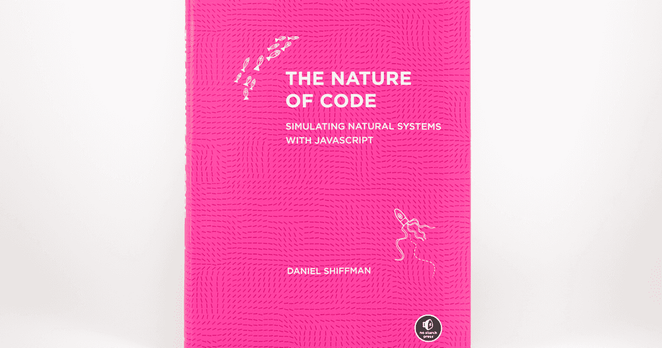
@Davvyk note that the book is Creative Commons-licensed and available at https://natureofcode.com/ !

That said, as I mentioned in the post, even though the actual content is all available online (and very convenient, since it's a coding book and you can have the p5js editor in one window and the book in another), the printed book is a lovely physical object.

Nature of Code

Simulating Natural Systems with JavaScript

Kind of a weird one but I feel potentially right for Mastodon: I have a set of Emigre #font #fontography posters on good condition from the mid/late-90s. Anyone know if they have any (niche) value beyond the purely personal?

Welcome the latest addition to the tidyverse: duckplyr! 🎉

https://duckplyr.tidyverse.org/

The duckplyr package aims to be a fully compatible drop-in replacement for dplyr, using duckdb when it can for performance, and always giving the same results as plain dplyr. If you haven't seen it yet, give it a try and tell us how it works for you!

A DuckDB-Backed Version of dplyr

A drop-in replacement for dplyr, powered by DuckDB for performance. Offers convenient utilities for working with in-memory and larger-than-memory data while retaining full dplyr compatibility.

So cool! Given what we now know about Orkney I’d love for this to be a direct link. https://www.theguardian.com/uk-news/article/2024/aug/14/stonehenge-megalith-came-from-scotland-not-wales-jaw-dropping-study-finds
Stonehenge megalith came from Scotland, not Wales, ‘jaw-dropping’ study finds

Monument’s largest ‘bluestone’ moved more than 450 miles – a discovery researchers say rewrites relationships between Neolithic populations

The Guardian
Kamala Holding Vinyls

Quick poll: caller IDs that are more downheartening than the nursery’s?
Please can one of the upcoming releases of #qgis be Arcis s/ Aube? (https://en.m.wikipedia.org/wiki/Arcis-sur-Aube). No reason…
Arcis-sur-Aube - Wikipedia

Wow, @ProjectJupyter is the winner of the White House OSTP "Technical Advancement to Enable Open Science" category.

Amazing to see recognition of the project at a national level! Makes me proud of the ecosystem of interconnected tools we've built.

https://www.whitehouse.gov/ostp/news-updates/2024/03/21/white-house-office-of-science-technology-policy-announces-year-of-open-science-recognition-challenge-winners/

White House Office of Science & Technology Policy Announces Year of Open Science Recognition Challenge Winners | OSTP | The White House

Today, the White House Office of Science and Technology Policy (OSTP) is announcing the winners of the OSTP Year of Open Science Recognition Challenge. This challenge engaged researchers, community scientists, educators, innovators, and the broader public to highlight efforts to expand access to research for the benefit of science and society. The effort also builds…

The White House
Paris cycling numbers double in one year thanks to massive investment and it's not stopping https://momentummag.com/paris-cycling-numbers-double/
Paris cycling numbers double in one year thanks to massive investment and it's not stopping

The report delves into the nuances of Parisian cycling culture, exploring the vibrant community of riders who navigate the city's streets

Momentum Mag
How… exciting… to see that the idea that “Stochastic processes let the data speak for itself and can remove potential interpretive biases…” hasn’t been fully extinguished when very smart physicists and complex systems people encounter the social and historical sciences: https://santafe.edu/news-center/news/to-make-sense-of-history-embrace-uncertainty
Study: To make sense of history, embrace uncertainty | Santa Fe Institute

There are many things we don’t know about how history unfolds. The process might be impersonal, even inevitable, as some social scientists have suggested; human societies might be doomed to decline. Or, individual actions and environmental conditions might influence our communities’ trajectories. Social scientists have struggled to find a consensus on such fundamental issues. A new framework by SFI faculty and others suggests a way to unify these perspectives.