Josef Taalbi

0 Followers
32 Following
17 Posts
Researcher at Lund University. Innovation studies, sustainable transitions, network science, history of technology. Sometimes I compose piano music.
Homepagehttp://www.joseftaalbi.com
Google Scholarhttps://scholar.google.com/citations?user=dBO5CxsAAAAJ
SWINNO databasehttps://www.lusem.lu.se/economic-history/databases/swinno
Musichttps://joseftaalbi.bandcamp.com/album/improvisations-nomadesques
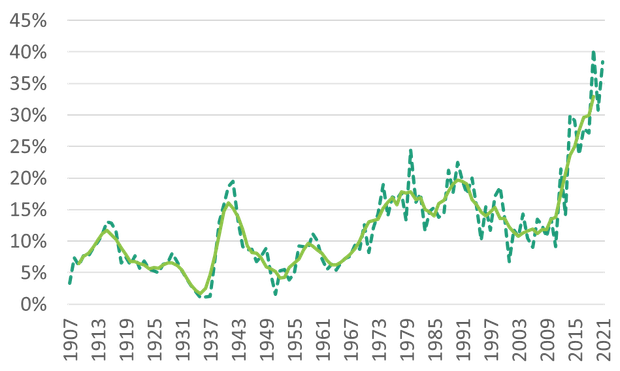
Percentage of environmental innovations in Sweden from 1908 to 2021. Part of this is creative response to energy crises: WWI, WWII, and OPEC, part may be legislation, social and political pressure to transform. From the SWINNO database.
I finally got time to read this study https://www.nature.com/articles/s41586-022-05543-x
Shows that the fraction of disruptive science has declined since the mid 20th century . One explanation is changes in the incentives for research, benifiting incremental science and digging deeper within safe areas of expertice rather than exploring new knowledge combinations. I wonder how these results go with research that show that big collaborations, also inter-disciplnary, tend to be more incremental.
Papers and patents are becoming less disruptive over time - Nature

A decline in disruptive science and technology over time is reported, representing a substantive shift in science and technology, which is attributed in part to the reliance on a narrower set of existing knowledge.

Nature