RT @Meaningness
https://metarationality.com/rationality
https://metarationality.com/rationality
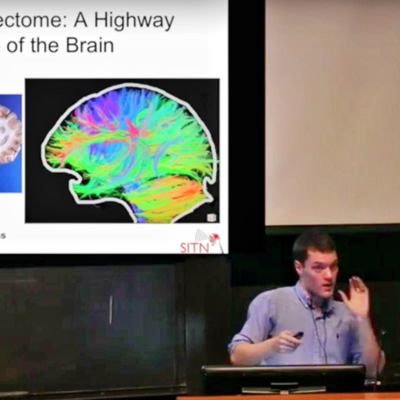
Came for the beautiful visuals, stayed for the cheeky name
---
RT @abhi_aggarwal1
iGluSnFR3 is published! Check it out⬇️
https://www.nature.com/articles/s41592-023-01863-6
We made a new glutamate indicator with improved sensitivity, kinetics & localization for imaging synaptic transmission.
This is #iGluSnFR3 in action detecting minis w/ TTX.
@PodgorskiLab @HHMIJanelia @AllenInstitute
https://twitter.com/abhi_aggarwal1/status/1654141541215084545

iGluSnFR variants with improved signal-to-noise ratios and targeting to postsynaptic sites have been developed, enabling the analysis of glutamatergic neurotransmission in vivo as illustrated in the mouse visual and somatosensory cortex.
Dendritic dynamics as fireworks show 🎆🤯
---
RT @abhi_aggarwal1
iGluSnFR3 is published! Check it out⬇️
https://www.nature.com/articles/s41592-023-01863-6
We made a new glutamate indicator with improved sensitivity, kinetics & localization for imaging synaptic transmission.
This is #iGluSnFR3 in action detecting minis w/ TTX.
@PodgorskiLab @HHMIJanelia @AllenInstitute
https://twitter.com/abhi_aggarwal1/status/1654141541215084545
iGluSnFR variants with improved signal-to-noise ratios and targeting to postsynaptic sites have been developed, enabling the analysis of glutamatergic neurotransmission in vivo as illustrated in the mouse visual and somatosensory cortex.
RT @jxbz
We are thrilled to announce "automatic gradient descent"---a neural network optimiser without hyperparameters. AGD trains out-of-the-box and at ImageNet scale.
paper: https://arxiv.org/abs/2304.05187
PyTorch: https://github.com/jxbz/agd
1/5

The architecture of a deep neural network is defined explicitly in terms of the number of layers, the width of each layer and the general network topology. Existing optimisation frameworks neglect this information in favour of implicit architectural information (e.g. second-order methods) or architecture-agnostic distance functions (e.g. mirror descent). Meanwhile, the most popular optimiser in practice, Adam, is based on heuristics. This paper builds a new framework for deriving optimisation algorithms that explicitly leverage neural architecture. The theory extends mirror descent to non-convex composite objective functions: the idea is to transform a Bregman divergence to account for the non-linear structure of neural architecture. Working through the details for deep fully-connected networks yields automatic gradient descent: a first-order optimiser without any hyperparameters. Automatic gradient descent trains both fully-connected and convolutional networks out-of-the-box and at ImageNet scale. A PyTorch implementation is available at https://github.com/jxbz/agd and also in Appendix B. Overall, the paper supplies a rigorous theoretical foundation for a next-generation of architecture-dependent optimisers that work automatically and without hyperparameters.
