James Lloyd 🧬

760 Followers
729 Following
464 Posts
Engineer of genetic circuits in plants. 🇬🇧🇪🇺 now in 🇦🇺.
Google Scholarhttp://shorturl.at/dnHVZ
Compbio bloghttps://www.badgrammargoodsyntax.com
PronounsHe/Him/They/Them
LocationWhadjuk nation (Perth, Australia)

Brilliant interview with Leni, a PhD candidate at UWA and Plants for Space, being interview about how we can grow/engineer plants to help feed astronauts exploring the solar system.

https://www.abc.net.au/news/2024-12-28/plants-for-space-scientists-designing-food-plants-for-astronauts/104732496

Scientists redesigning plants for astronauts to grow and eat in space

When astronauts are orbiting earth, it's often not chocolate they crave but a fresh, crunchy salad. Now a team of scientists is working to re-design plants to enable that to happen.

ABC News

This is wild: Orphan gene in poplar trees boosts photosynthesis when over expressed in poplar and Arabidopsis.

An orphan gene BOOSTER enhances photosynthetic efficiency and plant productivity

https://www.sciencedirect.com/science/article/pii/S1534580724006671?via%3Dihub

A brief break from posting science - here is some digital art that I drew to show-off just how beautiful Perth is (and a moss-y unicorn, because why not).

Sometimes it is nice to create something beautiful (that isn't a graph, which I do think can be very beautiful).

I absolutely adore the new sign that my partner printed for me. Representing ARC Centre of Excellence in Plants for Space now!

Asher Floyd has been doing so much cool design and printing since getting a 3D printer last month. But this one has blown me away!

Really interesting paper from P4S partner lab - check it out!

Characterization of the Cannabis sativa glandular trichome epigenome

https://bmcplantbiol.biomedcentral.com/articles/10.1186/s12870-024-05787-x

Characterization of the Cannabis sativa glandular trichome epigenome - BMC Plant Biology

Background The relationship between epigenomics and plant specialised metabolism remains largely unexplored despite the fundamental importance of epigenomics in gene regulation and, potentially, yield of products of plant specialised metabolic pathways. The glandular trichomes of Cannabis sativa are an emerging model system that produce large quantities of cannabinoid and terpenoid specialised metabolites with known medicinal and commercial value. To address this lack of epigenomic data, we mapped H3K4 trimethylation, H3K56 acetylation, H3K27 trimethylation post-translational modifications and the histone variant H2A.Z, using chromatin immunoprecipitation, in C. sativa glandular trichomes, leaf, and stem tissues. Corresponding transcriptomic (RNA-seq) datasets were integrated, and tissue-specific analyses conducted to relate chromatin states to glandular trichome specific gene expression. Results The promoters of cannabinoid and terpenoid biosynthetic genes, specialised metabolite transporter genes, defence related genes, and starch and sucrose metabolism were enriched specifically in trichomes for histone marks H3K4me3 and H3K56ac, consistent with active transcription. We identified putative trichome-specific enhancer elements by identifying intergenic regions of H3K56ac enrichment, a histone mark that maintains enhancer accessibility, then associated these to putative target genes using the tissue specific gene transcriptomic data. Bi-valent chromatin loci specific to glandular trichomes, marked with H3K4 trimethylation and H3K27 trimethylation, were associated with genes of MAPK signalling pathways and plant specialised metabolism pathways, supporting recent hypotheses that implicate bi-valent chromatin in plant defence. The histone variant H2A.Z was largely found in intergenic regions and enriched in chromatin that contained genes involved in DNA homeostasis. Conclusion We report the first genome-wide histone post-translational modification maps for C. sativa glandular trichomes, and more broadly for glandular trichomes in plants. Our findings have implications in plant adaptation and stress responses and provide a basis for enhancer-mediated, targeted, gene transformation studies in plant glandular trichomes.

BioMed Central
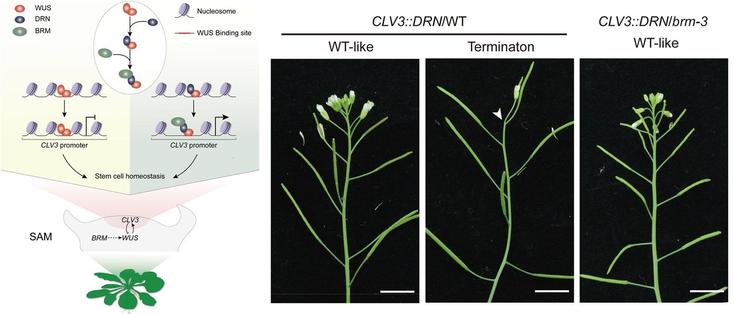
How do DRN & WUS upregulate CLV3 transcription in #plant shoot #ApicalMeristem? This study shows that DRN interferes with WUS dimerization & #ChromatinRemodeling to activate CLV3 transcription, so helping to maintain the shoot stem cell pool #PLOSBiology https://plos.io/3AyF1je
DRN facilitates WUS transcriptional regulatory activity by chromatin remodeling to regulate shoot stem cell homeostasis in Arabidopsis

DRN and WUS are known to upregulate the transcription of CLV3 in the shoot apical meristem of Arabidopsis, but how remains unclear. In this study, DRN is shown to interfere with WUS dimerization and chromatin remodeling to activate CLV3 transcription, thus contributing to the maintenance of the shoot stem cell pool.

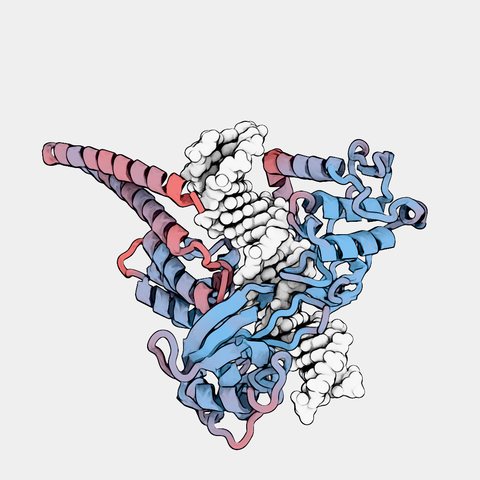
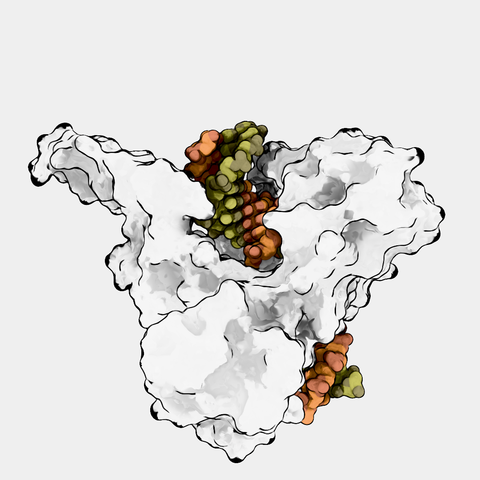
More fun compositing experiments #MolecularNodes #b3d #GeometryNodes
Gapless assembly of complete human and plant chromosomes using only nanopore sequencing
https://genome.cshlp.org/content/early/2024/11/04/gr.279334.124.abstract?sid=003f7e7c-5c3d-42be-aadf-9ad94b155647
Gapless assembly of complete human and plant chromosomes using only nanopore sequencing

An international, peer-reviewed genome sciences journal featuring outstanding original research that offers novel insights into the biology of all organisms

I wrote this piece for The Conversation on the Europa Clipper mission, which is due to launch this week and then investigate the possibility of life in the under-ice oceans of this moon of Jupiter.

https://theconversation.com/nasa-is-launching-a-major-mission-to-look-for-habitable-spots-on-jupiters-moon-europa-239928

NASA is launching a major mission to look for habitable spots on Jupiter’s moon Europa

On October 10, Europa Clipper will take off on a long journey to Jupiter’s moon Europa. The icy moon could potentially host alien life – and there’s only one way to find out.

The Conversation