Margaret Maitland

644 Followers
95 Following
66 Posts

Today on #internationalwomensday I’m thinking about extraordinary women in antiquity & amazing women colleagues today ❤️

Next Friday @ 18:30 I’ll be speaking at UCL Institute of Archaeology & online about The ‘Qurna Queen’: Reassessing a 17th Dynasty Intact Royal Burial: https://www.friendsofpetrie.org.uk/wp/lectures/2023-24-lecture-series/
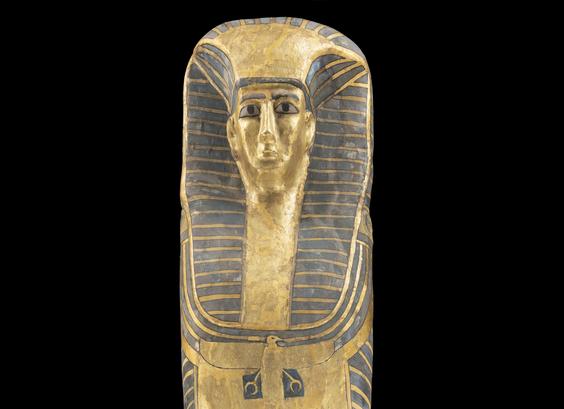
How did ancient Egyptian artefacts end up in UK museums?

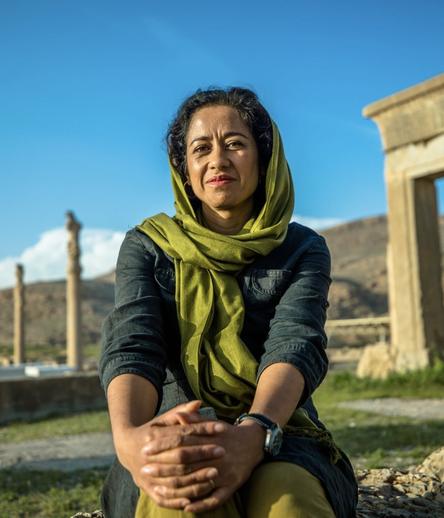
Join us for a free online event next Tuesday February 6th: ‘Buying Power: British Archaeology & the Antiquities Market in Egypt & Sudan 1880–1939’ with broadcaster Samira Ahmed!

https://www.nms.ac.uk/exhibitions-events/online-event/national-museum-of-scotland/buying-power-british-archaeology-and-the-antiquities-market-in-egypt-and-sudan-1880-1939/

Buying Power: British Archaeology and the Antiquities Market in Egypt and Sudan 1880–1939

Where did the ancient Egyptian collections in National Museums Scotland come from? How did they get here? Join Dr Dan Potter to discover the untold stories behind these enduringly popular collections.

National Museums Scotland
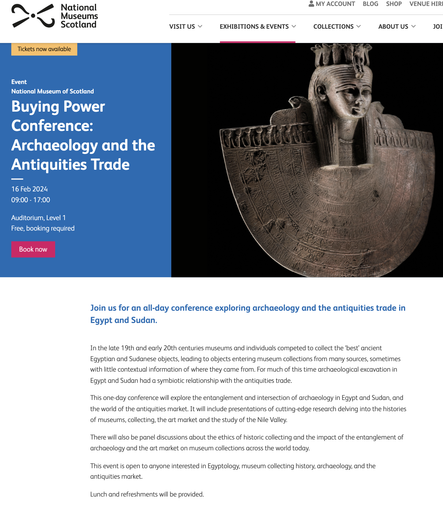
📢 Join us for a free conference on archaeology & the antiquities trade in Egypt & Sudan on Friday February 16th at the National Museum of Scotland! The event is part of an AHRC-funded project led by Dan Potter & will feature talks by leading scholars Stephen Quirke, Alice Stevenson & more! https://www.nms.ac.uk/exhibitions-events/events/national-museum-of-scotland/buying-power-conference/
Buying Power Conference | National Museum of Scotland

Discover a diverse programme of exhibitions and events across National Museums Scotland's four museums.

National Museums Scotland

My article ”Networks of Inequality: Access to Water in Roman Pompeii” was published!

I'm actually quite excited about this. The article outlines a methodology to study health inequality in ancient urban context.

#Pompeii #archaeology #health #inequality #RomanEmpire #history

https://journal.caa-international.org/articles/10.5334/jcaa.116

Networks of Inequality: Access to Water in Roman Pompeii | Journal of Computer Applications in Archaeology

The Journal of Computer Applications in Archaeology (JCAA) is a peer-reviewed, open access, electronic journal, featuring papers in all the disciplines related to digital archaeology, including but not limited to 3D modelling, spatial analysis, remote sensing, geophysics, field recording techniques, databases, semantic web, statistics, data mining, simulation modelling, network analysis and digital reconstructions of the past. The journal welcomes papers reporting original research, as well as papers that critically reflect on the use and impact of digital technologies in archaeology.

Journal of Computer Applications in Archaeology
@ArchaeoIain Thank you so much! 😊

January 16th, 128 CE—the strategos of the Gynaecopolite nome writes to the strategos of the Oxyrhynchite nome #OTD #OnThisDay, saying that a certain Achilleus accused of harboring a fugitive from slavery (and likely wanted for trial) has gone missing himself.

https://papyri.info/ddbdp/p.oxy;12;1422

p.oxy.12.1422 = HGV P.Oxy. 12 1422 = Trismegistos 21829

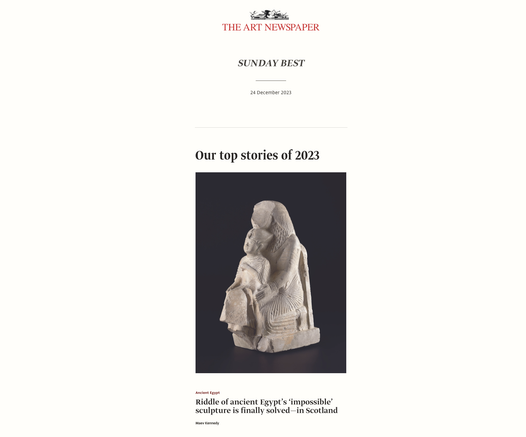
It was great to end 2023 with the Art Newspaper announcing that its top news story of the year was an article about my research on an 'impossible' statue in our museum collection that led to the discovery of a previously unrecognised statue-type from ancient Egypt! Check out the story here: https://www.theartnewspaper.com/2023/04/21/kneeling-man-ancient-egypt-statue-riddle-solve-national-museums-scotland And my original publication here: https://formazioneericerca.museoegizio.it/en/pubblicazioni/deir-el-medina-en/
Riddle of ancient Egypt’s ‘impossible’ sculpture is finally solved—in Scotland

Pioneering research by a National Museums of Scotland curator finds statue reflects a village of eminent tomb-makers

The Art Newspaper - International art news and events
@ArchaeoIain Thanks and yes I agree - that was implied but probably not clear within the word limit! Amenhotepyin’s inner coffin is on display in the Museum and we use the panel there to highlight that Egypt was under intense diplomatic pressure from Britain & the rest of Europe at the time when A’s coffin and over a dozen more were gathered and staged for the Prince to ‘discover’.
@ArchaeoIain Thanks for your question! Through the mid-19th century Egypt had become increasingly indebted to Europe, Britain and France in particular, until they eventually used this to justify taking charge of Egypt’s finances in 1876 and military occupation in 1882. During this period, antiquities were frequently used as diplomatic gifts. I recommend this article as a good overview: https://escholarship.org/uc/item/07v2d8vk
British Egyptology (1822-1882)

Author(s): Gold, Meira | Abstract: The growth of British Egyptology between 1822 and 1882 was a direct extension of informal colonial control. In the direct aftermath of the Anglo-French Napoleonic Wars (1803-1815), British fieldwork in Egypt focused on diplomatic collecting for the British Museum and topographical surveys by Orientalist expatriates seeking to differentiate between ancient and modern Egyptian cultures. A second phase of fieldwork developed from mid-century whereby experts in Britain relied on colonial networks of collectors and informants in Egypt to communicate field observations over long distances. British Egyptology was not yet a distinct field, and like other nascent scientific specialisations, developed with porous disciplinary boundaries. It thus encapsulated a wide variety of approaches which included chronology, philology, exegesis, ethnology, anthropology, museology, astronomy, and geology. British Egyptomania and academic Egyptology also grew in tandem as popularizers brought their work to the Victorian public and British tourists flooded into Egypt producing travel accounts. Egyptology was marketed for its ability to shed light on biblical historicity while public exhibitions highlighted the spectacle of the British imperial victories in the East.

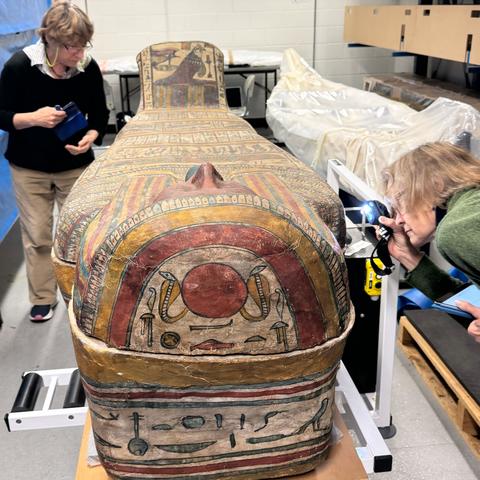
It was great to welcome to the National Museums Collection Centre researchers from the Fitzwilliam Museum at the University of Cambridge, Helen Strudwick & Julie Dawson, to study construction techniques used in ancient Egyptian coffins. This is the outer coffin of Amenhotepyin (c.754-656 BC), whose son Pakepu’s coffin is held in the Fitzwilliam Museum. Both were gifted to the Prince of Wales on his visit to Egypt in 1869.
#museums #museum #ancientegypt #egyptology #archaeology