#Linux
#FuckCars
#antiWork
#antifacist
#münster
#TypeScript
#React
I dont like Mastodon. Its a dumb copy of a capitalist non social network. I like the concept of threads not instagrams threats.

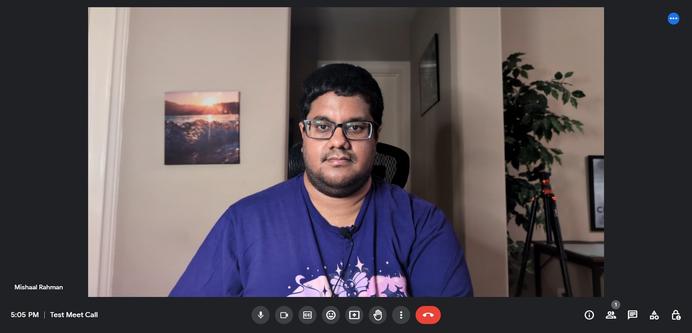
For comparison, here's a still image of me using the Camo app by Reincubate to turn my Pixel 8 Pro into a webcam:
And another still image from me using scrcpy's new camera mirroring feature to turn my Pixel 8 Pro into a webcam:
Android 14's USB webcam feature is very convenient, but it sadly doesn't seem to take full advantage of the amazing camera on your smartphone.
(2/3)
“Long Covid, a disease that studies have shown to have a quality of life worse than some end-stage cancers. We know it can be fatal. Many people with Long Covid have described it as a ‘living death.’
There are no cures, no established treatments, no financial support, and no incoming research funding despite the risk of Long Covid increasing with each COVID-19 infection.” https://thesicktimes.org/2023/11/14/welcome-to-the-sick-times-a-letter-from-our-co-founder-miles-w-griffis/
It’s not mysterious. A highly contagious airborne virus has spread around the world for the past four years and continues to infect people as I write. SARS-Cov-2 has killed an excess of 23 million people worldwide and plagued over 65 million people with Long Covid and other associated conditions.
Background Droplets and aerosols produced during dental procedures are a risk factor for microbial and viral transmission. Unlike sodium hypochlorite, hypochlorous acid (HOCl) is nontoxic to tissues but still exhibits broad microbicidal effect. HOCl solution may be applicable as a supplement to water and/or mouthwash. This study aims to evaluate the effectiveness of HOCl solution on common human oral pathogens and a SARS-CoV-2 surrogate MHV A59 virus, considering the dental practice environment. Methods HOCl was generated by electrolysis of 3% hydrochloric acid. The effect of HOCl on human oral pathogens, Fusobacterium nucleatum, Prevotella intermedia, Streptococcus intermedius, Parvimonas micra, and MHV A59 virus was studied from four perspectives: concentration; volume; presence of saliva; and storage. HOCl solution in different conditions was utilized in bactericidal and virucidal assays, and the minimum inhibitory volume ratio that is required to completely inhibit the pathogens was determined. Results In the absence of saliva, the minimum inhibitory volume ratio of freshly prepared HOCl solution (45–60 ppm) was 4:1 for bacterial suspensions and 6:1 for viral suspensions. The presence of saliva increased the minimum inhibitory volume ratio to 8:1 and 7:1 for bacteria and viruses, respectively. Applying a higher concentration of HOCl solution (220 or 330 ppm) did not lead to a significant decrease in the minimum inhibitory volume ratio against S. intermedius and P. micra. The minimum inhibitory volume ratio increases in applications of HOCl solution via the dental unit water line. One week of storage of HOCl solution degraded HOCl and increased the minimum growth inhibition volume ratio. Conclusions HOCl solution (45–60 ppm) is still effective against oral pathogens and SAR-CoV-2 surrogate viruses even in the presence of saliva and after passing through the dental unit water line. This study indicates that the HOCl solution can be used as therapeutic water or mouthwash and may ultimately reduce the risk of airborne infection in dental practice.