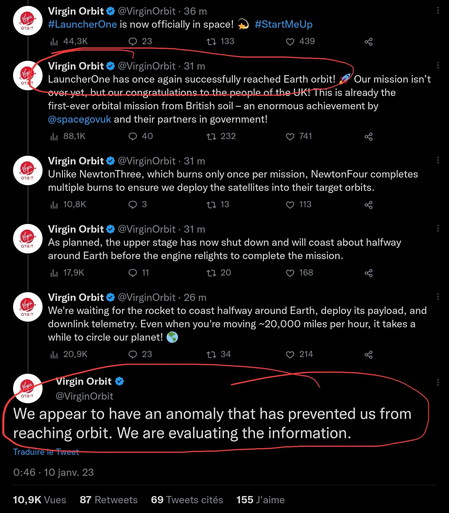
Actually her happy face. 38 minutes late for #caturday


| Tropical Weather Discord | https://discord.gg/tropicalweather |
| Dziban | http://dzibanian.spacetechnology.net |
| @PortOfNewOrleans | https://airwaves.social/@portofneworleans |
| @OverNewOrleans | https://airwaves.social/@overneworleans |
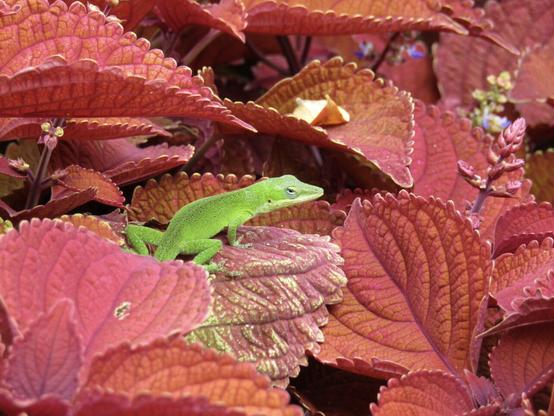
Camouflage isn’t working so well for this #anole at the moment, but that side-eye sure is fierce.
In a sudden policy reversal, Taiwan has decided to allow same-sex couples with one Taiwanese and one foreign national to register their marriage even if the foreign partner is from a jurisdiction where same-sex marriages are illegal.
In a directive issued to all local governments, the Ministry of the Interior said the previous rule was discriminatory.
Taiwan became the first country in Asia to legalize same-sex marriage in 2019.

Taipei, Jan. 20 (CNA) In a sudden policy reversal, Taiwan has decided to allow same-sex couples with one Taiwanese and one foreign national to register their marriage even if the foreign partner is from a jurisdiction where same-sex marriages are illegal.
Subbottom data off the coast of Louisiana showing a biogenic gas plume, migrating gas fronts (stepped reflectors), acoustic wipe outs, gas-saturated sediments & well-bedded normal sediments. Stepped reflectors are sections of thick clay strata being pushed upward by the pressure of biogenic gas from below. The vertical ticks are 5 m apart.
The image is compressed from the original 4750 x 670 pixels. #geology #sediments

Gosh. Maybe I should talk about this graphic a bit....
I made this by taking a section of the Cassini spacecraft T-39 SAR section. Then figuring out drainage patterns. Used that to set relative height. Then taking the infrared image and colorizing it, then with collaboration from Doug Ellison and Bjorn Jonsson, overlaid color onto elevation to make this rendering.
Image source (repository, I guess): https://solarsystem.nasa.gov/resources/14888/sikun-labyrinthus-an-artistic-view/
You can also see this in the JPL museum in the Saturn section.


This artistic interpretation of the Sikun Labyrinthus area on Saturn's moon Titan is based on radar and imaging data from NASA's Cassini spacecraft and the descent imaging and spectral radiometer on the European Space Agency's Huygens probe. The relative elevations are speculative and organized around the assumption that fluids are flowing downhill. Credit: NASA/JPL/ESA/SSI and M. Malaska/B. Jonsson
 silverlakeshore
 J Lam 👩🏻💻👩🏻🎨

 The Asian Feminist
 James Green
 Mike Malaska