10 Followers
52 Following
170 Posts

In the recently released badkeys v0.0.17, a new check for an RSA vulnerability has been added: RSA keys with small private d values, also known as Wiener's attack: https://badkeys.info/docs/smalld.html

RSA keys have a public exponent e and a private exponent d. Usually, we set the public exponent to a small value (these days, largely standardized to e=65537), which automatically means the private value d is about as large as the public modulus. d/e are interexchangable, and it's possible to create insecure keys with small d and large e value. Wiener's attack (first published 1989) allows breaking such keys.

This weakness can be entirely prevented if one simply does not support keys with large public e values. This is, e.g., the case in the go crypto library, see, e.g., this old (2012) blogpost by @agl https://www.imperialviolet.org/2012/03/16/rsae.html

Even more secure is to fix the e value to its common default (e=65537). This is small enough to be still fast, and it avoids both attacks relying on large e (Wiener's attack) and very small e values like 3 (Bleichenbacher's Signature Forgery/BERserk, Coppersmith/Håstad attack).

Someone Bought 30 WordPress Plugins and Planted a Backdoor in All of Them.

Last week, I wrote about catching a supply chain attack on a WordPress plugin called Widget Logic. A trusted name, acquired by a new owner, turned into

Anchor Hosting

This morning we got one of our pending #curl security flaws reported a **4th** time.

Everyone is using (the same) AI tools now.

"Days of arguing about exploitability can save minutes of fixing the bug."

-- Socrates, on vulnerability disclosure

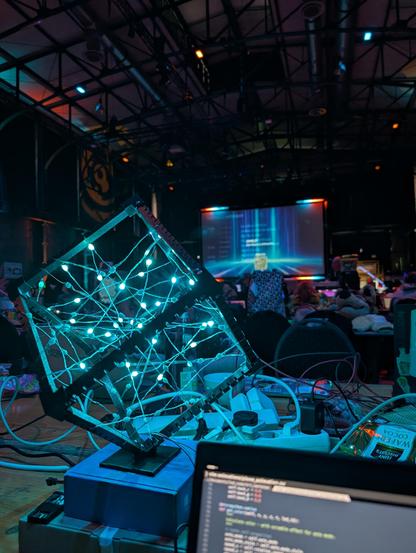
Untangled and calibrated the little cube. Now it's time to port the firmware to Rust. Surely that will give me some more fps compared to Micropython.
#rust #micropython #esp32 #revision2026 #revision

🆕 New blog post!

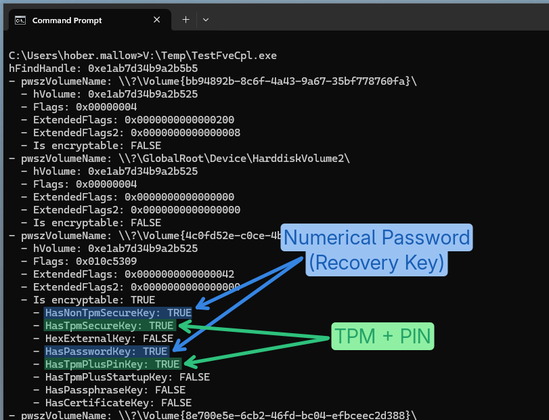
"BitLocker's Little Secrets: The Undocumented FVE API"

A small Windows RE adventure to figure out how to get the status and configuration of a BitLocker protected drive programmatically and without admin privileges.

Now also implemented in PrivescCheck! 🔥

👉 https://itm4n.github.io/bitlocker-little-secrets-the-undocumented-fve-api/

We found that Wi-Fi client isolation can often be bypassed. This allows an attacker who can connect to a network, either as a malicious insider or by connecting to a co-located open network, to attack others.

NDSS'26 paper: https://www.ndss-symposium.org/wp-content/uploads/2026-f1282-paper.pdf
GitHub: https://github.com/vanhoefm/airsnitch

High-level article on the work by Dan Goodin: https://arstechnica.com/security/2026/02/new-airsnitch-attack-breaks-wi-fi-encryption-in-homes-offices-and-enterprises/ I'd say we bypass Wi-Fi encryption though, in the sense that we can bypass client isolation. We don't break Wi-Fi authentication or encryption. Crypto is often bypassed instead of broken. And we bypass it ;) If you don't rely on client/network isolation, you are safe: we can't just break any Wi-Fi network.

It’s no secret that adversaries love (ab)using security tooling . So..

Rad just shipped our latest Canarytoken to exploit this: a CrowdStrike API Key Canarytoken!

Attackers who find it, have to use it - and when they do, they expose themselves.

https://blog.thinkst.com/2026/02/introducing-the-crowdstrike-api-key-canarytoken.html

i built an entire x86 CPU emulator in CSS (no javascript)

you can write programs in C, compile them to x86 machine code with GCC, and run them inside CSS

https://lyra.horse/x86css/