devon she/her

@devononabike
58 Followers
30 Following
57 Posts
sewist, epi-collie-dog parent, bicycletarian, native plants enthusiast and gardener, 1920's house/moneypit restorer, and health sciences librarian
Does anyone know of any ongoing or published studies of student AI perspectives and/or literacy across multiple health sciences disciplines? Or even just general undergraduates or high school students? I can't seem to find anything more recent than 2022 for health sciences: https://doi.org/10.2196/33390
Health Care Students’ Perspectives on Artificial Intelligence: Countrywide Survey in Canada

Background: Artificial intelligence (AI) is no longer a futuristic concept; it is increasingly being integrated into health care. As studies on attitudes toward AI have primarily focused on physicians, there is a need to assess the perspectives of students across health care disciplines to inform future curriculum development. Objective: This study aims to explore and identify gaps in the knowledge that Canadian health care students have regarding AI, capture how health care students in different fields differ in their knowledge and perspectives on AI, and present student-identified ways that AI literacy may be incorporated into the health care curriculum. Methods: The survey was developed from a narrative literature review of topics in attitudinal surveys on AI. The final survey comprised 15 items, including multiple-choice questions, pick-group-rank questions, 11-point Likert scale items, slider scale questions, and narrative questions. We used snowball and convenience sampling methods by distributing an email with a description and a link to the web-based survey to representatives from 18 Canadian schools. Results: A total of 2167 students across 10 different health professions from 18 universities across Canada responded to the survey. Overall, 78.77% (1707/2167) predicted that AI technology would affect their careers within the coming decade and 74.5% (1595/2167) reported a positive outlook toward the emerging role of AI in their respective fields. Attitudes toward AI varied by discipline. Students, even those opposed to AI, identified the need to incorporate a basic understanding of AI into their curricula. Conclusions: We performed a nationwide survey of health care students across 10 different health professions in Canada. The findings would inform student-identified topics within AI and their preferred delivery formats, which would advance education across different health care professions.

JMIR Medical Education

Interested in what Slow Librarianship is all about? Already know that but want to create a local community of library workers? Join me and @devononabike as we lead a Core eForum on "Slow Librarianship: A Community of Practice."

This online event is free and open to all library workers. You do not need to be a Core or ALA member to participate.

Come and discuss or just listen in!

https://www.ala.org/core/slow-librarianship-community-practice

@libraries @librarians @slowlibrarianship #Libraries #Librarians #SlowLibrarianship

Slow Librarianship: A Community Practice

Slow Librarianship is a practice that evolved in response to academic hustle culture but applies to all areas of library work. Julia Glassman coined the term in 2017, and Meredith Farkas, inspired by Julia’s work, has been speaking and writing on the topic since. The term grew at the same time as other social movements, largely in the context of the pandemic. The core idea of valuing quality over quantity is timeless and transcends states of emergency.Slow Librarianship is a quality-over-quantity practice that evolved in response to academic hustle culture but applies to all areas of library work. Julia Glassman coined the term in 2017, and Meredith Farkas, inspired by Julia’s work, has been speaking and writing on the topic since.

Core
RT @womensart1
#WomensHistoryMonth  ♀

RT @tcshields
RFIs that may interest #medlibs:

1. The NIDDK seeks public comment on the Report of the NIDDK Advisory Council Working Group on Health Disparities and Health Equity Research
https://grants.nih.gov/grants/guide/notice-files/NOT-DK-23-011.html

2. Future Directions in Violence Against Women Research https://grants.nih.gov/grants/guide/notice-files/NOT-NR-23-008.html

NOT-DK-23-011: Request for Information: The National Institute of Diabetes and Digestive and Kidney Disease seeks public comment on the Report of the NIDDK Advisory Council Working Group on Health Disparities and Health Equity Research

NIH Funding Opportunities and Notices in the NIH Guide for Grants and Contracts: Request for Information: The National Institute of Diabetes and Digestive and Kidney Disease seeks public comment on the Report of the NIDDK Advisory Council Working Group on Health Disparities and Health Equity Research NOT-DK-23-011. NIDDK

RT @davidshorter
Job! Oral Historian at UCLA handling the creation of a digital archive of thousands Los Angeles Police Department documents, and an oral history and carceral ephemera archive, under one shared digital infrastructure for the ethnic studies centers. https://hr.mycareer.ucla.edu/applicants/jsp/shared/frameset/Frameset.jsp?time=1675108462617
Loading Content

RT @GreenwayGGF
We have an assignment for u - Ur invited to share ur ideas & comments on Phase 2 of the Downtown Floodwall Area Redesign Project. Check out the concept plans at https://bit.ly/gfdowntown2 and share your input by 5 PM on Thursday, February 2. @GrandForksCity @gfherald @egfparks
Grand Forks Floodwall Revitalization

RT @FrancesMFDanger
Since #BobBarker is trending it's a good time to remind folks that he's Native.

He's Lakota and grew up on the Rosebud Reservation. https://twitter.com/DerekAdamThomas/status/1615895556987002881

Derek Thomas on Twitter

“Bob Barker, at the age of 99, is still alive and well.”

Twitter

RT @billyperrigo
🚨Exclusive: OpenAI used outsourced Kenyan workers earning less than $2 per hour to make ChatGPT less toxic, my investigation found

(Thread)

https://time.com/6247678/openai-chatgpt-kenya-workers/

Exclusive: OpenAI Used Kenyan Workers on Less Than $2 Per Hour to Make ChatGPT Less Toxic

A TIME investigation reveals the poor conditions faced by the workers who made ChatGPT possible

Time
RT @kelseybogan
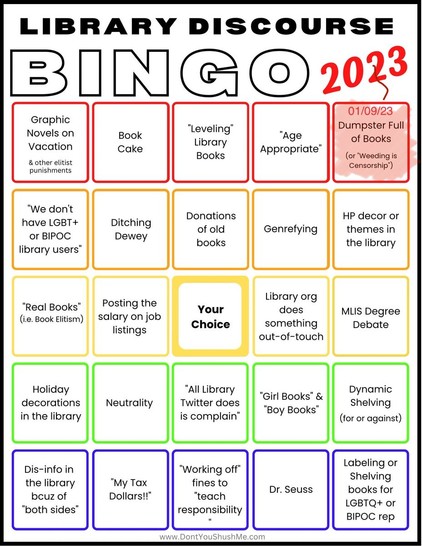
Librarians I hope you have your 2023 bingo cards out bcuz the “ppl who don’t understand the concept of books being consumables w temporary life spans overreacting to standard weeding practices” drama is starting early this year https://twitter.com/martinmbauer/status/1612049676902998016
Martin Bauer on Twitter

“This is a crime scene.”

Twitter

Come work with me! Cool balance of independence & supportive colleagues 🤓

dual position: U of ND School of Medicine and Health Sciences Northwest Clinical Campus Librarian / Director of the Trinity Health Library in Minot, ND

#medlibs #moa

https://prd.hcm.ndus.edu/psc/recruit/EMPLOYEE/HRMS/c/HRS_HRAM_FL.HRS_CG_SEARCH_FL.GBL?Page=HRS_APP_JBPST_FL&Action=U&FOCUS=Applicant&SiteId=1&JobOpeningId=2946199&PostingSeq=1

Careers