Computer Chronicles Revisited

@deviledeggpress
29 Followers
30 Following
40 Posts
A review of the PBS series that aired from 1983 to 2002. Written by S.M. Oliva. Published by Deviled Egg Press, LLC.
Bloghttps://computerchronicles.blog
Podcasthttps://www.computerchronicles.blog/tag/podcast/
Ebookshttps://www.computerchronicles.blog/ebooks/
Computer Chronicles Revisited 34 — Dollars and Sense, Bank of America's Homebanking, and Tax Preparer by HowardSoft

The Computer Chronicles discusses personal finance software.

Computer Chronicles Revisited

Since it's income tax season here in the USA, let me shout out "Tax Preparer" by HowardSoft. First developed by Jim Howard in 1979 for the Apple II, "Tax Preparer" was featured on a 1985 "Computer Chronicles" episode, with Howard appearing in-studio with Stewart Cheifet and Gary Kildall.

41 years later, Howard is *still* updating and releasing "Tax Preparer" for the PC. It's almost certainly the oldest continuously developed program featured on "Computer Chronicles."

https://howardsoft.com

HowardSoft (Home Page)

Developing tax and real estate software for personal computers since 1979, HowardSoft is known for its Tax Preparer and Real Estate Analyzer products. Tax Preparer supports 1040, 1065, and 540 returns, plus e-file for tax professionals.

Crisco plays a surprisingly key role in my next blog post.

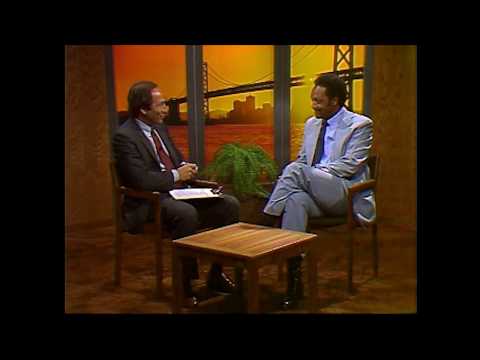
In 1984, Stewart Cheifet interviewed Rev. Jesse Jackson for "Stock Market Today," a local business news program that Cheifet established at KCSM-TV in San Mateo. This interview came during Jackon's first presidential campaign.

https://www.youtube.com/watch?v=-OvHQjsDrkA

KCSM Jesse Jackson Intv by Stewart Cheifet cir1990

YouTube

"To date, Cheifet said, NASA had flown more than 300 space missions, and all that research led to tons of data–in fact, over 125,000 computer tapes. The current size of the NASA database was 6 TB. And the size of that database was expected to double every two years."

Even in 1989, only #NASA could reasonably afford 6 TB of hard drive space.

https://www.computerchronicles.blog/computer-chronicles-revisited-135-nasas-ames-research-center-and-goddard-space-flight-center/

Computer Chronicles Revisited 135 — NASA's Ames Research Center and Goddard Space Flight Center

The Computer Chronicles discusses computers in space

Computer Chronicles Revisited

I feel I need to say something about Artemis as a former NASA employee, Space scientist and engineer.

I hope more than anything that the astronauts get back safely. But let us not be fooled by what this is.

Is it spectacular, yes. Is it a feat of engineering, yes. Does it make any advance in science, no. Does it help mankind explore the universe, dubious at best.

Why exactly are we sending humans to the moon? With our technology we will never send humans much further than Mars. The only way humans can possibly go further is through a scientific breakthrough. Good luck with that when Trump is gutting science.

Human exploration needs money spent on long-term advances - not using the same technology to do what we did before, however, glamorous it is.

So why do this and why do it now? Political theatre, a win for a Trump led NASA if it succeeds.

So I hope all works well and all return safely. But let us be clear what this is and why it is being done.

This is my opinion, I do not represent anyone.

David Glover-Aoki recently digitized a previously lost "Computer Chronicles" episode from 1981. Before the national PBS show, "Chronicles" was a local, live program on KCSM hosted by Jim Warren.

This episode from October 1981 focused on the use of Logo for educational computing. John D'Angelo of Texas Instruments did the main demo. For you game devs, this is an interesting bit of history since he talks in detail about the concept of "sprites," a term coined by TI.

https://www.computerchronicles.blog/computer-chronicles-revisited-134-ti-logo/

Computer Chronicles Revisited 134 — TI Logo

The Computer Chronicles discusses the use of Logo in educational computing

Computer Chronicles Revisited

In 1984, Stewart Cheifet told a Senate committee that his station, KCSM, ran 341 minutes of ads during a limited #PBS advertising experiment authorized by Congress. In contrast, he said neighboring PBS station KQED spent 2,548 minutes during that same period running its pledge drive.

My question is: How many minutes did it take some College of San Mateo student to sit down and watch all that footage to calculate those figures for Stewart?

The soft proponents of #AI overwhelmed by the anger of AI opponents are used to living in a world where ethics was not a consideration when it came to the unquestioned adoption of new technology. Previously, anyone raising ethical questions could simply be dismissed for "trying to start a moral panic." Or you could just point to a single benefit--real or hypothetical--that automatically negated 99 other provable negative consequences.

Such tactics, it would seem, are no longer effective.

One day I'll do a podcast dedicated to 1980s software that included unnecessary exclamation points in their names!