The Rosette Nebula, which is to the left of Orion. This is a total of about 16 hours of imaging over 7 sessions spread over about 2 weeks. The second image uses different processing to enhance the oxygen (the blue).



I'm a retired middle school math teacher and cross country coach. Before teaching, I worked as a software engineer.
I am interested in computers, math, science, history, and politics. I enjoy running, amateur astronomy, drone photography, and programming.
| Website | https://www.gradekeeper.com/dethier/ |
The Rosette Nebula, which is to the left of Orion. This is a total of about 16 hours of imaging over 7 sessions spread over about 2 weeks. The second image uses different processing to enhance the oxygen (the blue).
The Pacman Nebula. This is about 20 hours of imaging over 4 nights. It is about 9500 light years away from us and about 25 light years in diameter.

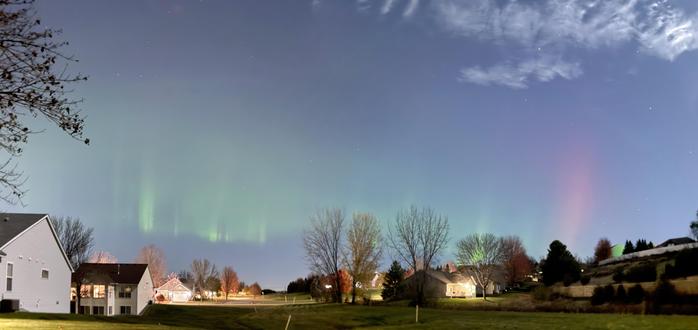
The northern lights tonight were not nearly as good as last night, but there were moments where things picked up. This panorama is from just after 10:00.

Panorama of tonight's northern lights. Two photos, handheld with my iPhone, stitched together with Panorama Stitcher on my Mac.
The Triangulum Galaxy. This is the result of almost 24 hours of imaging over 5 nights. This galaxy is about 2.7 million light years away. It is about 60,000 light years in diameter, a bit more than half the size of our Milky Way galaxy.


The Dumbbell Nebula. This is about 5 1/2 hours of imaging over three nights. Very clear all three nights, with stars visible right down to the roofs of the neighboring houses. This is the result of a star that exploded about 10,000 years ago resulting in this expanding nebula. It is about 1360 light years away and about 2 light years in diameter.


