I have noticed over the years that interest in programming languages comes in waves. In the 80s and early 90s, when object-oriented programming was "hot", it inspired many new languages and interest in language design ideas. That ended when attention shifted to the new WWW. The 2010's were a similar "high-water" mark for functional programming and the languages it inspired. Now everyone is focused on AI, of course. Andrew Oram is writing a retrospective series about FP, then and now.
https://www.lpi.org/blog/2026/03/18/functional-languages-and-the-future-of-programming-part-1/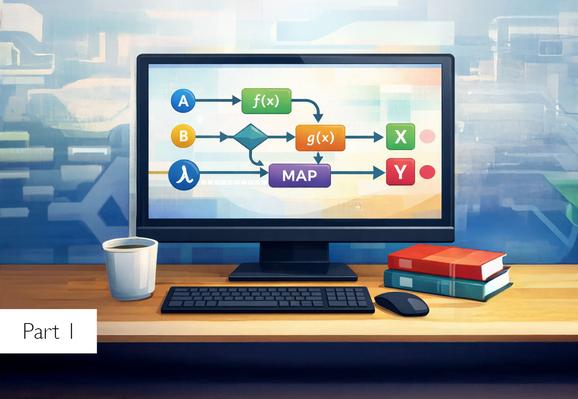
Functional Languages and the Future of Programming (Part 1)
Functional programming explained: history, core concepts, and the influence of languages like Haskell, Erlang, and Scala.
I wrote an O'Reilly Radar post about the "PARK" stack for generative AI systems:
https://www.oreilly.com/radar/what-is-the-park-stack/
What Is the PARK Stack?
Background: Stacks with four-letter acronymsAccording to Wikipedia, the LAMP stack was coined in 1998 by Michael Kunze to describe what had emerged as a
The whole racist backlash in "some quarters" against Bad Bunny and hispanic culture, in general, is not just bad, it's clueless and pathetic. Young people have largely embraced music from alternative cultures for a long time, starting with black music in the 20s with Jazz, Rock, Soul, and Hip Hop, up to K-Pop more recently. Probably even earlier...
Despite all the AI coding assistants, I'm still fastest going to Stack Overflow for answers...
NANDA is an interesting MIT project working on distributed AI agent technologies. If you are in the Washington DC area, there is a hackathon on Saturday, Feb. 21 at George Mason U.
https://luma.com/4pwuq0o4
DMV NANDA Hack · Luma
🌐 The Internet of AI Agents is here. Are you ready to build it?
We're thrilled to announce DMV Hacks—a first-of-its-kind hackathon bringing Project NANDA to…
 Riku Silvola
 German Vidal
 Simon Willison
 Lawfare
 Tech Tangents