
Data Panacea

@datapanacea
0 Followers
0 Following
219 Posts
A data services & consulting company accelerating the complex analytics journey for organizations. Generating value from data.

…reintroducing dimensional data modeling into your analytics practice may be the missing piece.

Dimensional modeling is not outdated; it is a strategic way to define analytics requirements and design modular solutions that can actually keep up with the business. 💡

One underrated benefit: you do not need source data available to start. You can model around current business rules and processes, then map sources as systems come online or change (migrations, acquisitions, platform swaps, etc.). I have seen this dramatically de-risk major transitions. 🔁

If you are:
• Drowning in bespoke reports
• Struggling to reconcile metrics across teams
• Unsure how to combine data from disparate systems

Instead of starting from “build me this report,” we start from “what business processes generate this metric and at what level of detail?” That shift is what makes designs modular, reusable, and resilient to change instead of overfitted to a single dashboard request.

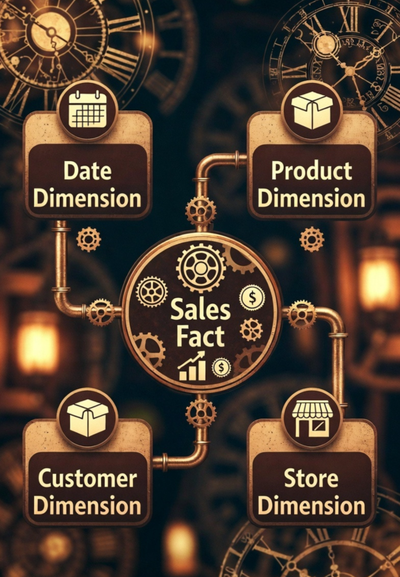
• Dimensions (customers, products, employees, etc.) give us consistent, reusable definitions across reports.
• Facts capture the grain of real business processes and events, making it possible to answer both today’s and tomorrow’s questions.

Importantly, dimensional modeling changes how teams handle requirements:

Data modeling is first and foremost a communication and alignment tool – not just a technical artifact. It is how we:
• Agree on what the business actually needs
• Translate those needs into a coherent solution
• Reduce risk from hidden assumptions and misunderstandings

Dimensional modeling sits in the sweet spot between business and tech for analytics:

• It models the business, not just the database.

Is dimensional data modeling still relevant in the modern data stack? Short answer: yes. ✅

With modern warehouses and lakehouses (Snowflake, Databricks, BigQuery, etc.), it is tempting to think we can skip “old school” modeling and just throw everything into SQL and dashboards. But that usually leads to brittle, one-off solutions that are hard to extend and reconcile across teams.

Here is how we think about it.
• Strong security and governance (encryption, RBAC, PII handling).
• Fault tolerance and clear auditing so you can trust every sync.

If your warehouse is rich with insights but your teams still live in spreadsheets and exports, it might be time to bring reverse ETL into the conversation. 🚀

• Reduce manual CSV exports/imports and other ad-hoc data workarounds.
• Improve data governance by reusing warehouse logic, metrics, and definitions everywhere.
• Eliminate fragile point-to-point integrations with a cleaner hub-and-spoke model.
• Deliver more relevant, real-time experiences for customers and employees.

What to look for in a reverse ETL solution ✅
• Connectors to the SaaS tools and proprietary apps you rely on.
• Automated, reliable syncing to keep data fresh.

• Sales & Marketing: Unified customer profiles powering better targeting, personalization, and conversion.
• Customer Support: Complete, up-to-date context at the agent’s fingertips for every interaction.
• HR: Bringing engagement, performance, and retention signals into HR systems to make better people decisions faster.

Key benefits of reverse ETL 📊
• Operationalize your “single source of truth” instead of keeping it locked in dashboards.

Reverse ETL is moving from “nice idea” to “must-have” in the modern data stack.

We invest heavily in cleaning and modeling data for analytics, but the real value shows up when that data flows back into the tools teams actually use every day.

So what is reverse ETL? 🔁
It’s the process of syncing trusted, modeled data from your warehouse into operational systems like CRM, marketing automation, support, HR so people can act on it directly in their workflows.

A few high-impact use cases: