 Electromagnetic Field
Our Call for Participation is now live!
If you have a talk, workshop, performance, or installation you'd like to bring to EMF, you can now submit it here:
Accepted proposals are guaranteed the chance to buy a ticket!

| personal | https://johndalziel.com |
| projects | https://crashposition.com |
| blog | https://computus.org |
Our Call for Participation is now live!
If you have a talk, workshop, performance, or installation you'd like to bring to EMF, you can now submit it here:
Accepted proposals are guaranteed the chance to buy a ticket!
We're finally ready to announce the ticket sales dates for EMF 2026!
Tickets will go on sale at https://www.emfcamp.org/tickets and you can see the ticket prices there now.
Twelve years. I started this project twelve years ago, and today I hold the result in my hand. It’s a book that combines bead weaving with math called, “Beading with Algorithms: Cellular Automata in Peyote Stitch.” With help from mathematician and artist Roger Antonsen, graphic designer Zelda Lin, a handful of talented proof readers, and the good people from World Scientific Publishing Company, my dream of combining my loves of math, art, and teaching into a book is finally a reality.
This book is the first of its kind, a recipe book of algorithms that can be used and combined to generate colorful patterns in peyote stitch beadwork in any size and shape you desire. These algorithms could also be applied to other pixelated art forms like tile laying, embroidery, crochet, and quilts. We included projects like bracelets, pill pouches, pendants, beaded beads, and key chains. We also included a bunch of different grids that you can photocopy and color with markers.
Of course I’m biased, but I think it’s a really beautiful book. We included multiple colorful images on almost every page, 172 pages in all. It was a huge layout challenge, but Zelda nailed it. My original goal was to write 128 pages on how to use algorithms to make beaded jewelry, but the more we explored the space, the more we found. Not just millions of algorithms, the space of possibilities is infinite. So of course, we couldn’t include them all. But we used math and Roger’s custom software that he wrote for this project to help us find dozens of the easiest algorithms and more than a hundred more in increasing levels of complexity. We included all of our favorites. 1/2


How Wrong Can a JavaScript Date Calculation Go?, by @philnash:
https://philna.sh/blog/2026/01/11/javascript-date-calculation/
Astro Joining Cloudflare
https://astro.build/blog/joining-cloudflare/

The Astro Technology Company is joining Cloudflare! Astro remains open-source, MIT-licensed, and platform-agnostic. With Cloudflare's support, we're focusing 100% on building the best framework for content-driven websites. Astro 6 beta is available now.
 Chris Heilmann
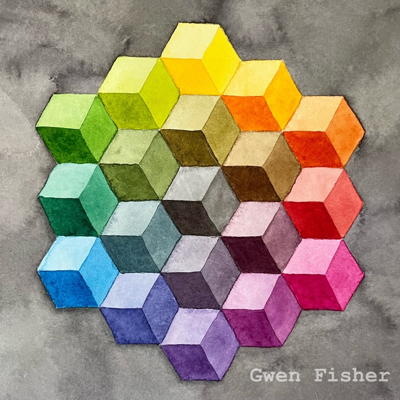 Gwen Fisher
 Frontend Dogma
 Natasha
  🇪🇺
🇪🇺 bit101
 Hacker News 100
 kottke.org