Clock glitched...nd yr secrets

50 Followers
19 Following
454 Posts
Cryptography. Privacy. Embedded HW and radio.
I kind of always end up in debugging the debugger.
And end up hunting ghosts in electric circuits.

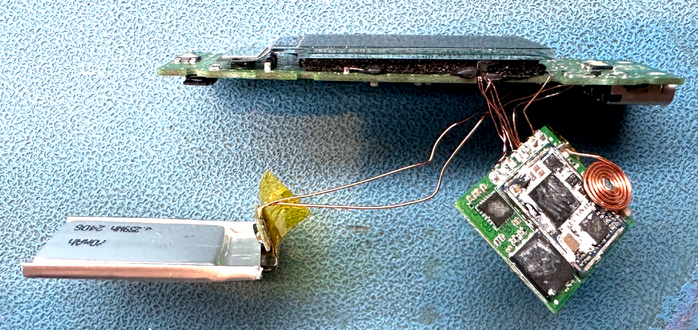
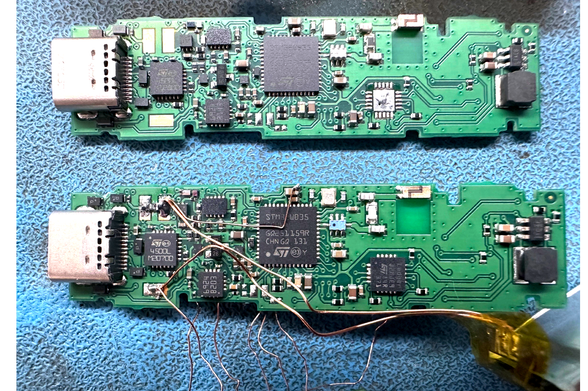
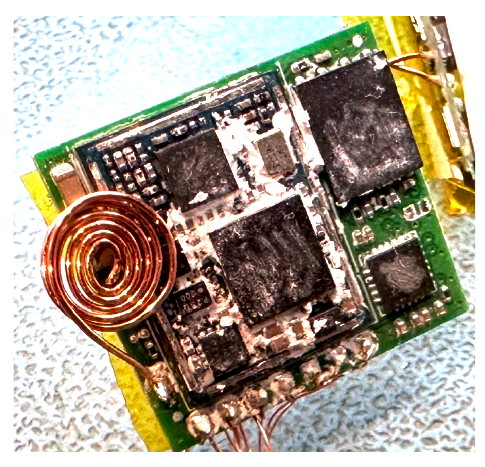
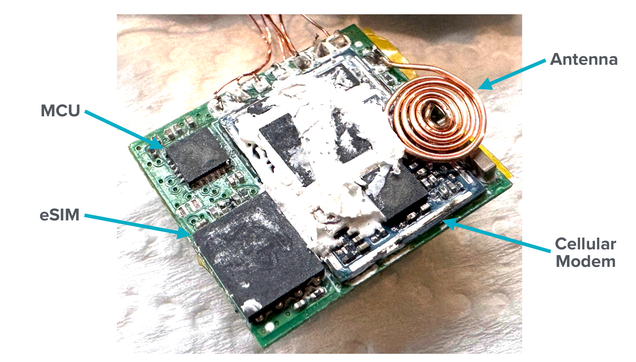
Supply chain attack on Ledger that taps display via SPI using MCU, looks at character glyphs known beforehand, uses cellular modem with tiny built-in antenna.

https://grandideastudio.com/portfolio/security/ledger-hardware-implant/

(Note that with this implant the STM<->secure element is compromised here)

The coreutils Rust rewrite story is pretty funny.

Coreutils are tools like rm, mv, mkdir, etc. Unlike binutils, this isn't a fertile ground for memory safety bugs. But, the rewrite was completed, and in the spirit of progress, Canonical decided to switch.

But do you know what coreutils are a fertile ground for? Race conditions around file creation, deletion, permission setting, and so on. The original code accounted for decades of hard-learned lessons in that space. The Rust rewrite did not:

https://seclists.org/oss-sec/2026/q2/332

PS. I'm not dunking on Rust. It's just that... starting over from scratch has its hidden costs.

oss-sec: uutils coreutils CVEs

ZKPs /zkSNARKs over VMs are insane enough to understand, not to mention over quantum circuit that really I couldn't get my cryptographer professional friends to actually explain how you are supposed to verrify THAT.

Once we got ECDSA right after many many years, we are pushed onto LWE and other lattice schemes, and lots of really untested math because of "post quantum". Again withou anyone specialized I can trust in this really knowing - whether the Google's proof is just pipe dream of theoretical something, great mask via the ZKP on the the "solution"

https://blog.zksecurity.xyz/posts/groth16/

Groth16, Intuitively

Groth16 is still the gold standard for succinct SNARKs: 128-byte proofs, constant-size verification, and a decade of real-world deployment. But despite its ubiquity, almost nobody explains *why* it works the way it does. In this post, we build Groth16 from the ground up, starting from R1CS and QAPs, then layer in pairings, trusted setup parameters, and the separator tricks (α, β, γ, δ) that make the scheme sound. By the end, you should have an intuitive grasp of every term in the final verifier equation.

ZK/SEC Quarterly

Anonymous credentials - that which should be according to specification in the "age verification wallets" with zero-knowledge proof, but isn't (it's demo with disclaimer "DO NOT USE, DEMO ONLY", but EK doesn't care, Europol needs data)

To illustrate how anonymous credentials work, here are two nice writeups:

https://blog.cryptographyengineering.com/2026/03/02/anonymous-credentials-an-illustrated-primer/

https://blog.cryptographyengineering.com/2026/04/17/anonymous-credentials-an-illustrated-primer-part-2/

Anonymous credentials: an illustrated primer

This post has been on my back burner for well over a year. This has bothered me, since with every month that goes by, I become more convinced that anonymous authentication the most important topic …

A Few Thoughts on Cryptographic Engineering
Anthropic secretly installs spyware when you install Claude Desktop — That Privacy Guy!

Anthropic's Claude Desktop silently installs a Native Messaging bridge into seven Chromium browsers, including browsers Anthropic's own documentation says it does not support, and browsers the user has not even installed.

That Privacy Guy!
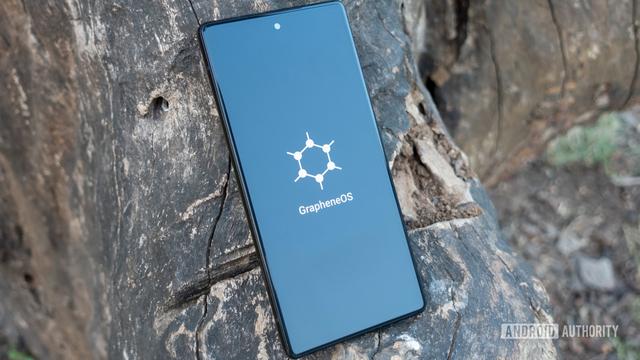
https://www.androidauthority.com/grapheneos-age-check-verification-laws-3651019/
- *“GrapheneOS will remain usable by anyone around the world without requiring personal information, identification or an account"*
*- “If GrapheneOS devices can’t be sold in a region due to their regulations, so be it”*
GrapheneOS won't comply with age check laws for operating systems

The team behind GrapheneOS said it won't apply with age check laws, which require people to confirm their age before using an OS.

Android Authority
If you ask AI to rewrite the entirety of an open-source program, do you still need to abide by the original license? In philosophy, this problem is known as the Slop of Theseus

I may regret this at some point, but I felt the need to put down in writing how I feel about this moment in the tech industry.

It is not kind. You may well be insulted by it. If you are... then you really should question yourself.

https://www.garfieldtech.com/blog/selfish-ai

#AI #LLM #Programming

Selfish AI | GarfieldTech

live life to the fullest. write code that will make others go "well that shit (derogatory) couldn't have been written by an LLM".
When people ask me if I'm an Android person or an iPhone person