Out now “Levels of explicability for medical artificial intelligence: What do we normatively need and what can we technically reach?"
With Ursin, Lindner, Ropinski and Salloch on
#informedconsent in
#MedicalAI #bioethics https://link.springer.com/article/10.1007/s00481-023-00761-x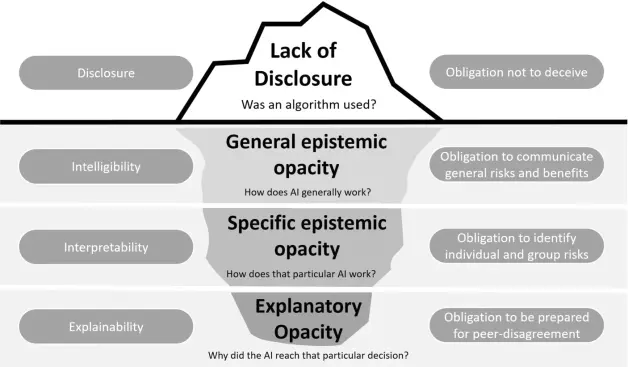

Levels of explicability for medical artificial intelligence: What do we normatively need and what can we technically reach? - Ethik in der Medizin
Definition of the problem The umbrella term “explicability” refers to the reduction of opacity of artificial intelligence (AI) systems. These efforts are challenging for medical AI applications because higher accuracy often comes at the cost of increased opacity. This entails ethical tensions because physicians and patients desire to trace how results are produced without compromising the performance of AI systems. The centrality of explicability within the informed consent process for medical AI systems compels an ethical reflection on the trade-offs. Which levels of explicability are needed to obtain informed consent when utilizing medical AI? Arguments We proceed in five steps: First, we map the terms commonly associated with explicability as described in the ethics and computer science literature, i.e., disclosure, intelligibility, interpretability, and explainability. Second, we conduct a conceptual analysis of the ethical requirements for explicability when it comes to informed consent. Third, we distinguish hurdles for explicability in terms of epistemic and explanatory opacity. Fourth, this then allows to conclude the level of explicability physicians must reach and what patients can expect. In a final step, we show how the identified levels of explicability can technically be met from the perspective of computer science. Throughout our work, we take diagnostic AI systems in radiology as an example. Conclusion We determined four levels of explicability that need to be distinguished for ethically defensible informed consent processes and showed how developers of medical AI can technically meet these requirements.
A paper written with Eduardo Noboa titled "Energy Sovereignty: A Values-Based Conceptual Analysis" is out
#energy #sovereignty #energytransition https://link.springer.com/article/10.1007/s11948-022-00409-x
Energy Sovereignty: A Values-Based Conceptual Analysis - Science and Engineering Ethics
Achieving energy sovereignty is increasingly gaining prominence as a goal in energy politics. The aim of this paper is to provide a conceptual analysis of this principle from an ethics and social justice perspective. We rely on the literature on food sovereignty to identify through a comparative analysis the elements energy sovereignty will most likely demand and thereafter distinguish the unique constituencies of the energy sector. The idea of energy sovereignty embraces a series of values, among which we identified: (i) accessibility, to allow access to everyone, (ii) empowerment and recognition, to develop and sustain capabilities to collaboratively produce solution-oriented energy system knowledge and effectively participate in governance, (iii) stewardship and sustainability, to be able to design and manage decentralised renewable systems in view of protecting the environment, (iv) self-sufficiency, to reduce the negative shocks of exploitative business practises, (v) resilience, to maintain production capacities while withstanding socioeconomic, political, environmental and climatic shocks, (vi) peace, to establish production systems that do not involve hostile relations, (vii) transparency and self-determination, to establish democratic decision-making mechanisms that give a voice to previously underrepresented groups and limit corporate takeover (viii) gender-justice, by acknowledging the contributions of women and eliminate barriers to their empowerment. With a conceptual framework of energy sovereignty, we present a rationale that draws on the key values to be considered when formulating policy solutions for the energy sector.