 John Cutting
Preview of something I've been working on (on and off for the past few years)- a #blaseball inspired olympics sim.

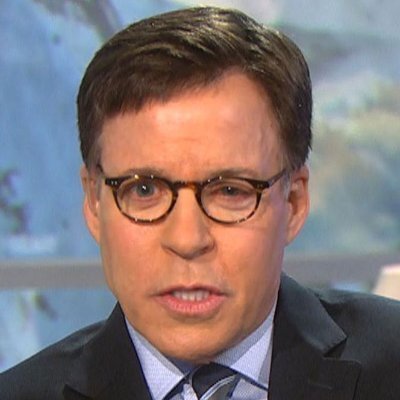
| Cohost | cohost.org/Blobcostas |
| @blobcostas | |
| Twittodon | https://twittodon.com/share.php?t=Blob |
#Blaseball is dead and Blob is retired.
Follow my real-world account, here if you please

511 Posts, 61 Following, 81 Followers · Writer at Fortuna Saga, sprite artist, and someone who generally over-thinks SNES RPGs. Chaotic Neutral; He/Him
From the Immaterial Plane, this is Splorts Announcer Blob Costas signing off.
Fare thee well, #blaseball friends.
Good night and good luck.
youtube.com/watch?v=iMNL9y6Q5xE
While I'm sad to see #Blaseball go, it was disappointing to see the game die via an announcement instead of ending the series in the universe of Blaseball. I created a vignette of what that might have looked like if things had been a little different.
Some final reflections on #Blaseball
https://cohost.org/JohnCutting/post/1613880-blaseball-postmortem

Blaseball officially announced yesterday that it is shutting down permanently. Blaseball has been a large part of my (online) life these past 2-3 years, and I want to reflect on what its life and death mean to me. I genuinely loved my Blaseball persona as 'Splorts' announcer and perpetual pinkeye victim Blob Costas. I started out trying to roleplay what I imagined Bob Costas would be like in a strange world full of near-familiar baseball with creeping eldritch horrors, but eventually Blob just became an extension of my personality where I felt more free to talk about politics, my own bisexuality, and other topics that I normally don't broach on my professional or personal online presences. This reflected back on me personally, and I'm much more open about my (and my partner's) queerness, polyamory, and other facets of my personality. I'm normally a Serious Person™ online, and it was refreshing to have a space where I can be silly and be the butt of my own jokes without fear of embarrassment or rejection. I think I'm a more easy-going person as a result of this time seeing the world through Blob's conjunctivitis-scarred eyes. I'll always be grateful to Blaseball for that. Blaseball came at a weird time in many of our lives. I was working very hard and had almost all of my hair fall out in a single night due to stress. I was creatively bankrupt and the COVID-19 lockdown made me reevaluate how I was spending my time. I took more time to rest and recover, and I found that making jokes as Blob Costas late at night when I had a (too common) bout of insomnia was the creative and intellectual salve that I needed to relax and recenter myself. My experience with Blaseball isn't unique. Viewing the Twitter feeds since the announcement was made shows that many people had similar experiences with the Splort. Instead, I want to talk about how Blaseball has helped me professionally by providing new approaches to how I approach communication. 1. Communication is better and more productive when you are willing to roll with the unexpected and when you "yes and" with those you want to connect with. Some of the my most memorable moments with Blaseball are events called the Grand Unslam and the Wyatt Masoning. The specifics of these events are not important for this discussion (You can look it up). The root cause for both, and so many more fun events, were backend coding issues with Blaseball itself. Most games would have simply fixed the issue, released a hotfix update with patch notes, and moved on as planned. This is because most games (even games as a service) have a story that they want to tell TO the audience. Blaseball didn't do this. The writers incorporated these bugs (and many more) into the lore of the story that they were telling. The main antagonist of the first story arc (a vengeful peanut god) arrived by a similar and unplanned turn of events. It would have been so easy to simply hit the reset button and get the plot of Blaseball back 'on track.' The fact that they didn't do this was inspired because the story was not something that was just being told to the audience. It was an experience that was being shared with the audience. The audience had a part to play in it too. What they saw and didn't see mattered. How they reacted mattered. By rolling with these bugs, the audience created real emotional connections because they could feel like more than passive observers. This has helped me (and by extension my co-workers) in a professional sense as well. I started to notice that the meetings or presentations that we would give that didn't go well had a common thread. We were inflexible with our plans. We would have a goal that we were trying to accomplish, and, if something came up to disrupt that, we would tend to shelve it for later or treat it as a distraction away from our goals. We were missing opportunities to connect with our clients. We were telling them what we thought they needed to hear, We were missing opportunities for them to contribute and connect and become closer partners with us. Blaseball did this very well. They created space to connect and worked hard to find ways to accommodate new information or new parameters while still telling a story that they wanted to tell. In improv, this is commonly called "yes anding." You take in what your audience or your partners have to say, and you add to it. You build something on it instead of digging your heels in and trying to go through with what you think is the safe, planned path. Being a fan of Blaseball really gave me some new perspective on how to capitalize on those opportunities to connect with my audience while still keeping the direction of things generally in the way that it needed to go. The solutions we started coming up with using the schema were more varied, more creative, and more successful. I think a lot of this has to do with what blaseball showed us. 2. Failure is awesome! It's a little bit funny for me to say this in light of the, frankly, poorly executed announcement about the end of Blaseball. I can put on my blackhearted businessman hat, and I can opine about the many missed opportunities that the Game Band could have tried out to build self-succiency for their phenomenally popular game. While wearing this hat, I can think of a lot of things that they could have done to reduce operating costs or find additional revenue streams that the fans would not have rejected, but that's not the point. When I take the hat off, I'm glad that they didn't do this stuff because I feel it would have torn the soul of the game out bit by bit. I'm grateful for the transiently beautiful game and community that we had. There were a lot of failures in Blaseball. From the system issues I talked about in the previous section to some poorly communicated or realized features or things that created perverse incentives within the community... All of these that turned a lot of fans off of the community for good. Looking back, I really appreciated how the Game Band handled most of these hiccups. Yes, of course, they learned from them, but they also found ways to resolve them in ways that were satisfying and didn't come off as heavy-handed. There is a lesson here too. Failure sucks but it can be awesome if you tackle it with humility, flexibility, and a little bit of good humor. It's easy for me as a manager to have serious discussions about the Pluses and Deltas of something at work. These questions are the fundamental blocks to build a successful team. However, Blaseball taught me to start seeking those second order lessons from failures. What did we learn from this failure that we wouldn't have learned it everything went according to plan? Are there people (stakeholders, clients, partners, competitors...) that would categorize this as a success instead of a failure? Why? How might we tie up this failure in a satisfying way without starting over? Blaseball made more comfortable exploring these weird and wild second order questions when things didn't go well. It turns out that these conversations are not the unproductive naval gazing as I had previously assumed. This taught me (and my teams) to be more honest and open about failure, and it helped us find some creative solutions that were delightfully successful and opened a lot of new doors for us. I'm going to miss Blaseball. It taught me a lot about myself and helped me apply new perspectives in my professional life. In twenty years, I might forget the exact details about Chorby Short and Jessica Telephone and the Grand Unslam, but I doubt I'll forget some of these intangible lessons this game and its community shared with me.
#Blaseball has officially ended.
I genuinely loved being Blob Costas.
For those of you that I've friended in this fandom, please consider following my real persona here. I write webcomics and have deep thoughts about movies and RPGs.
511 Posts, 61 Following, 81 Followers · Writer at Fortuna Saga, sprite artist, and someone who generally over-thinks SNES RPGs. Chaotic Neutral; He/Him


 wb x64