Burcu Baykurt

@baykurt
479 Followers
160 Following
68 Posts
Media & technology studies @UMassAmherst
[email protected]
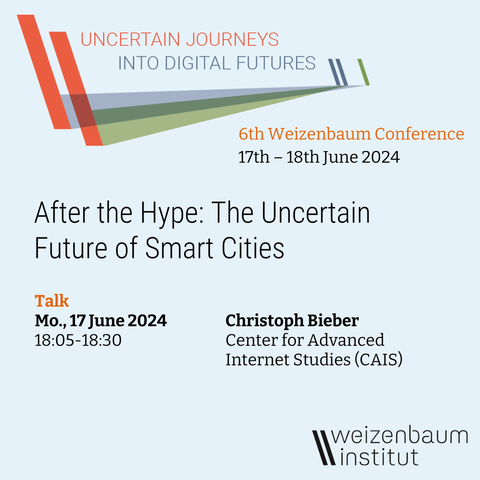
#SmartCities have always been a promising vision of #urban spaces. But their actual implementations have been found wanting. Sign up for the Weizenbaum Conference #WIConf24 now and don’t miss the talk by Christoph Bieber (@CAISnrw) about the „Post-Smart City era“ 👉 https://www.weizenbaum-conference.de/pogram/
Program – Weizenbaum Conference 2024

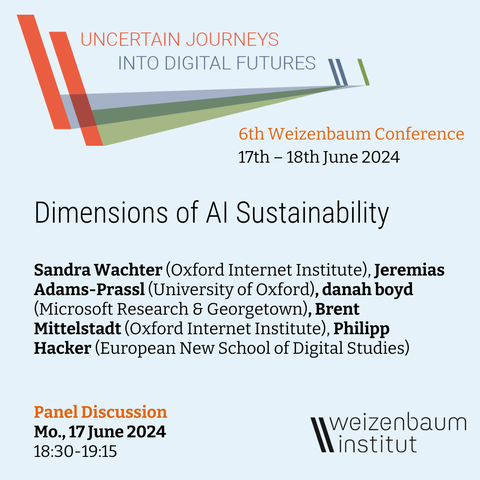
It’s difficult to imagine a future without #AI – but what exactly should it look like? Our #WIConf24 panel w/ @SandraWachter @zephoria, Brent Mittelstadt, Jeremias Adams-Prassl, and Philip Hacker (@ens) explores ethical, environmental, and social implications of AI, in order to integrate sustainable practices into its development and deployment.

Don’t miss out ⤵️ https://www.weizenbaum-conference.de/

Weizenbaum Conference 2025 – Empowering People in Online Spaces

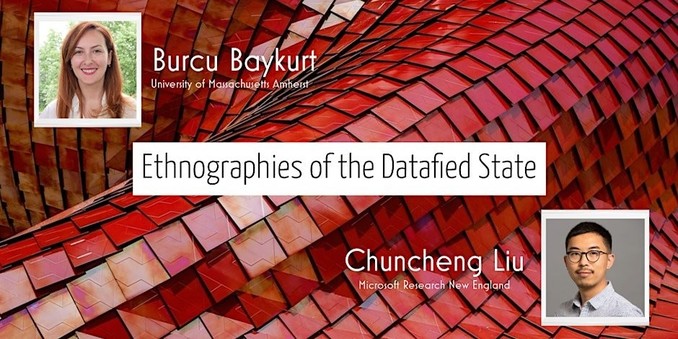
I'm looking forward to being in conversation with @chchliu on "Ethnographies of the Datafied State," organized by the fantastic Digital Ethnography Working Group at Rutgers.

Join us on Zoom this Friday at 1 PM (EDT): https://www.eventbrite.com/e/ethnographies-of-the-datafied-state-tickets-867694155577?aff=oddtdtcreator

Ethnographies of the Datafied State

This panel explores the use of ethnographic methods in examining the complex relationship between computation and statecraft.

Eventbrite

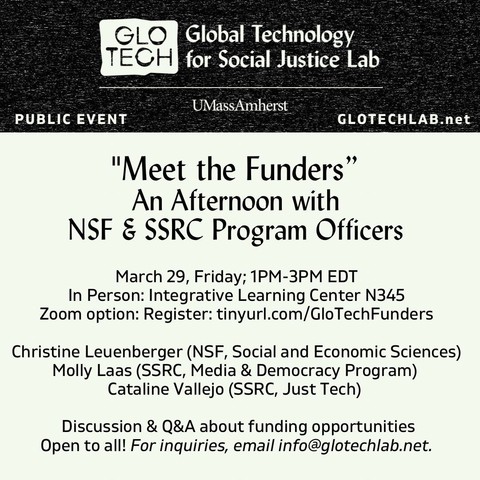
Our first public event on March 29th is motivated by a very important question: At a time when studying digital technologies can't be limited to one country or even one region, how do we build sustainable support for research at the intersection of critical tech studies & global studies?

It's open to all and hope you can join the conversation! tinyurl.com/glotechfunders

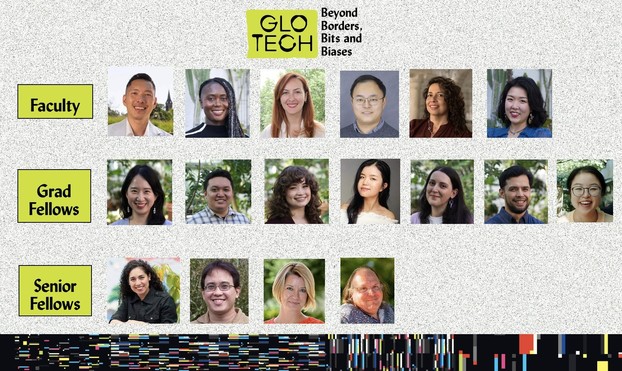
I'm still not very active on social media but want to share some exciting news that might be of interest: A few weeks ago, we announced the launch of The Global Technology for Social Justice Lab at UMass Amherst (GloTech Lab) glotechlab.net

As a group of global scholars frustrated with Euro-American-centrism in tech policy / design -- and its critique -- we want to collectively seek alternative ways of thinking, collaborating, and building effective advocacy against global digital injustices.

🚨 ACADEMIC JOB ALERT 🚨

Open-Rank TT Position in Media Ethics & Law | UMass Amherst Journalism Department

Posting is flexible regarding approach to the subject matter. Please spread widely within your networks. Feel free to direct questions to me, as I'm chairing the search. I'm happy to call UMass home. I ❤️ my colleagues and students. A lovely, exciting place to work.

https://careers.umass.edu/amherst/en-us/job/520380/open-rank-tenure-track-journalism-ethics-and-law

@academicchatter @communicationscholars @phdstudents #commodon #mediaStudies #academicChatter

Details - Open Rank Tenure Track - Journalism - Ethics and Law | Human Resources | UMass Amherst

Oh hey our book is now out in open access! Download a free pdf of our thoughts on the intersections between (digital) media studies and the energy humanities! We're very proud of it!

https://meson.press/books/digital-energetics/

Zane Griffin Talley Cooper, Jordan B. Kinder, Anne Pasek, Cindy Kaiying Lin: Digital Energetics

Media and energy require joint theorization as they are bound together across contemporary informational and fossil regimes. Digital Energetics traces the contours of a media analytic of energy and an energy analytic of media across the cultural, environmental, and labor relations they subtend. Focusing specifically on digital operations, its authors analyze how data and energy ...It’s Open Access! Check it out!

meson press
New publication out today with the International Journal of Communication! In it, I use a textual analysis to argue how journalists used distancing techniques and mnemonic devices to make sense of Trump and Trumpism and to bolster their own cultural authority at a time when trust in the media is at record lows. Open access here: ijoc.org/index.php/ijoc/article/view/19842/4198
If you're working at the intersection of digital technologies/machine learning and immigration, we'd love to hear your feedback as we continue our research in this area.
In a new article, Allie Lyamuya & I show how governmental organizations justify using data science techniques in humanitarian work even when they don't work well and/or might cause risk for vulnerable groups. We argue that what sustains the ideal of a predictable border is not necessarily the technical success of prediction but the organizational strategies of bureaucrats (i.e., constantly seeking novel variables and data, maintaining ambiguity, and shifting models). https://journals.sagepub.com/eprint/KJECRSZSTYAJEWZZKKVV/full