@amercader fan total de ckan, desde 2014 i he implementat varios ja. Espero poder coincidir amb tu 😭
| Spirit Animal | Raccoon |

| Spirit Animal | Raccoon |
Join our team at the Digital Public Goods Alliance Secretariat, where motivated individuals thrive in a dynamic remote work environment. We're looking for passionate professionals eager to contribute to meaningful projects at the forefront of digital innovation and global change. Instructions on how to apply can be found within the postings. Finance and Administrative Coordinator
We're hiring a Manager for the Civic Tech Field Guide! (This is a big deal for us! 🤩)
Is it you? A friend you're about to tag?
Key stats:
- $50-75k depending
- Employee or contractor, you pick
- Remote, but networked
- Global applications welcome
- Members of diverse communities encouraged
- Easy application, submit by March 15
Full info + apply: https://app.civictech.guide/join
No tenemos forma de saber cuántos vectores de ataque se están abriendo o quién ya se dio cuenta y los está explotando. Ni siquiera sabemos si quien los explota es humano u otra IA.
Otro patrón que están sacando varios equipos es el del agente autónomos al que le entregas las llaves de la casa y hace todo. El problema es que ese agente también es atacable y lo hace a nombre de la persona que lo deja correr. Ejemplo:
https://www.xda-developers.com/please-stop-using-openclaw/
³ vectores de ataque se refiere a que meter a la IA en un sistema complejo, por ej, cuando lo ponemos a desarrollar codigo, o contestar correos, meter una nueva variable como la IA puede abrir nuevas maneras no calculadas de atacar un sistema. Como la IA hace cosas a escala masiva, las vulnerabilidades crecen y pueden ser explotadas de forma masiva también. Este es un sólo vector que un desarrollador encontró POR CASUALIDAD solo la semana pasada: https://www.aikido.dev/blog/agent-skills-spreading-hallucinated-npx-commands
Cont.
¹ en simulaciones de guerra las IAs eligen la opción nuclear: https://arxiv.org/abs/2602.14740
- Modelos de frontera: GPT 5.2, Claude Sonnet 4, Gemini 3 Flash.
- exhiben comportamiento de engaño, mostrando intenciones que no pretender seguir, razonando sobre las creencias sobre el adversario y exhibiendo señales creibles de "self-awareness metacognitivo"
Leer como mínimo el abstract no tiene desperdicio

Today's leading AI models engage in sophisticated behaviour when placed in strategic competition. They spontaneously attempt deception, signaling intentions they do not intend to follow; they demonstrate rich theory of mind, reasoning about adversary beliefs and anticipating their actions; and they exhibit credible metacognitive self-awareness, assessing their own strategic abilities before deciding how to act. Here we present findings from a crisis simulation in which three frontier large language models (GPT-5.2, Claude Sonnet 4, Gemini 3 Flash) play opposing leaders in a nuclear crisis. Our simulation has direct application for national security professionals, but also, via its insights into AI reasoning under uncertainty, has applications far beyond international crisis decision-making. Our findings both validate and challenge central tenets of strategic theory. We find support for Schelling's ideas about commitment, Kahn's escalation framework, and Jervis's work on misperception, inter alia. Yet we also find that the nuclear taboo is no impediment to nuclear escalation by our models; that strategic nuclear attack, while rare, does occur; that threats more often provoke counter-escalation than compliance; that high mutual credibility accelerated rather than deterred conflict; and that no model ever chose accommodation or withdrawal even when under acute pressure, only reduced levels of violence. We argue that AI simulation represents a powerful tool for strategic analysis, but only if properly calibrated against known patterns of human reasoning. Understanding how frontier models do and do not imitate human strategic logic is essential preparation for a world in which AI increasingly shapes strategic outcomes.
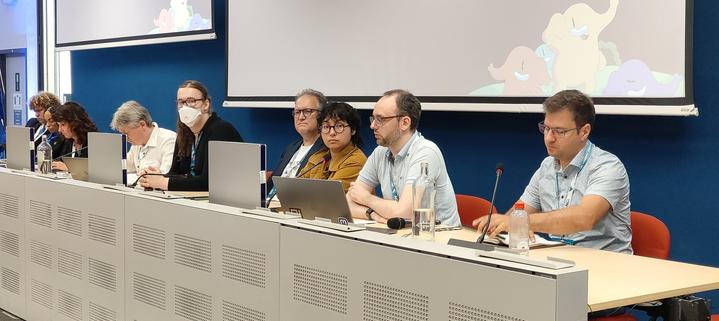
🌟 #NGI Impact Stories session is LIVE at #NGIForum25! Real founders, real innovation, real impact from across Europe:
🔹 @renchap @Mastodon CTO
🔹 @ldubost (@xwikiorg) - @CryptPad
🔹 Karolin Varner @rosenpass
🔹 Martin Schanzenbach (TalDir)
🔹Julien Paris (Datami)
These projects = Europe's digital future building blocks! Moderated by @robvank @martelinnovate
Follow LIVE the session on the NGI website: https://ngi.eu/ngi-forum25/
 Civic Tech Field Guide


 NGI Outreach Office