This
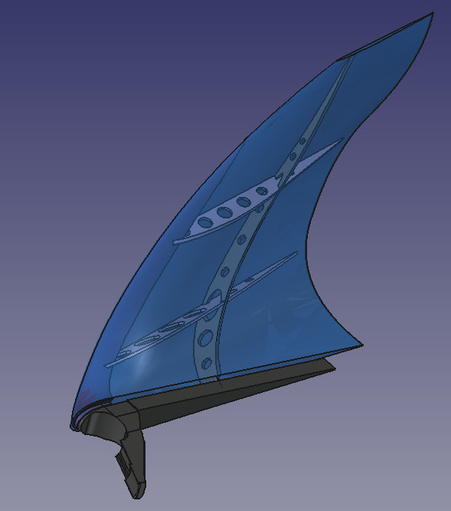
#freecadfriday I've been working on the winglets again. Finally got a nice 3D printed core structure, designed in
@freecad printed on my Prusa XL. It clicks together really nicely and is featherlight. I bond it into the carbon skins using strips of UD carbon, so it makes a lovely light and very rigid structure. The 3D print is just the support; it stops the carbon buckling so that it can be really thin. It took a few iterations to get to a design that I could be proud of!
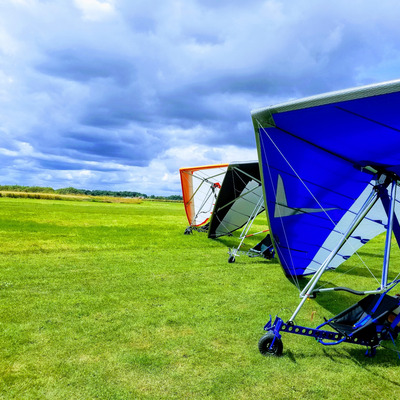
Winglets are really great! I love the way the glider handles with them and especially how it looks with them. They also (when designed properly, which ours our, both by analysis and by testing) add a bit to performance, particularly low speed and min sink. However they also have some downsides. We've come up with something that gives a lot of the benefit, but simpler, more practical and lower cost. We also have great fun testing it!
https://www.patreon.com/posts/fun-with-fins-159718639?utm_medium=clipboard_copy&utm_source=copyLink&utm_campaign=postshare_creator&utm_content=join_linkOdd message on my parents computer, Firefox popped up with a warning that it was running low on disk space and to clear stored data to free up space. The computer in question has a 500GB drive which is about 1/2 full, but Firefox thinks that it had somehow got 17 million TB stored somewhere. My parents seem to have somehow downloaded the whole internet! They cleared it and the error hasn't come back.
Really, this sort of thing is what I'm aiming for!
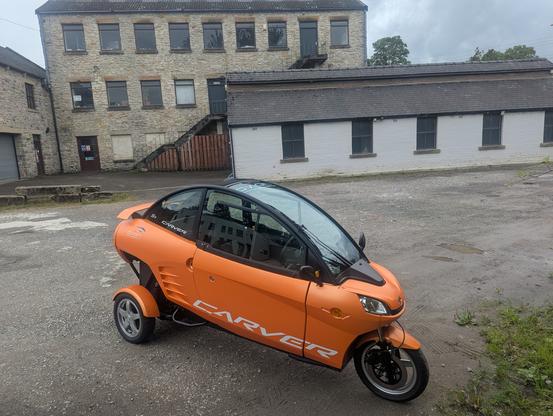
I have a Carver, it's a 3 wheel electric vehicle that tilts as it goes round corners, feels a bit like flying at ground level. I'd like a Head Up Display to show me things like power use/regen, battery level and also an artificial horizon, just because! Getting the data is no problem, I can read the CANbus, but how can I display it? I need a REALLY bright display to reflect off the screen which I can connect to something like a RPi or ESP. Any ideas people?
@freecad If anyone has suggestions for the Appearance settings to make the X look more metallic then please let me know. The logo is supposed to visually echo the noseplates.
This
#freecadfriday I've been finding
@freecad useful for designing a logo for our new Dynamic Cross Link (DXL) system. I know something like
#blender would probably be a more suitable tool for this sort of thing, but I'm so much more competent in FreeCAD that I could knock up a 3D logo and animate it for my video in about half an hour instead of having to (re)learn Blender. I like the effect.
Used
@FreeCAD to design the moulds for the winglet. So printing the patterns (Prusa XL) to make moulds from which eventually the carbon parts will be made from. There's a pair of winglets, each mould is in 2 halves (plus some small loose pieces), the pattern for each half is printed in two sections and the print takes nearly 2 days. So about 2 weeks of solid 3D printing time to do the full set.
And here's the same launch from onboard.
Here's a launch at the Kennedy site near the Cote d'Azur in the south of France. Flew on 8 out of the 9 days I was there, had some thermic conditions, in November! Could probably have squeezed in a top to bottom on the other day as well if I'd been desperate!