@asol
- 7 Followers
- 39 Following
- 96 Posts
@astrojuanlu poetry and pipx always felt a bit heavy for me, stuck around simple pip till uv came out
@ekuber congrats now you have 4 Macs in 1!!!
 Hacker News Discussions
@orhun looks, good, I'm looking for a linux machine, would you recommend?
@orhun what’s that Lenovo?
@ham_sando paid solution, tries to do too much.
@ham_sando Never heard of Domino. Airflow provides scheduling and triggering, plus a good webui and rich plugin ecosystem.
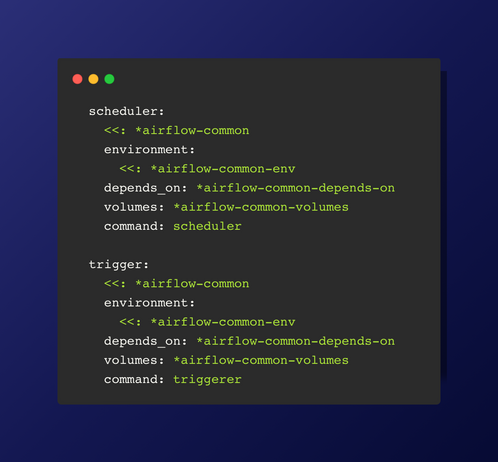
scheduler: This service is responsible for scheduling tasks, defining dependencies, and determining execution times.
trigger: This service manages external event triggers for task execution.
Both services inherit common settings (airflow-common, environment variables, dependencies, and volumes) and specify their respective commands (scheduler and triggerer).
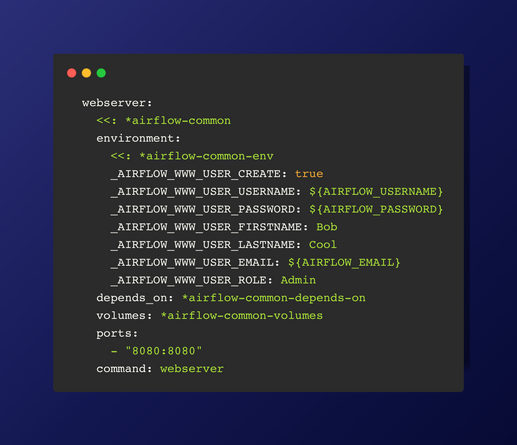
Next we can configures the Airflow webserver service, setting up a default admin user with provided environment variables and specifying dependencies, volumes, and port mappings for accessing the web interface. A webserver serves the web-based user interface for managing and monitoring Airflow workflows.
Recommendation would be to setup .envrc file with all the environment variables
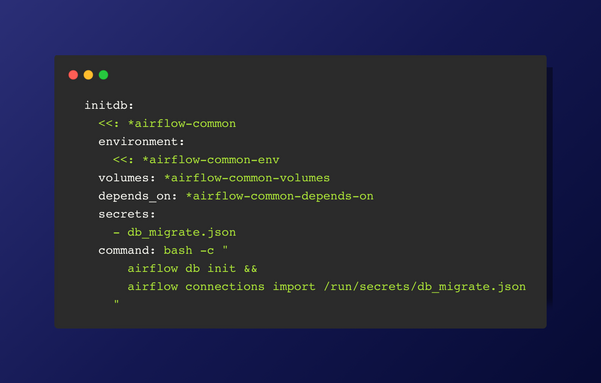
The initdb service uses common Airflow settings extended from *airflow-common.
The environment variables and volume mappings are also extended from common settings.
The service depends on other services defined in *airflow-common-depends-on.
The command initializes the Airflow database with airflow db init and imports connections specified in the db_migrate.json file located in the secrets directory.
The environment variables and volume mappings are also extended from common settings.
The service depends on other services defined in *airflow-common-depends-on.
The command initializes the Airflow database with airflow db init and imports connections specified in the db_migrate.json file located in the secrets directory.