ASA Drugs and Society

176 Followers
408 Following
29 Posts
The American Sociological Association's section devoted to the sociological study of substance use, its social contexts, causes, and interconnected social effects.
Professional OrganizationAmerican Sociological Association
Websitehttps://www.asanet.org/asa_sections/drugs-and-society/
Facebookhttps://www.facebook.com/ASADrugsSoc

Racial Inequality in Receipt of Medications for Opioid Use Disorder.

Since 2010, Black persons in the United States have had a greater increase in opioid overdose–related mortality than other groups, but national-level evidence characterizing racial and ethnic disparities in the use of medications for opioid use disorder (OUD) is limited.

https://www.nejm.org/doi/full/10.1056/NEJMsa2212412

Here's an open access article detailing the long-term outcome for MDMA)-assisted psychotherapy for treatment of PTSD.

Long-term follow-up outcomes of MDMA-assisted psychotherapy for treatment of PTSD: a longitudinal pooled analysis of six phase 2 trials
https://link.springer.com/article/10.1007/s00213-020-05548-2

Long-term follow-up outcomes of MDMA-assisted psychotherapy for treatment of PTSD: a longitudinal pooled analysis of six phase 2 trials - Psychopharmacology

Rationale Posttraumatic stress disorder (PTSD) is a chronic condition that has wide-ranging negative effects on an individual’s health and interpersonal relationships. Treatments with long-term benefits are needed to promote the safety and well-being of those suffering from PTSD. Objectives To examine long-term change in PTSD symptoms and additional benefits/harms after 3,4-methylenedioxymethamphetamine (MDMA)-assisted psychotherapy for treatment of PTSD. Methods Participants received two to three active doses of MDMA (75–125 mg) during blinded or open-label psychotherapy sessions with additional non-drug therapy sessions. PTSD symptoms were assessed using the Clinician-Administered PTSD Scale for DSM IV (CAPS-IV) at baseline, 1 to 2 months after the last active MDMA session (treatment exit), and at least 12 months post final MDMA session (LTFU). A mixed-effect repeated-measures (MMRM) analysis assessed changes in CAPS-IV total severity scores. The number of participants who met PTSD diagnostic criteria was summarized at each time point. Participants completed a long-term follow-up questionnaire. Results There was a significant reduction in CAPS-IV total severity scores from baseline to treatment exit (LS mean (SE) = − 44.8 (2.82), p < .0001), with a Cohen’s d effect size of 1.58 (95% CI = 1.24, 1.91). CAPS-IV scores continued to decrease from treatment exit to LTFU (LS mean (SE) = − 5.2 (2.29), p < .05), with a Cohen’s d effect size of 0.23 (95% CI = 0.04, 0.43). The number of participants who no longer met PTSD criteria increased from treatment exit (56.0%) to LTFU (67.0%). The majority of participants reported benefits, including improved relationships and well-being, and a minority reported harms from study participation. Conclusions PTSD symptoms were reduced 1 to 2 months after MDMA-assisted psychotherapy, and symptom improvement continued at least 12 months post-treatment. Phase 3 trials are investigating this novel treatment approach in a larger sample of participants with chronic PTSD. Trial registration clinicaltrials.gov Identifier: NCT00090064, NCT00353938, NCT01958593, NCT01211405, NCT01689740, NCT01793610

SpringerLink

Another #history lesson, from the book Last Call: The Rise and Fall of #Prohibition by Daniel Okrent: politician and naval hero Richmond P. Hobson, a strident "dry" helped promote the anti-liquor sentiment using #racist paternalism and tropes - including claims that alcohol often drove black Americans (not the language used at the time) to cannibalism. Hobson is considered likely the MOST liberal of southern Democrats at the time on the topic on "the race issue."

http://encyclopediaofalabama.org/article/h-3235

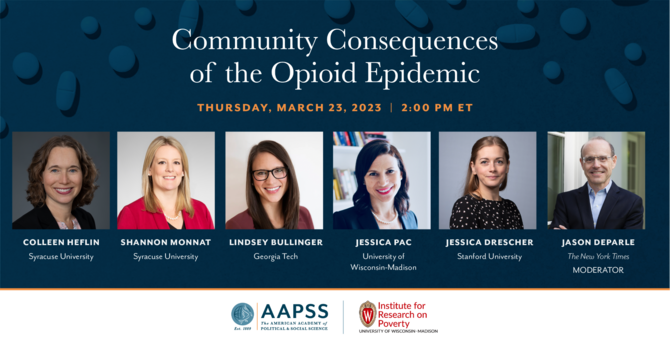
Also, AAPSS is having a launch webinar for the issue, Thursday at 2pm ET, with five researchers and moderator Jason DeParle. Registration: https://us06web.zoom.us/webinar/register/1316783176624/WN_xAtlzne4QtaZfVL5fCCwfA
#publichealth #opioids
Welcome! You are invited to join a webinar: Community consequences of the opioid epidemic . After registering, you will receive a confirmation email about joining the webinar.

Please join the American Academy of Political and Social Science (AAPSS) and the Institute for Research on Poverty at the University of Wisconsin for a webinar on the societal consequences of the opioid epidemic, particularly as they affect child well-being. The conversation will draw findings and insights from the forthcoming volume of the AAPSS journal, The ANNALS, which uses data from local, state and federal sources to investigate how opioid use disorder impacts the effectiveness of our education system, strains social services including child welfare agencies, and creates fiscal burdens across social welfare infrastructure. Each of the panelists contributed to the volume. You can read the unlocked volume here: https://journals.sagepub.com/toc/anna/703/1 Moderator: Jason DeParle, Reporter, The New York Times Speakers: Colleen Heflin, Syracuse University Shannon Monnat, Syracuse University Lindsey Bullinger, Georgia Institute of Technology Jessica Pac University of Wisconsin-Madison Jessica Drescher, Stanford University The virtual event will feature a discussion among experts and a Q&A with attendees.

Zoom
Most folks I know who are worried about AI aren’t worried about these programs becoming self aware and oppressing us. That’s not a thing. We’re worried about all the ways these systems will ramp up existing inequalities and further obliterate our shared reality as human beings. That’s already happening.

"More than 1,000 “super-emitter” sites gushed the potent greenhouse gas methane into the global atmosphere in 2022"

Hard to know what the most shocking part of this story is, but just the idea that 25% of current warming is from methane and **40%** of that methane is from entirely avoidable fossil fuel facility leaks is horrifying. https://www.theguardian.com/environment/2023/mar/06/revealed-1000-super-emitting-methane-leaks-risk-triggering-climate-tipping-points #methane #climate #fossilfuels

Revealed: 1,000 super-emitting methane leaks risk triggering climate tipping points

Vast releases of gas, along with future ‘methane bombs’, represent huge threat – but curbing emissions would rapidly reduce global heating

The Guardian

#Sociology: our first @ContextsMag issue is live and free for 30 days!!! Follow the link to read public-facing, rad, rigorous, incredible research. Share! Send to friends and family! Celebrate what sociology can do for the world! Also, check out contexts.org for other exciting elements related to the issue and to on-going blog essays, updates, and the like!

@aminghaziani @[email protected] @sociology @sociologists_list

https://journals.sagepub.com/home/ctx

:SoM

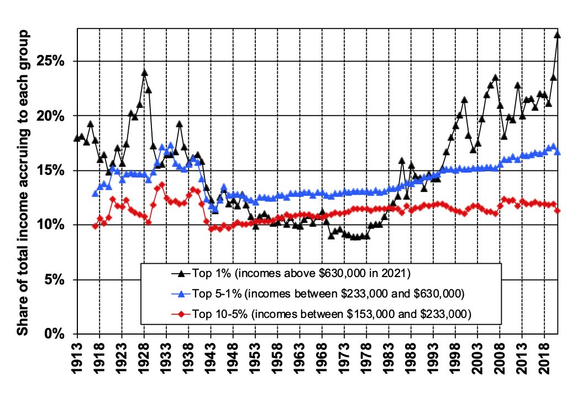
we did it guys, we created a new gilded age

"By 2021, the top 1% income share has reached an all-time high of 27.4% much higher than the previous record of 23.9% in 1928"

https://eml.berkeley.edu/~saez/saez-UStopincomes-2021.pdf

Developers Created AI to Generate Police Sketches. Experts Are Horrified #AI #BLM #Sociology
https://www.vice.com/en/article/qjk745/ai-police-sketches
Developers Created AI to Generate Police Sketches. Experts Are Horrified

Police forensics is already plagued by human biases. Experts say AI will make it even worse.