| Personal | https://roth-a.de |

Alexander Roth
@aroth
- 382 Followers
- 465 Following
- 254 Posts
Affiliate Fellow @ Bruegel & researcher @ DIW_Berlin,
3) Lacking strong competencies in fiscal and energy policy, the Commission focused on coordination (https://www.bruegel.org/analysis/how-europe-should-respond-iran-gas-shock-and-how-it-shouldnt) and relaxing state aid in the short term
4) It urged governments to use only targeted measures as a response to the higher fossil fuel prices. Our Bruegel tracker (https://www.bruegel.org/dataset/2026-european-energy-crisis-fiscal-response-tracker) shows that most measures are untargeted, though.
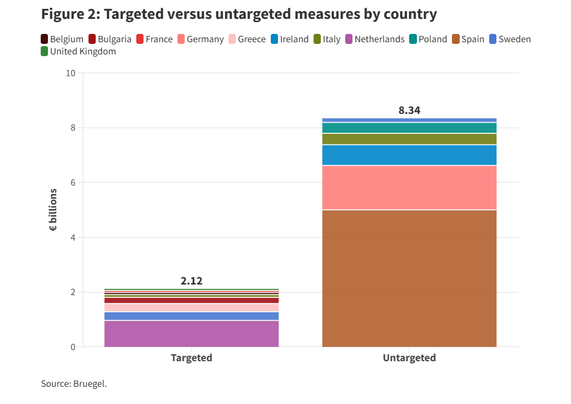
(3) The majority of measures are untargeted and focus on lowering energy prices - instead of helping vulnerable groups and promoting structural change
And here the link again: https://www.bruegel.org/dataset/2026-european-energy-crisis-fiscal-response-tracker
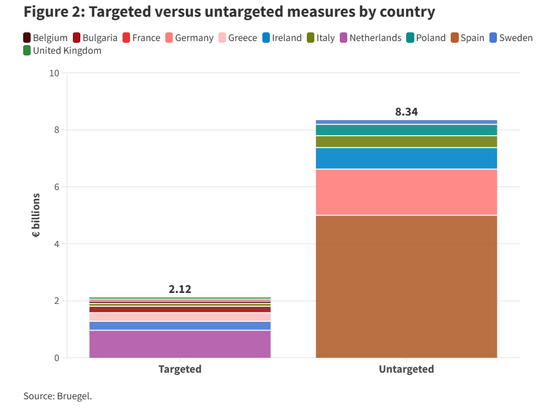
(1) European governments have so far committed almost €10.46 billion in fiscal measures
(2) Spain and Germany are responsible for more than 50% of all amounts combined; Spain, Bulgaria, Greece, and Sweden have committed the most in terms of GDP
✅ What to do:
- Promote savings and ensure that the storage is filled to have a buffer for the next winter
- Push for structural demand reduction by fuel switching and electrification (e.g., through lower electricity taxes)
- Engage with other major LNG buyers to coordinate global gas savings
3/5
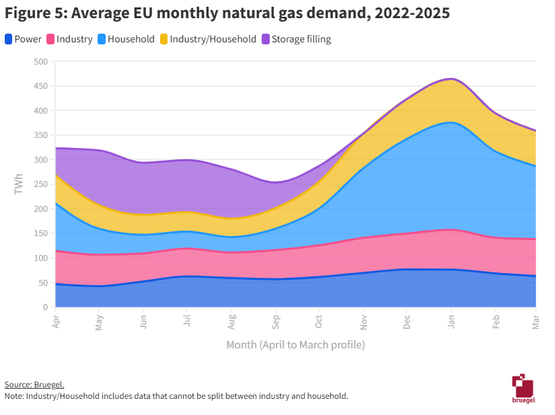
⚠️ The situation:
- The closure of the Strait of Hormuz has reduced global LNG supply by 20%
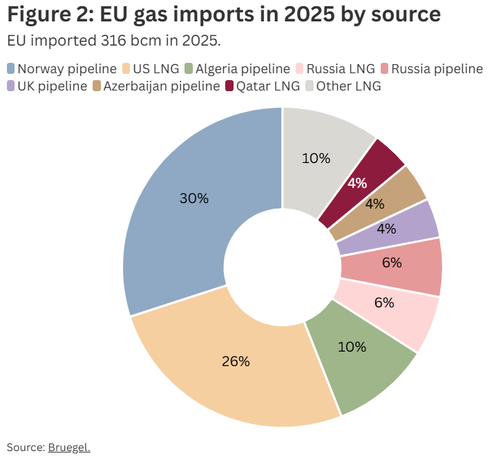
- 4% of the EU's gas imports come from Qatar
- Despite this small share, the EU faces an energy bill shock: if high prices persist, the EU’s energy bill could increase by €100bn over the next 12 months
2/5
So, what are the main takeaways?
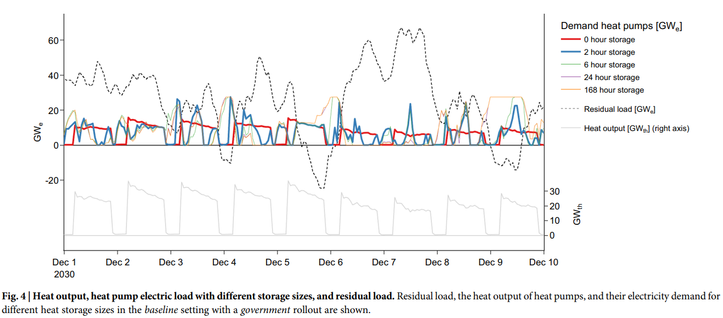
▶️ Flexible heat pumps with thermal storage can provide valuable flexibility to the power sector.
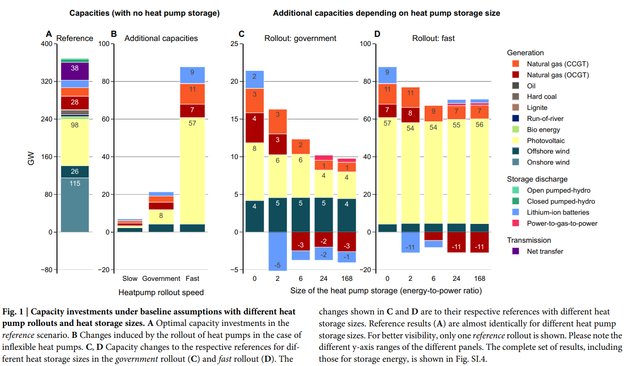
▶️ They can reduce the need to build other flexible power plants or storage.
▶️ Hourly electricity prices are key for incentivizing optimal heat pump use.
▶️ To that end, households need to be equipped with 'smart meters' (Germany needs to speed up).
▶️ An ambitious rollout of heat pumps can significantly reduce natural gas consumption, CO2 emissions, and costs.
And for the nerds, some details on the method 🤓
* We use a linear cost-minimization model of Germany and its neighboring countries with the sexy name #DIETER.
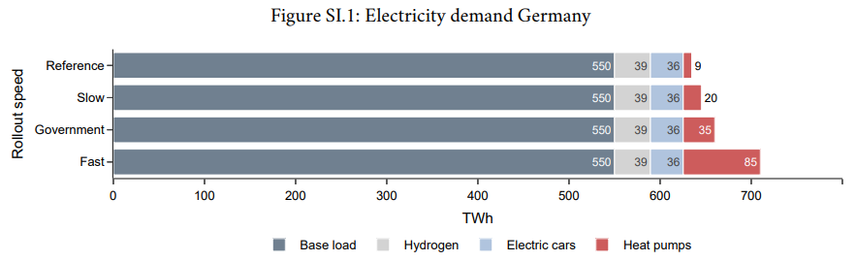
* Different heat pump rollout scenarios until 2030 are modeled (1.7, 3, 6, and 10 million units).
* #BEV and #hydrogen demand is also included.
And some further points:
* An ambitious heat pump rollout would be best matched with additional wind power, but solar PV also works if combined with other technologies.
* We calculate that small (<2 h) heat storage makes sense economically; larger ones are too expensive and anyway unrealistic for private households and will be rather used in heating grids.
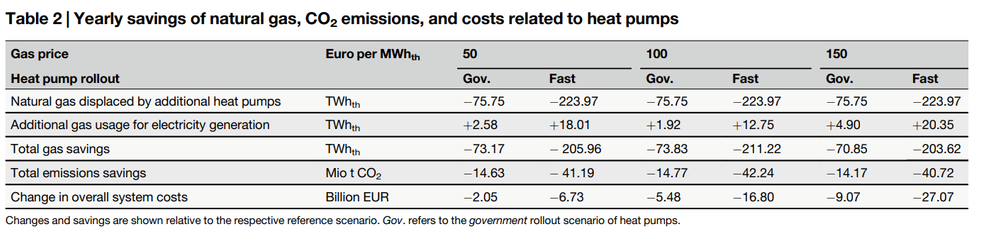
3️⃣ By installing more heat pumps, Germany could save natural gas, money, and emissions:
We estimate that annual household CO2 emissions could be reduced by
~ 18% (~14 mil. tons) for 6 million heat pumps
~ 51% 🤯 (~41 mil. tons) for 10 million heat pumps.
We estimate that annual household CO2 emissions could be reduced by
~ 18% (~14 mil. tons) for 6 million heat pumps
~ 51% 🤯 (~41 mil. tons) for 10 million heat pumps.
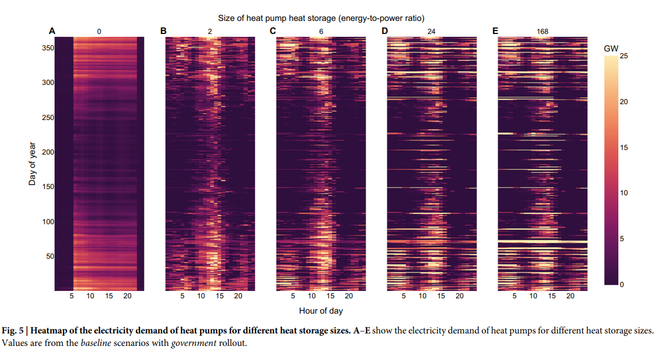
2️⃣ Even with small thermal storage, heat pumps can absorb excessive renewable energy in the system. Instead of producing heat in the evening, when needed, they integrate cheap solar during the day.