Antonio Ragagnin

@antonior
1 Followers
3 Following
9 Posts
Astrophysicist, fixed-term research staff at INAF - OAS (Bologna, Italy)

🔥 New hotwheels tutorial is out!

A direct consequence of hotwheels extreme modularity is that you can easily stack multiple particle-mesh (PM) solvers like nested dolls!

In this demo, we layer PM grids over a N-body sampled Navarro-Frenk-White (NFW) halo and match the analytic acceleration profile down to 1 kpc on a galaxy cluster scale.

Link: https://www.ict.inaf.it/gitlab/hotwheels/gitlab-profile/-/blob/main/run_pm_dmo_NFW_fixed_timestep.md

run_pm_dmo_NFW_fixed_timestep.md · main · hotwheels / gitlab-profile · GitLab

Documentation for hotwheel with examples of installing and running hotwheel packages for running simulations.

GitLab
🚀 hotwheels is a modern code for n-body cosmological simulations.
⚡️Kernels are written in C for best exploitation of HPC facilities
🛠️Python wrappers make it easy to run them (inspired by the power of ML tools).
🔗Link: https://www.ict.inaf.it/gitlab/hotwheels
hotwheels · GitLab

A new, modular, mini-app friendly, highly testable, GPU-friendly code for N-body cosmological hydrodynamic simulations.

GitLab
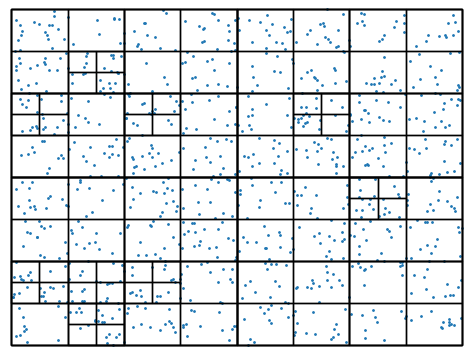
I am writing a new GPU- and vector-friendly code for n-body cosmological simulations. I re-implemented an octree, allowing multiple particles per leaf to speed up neighbour search and improve memory efficiency. Figure: I test the tree with up to 10 particles per leaf.
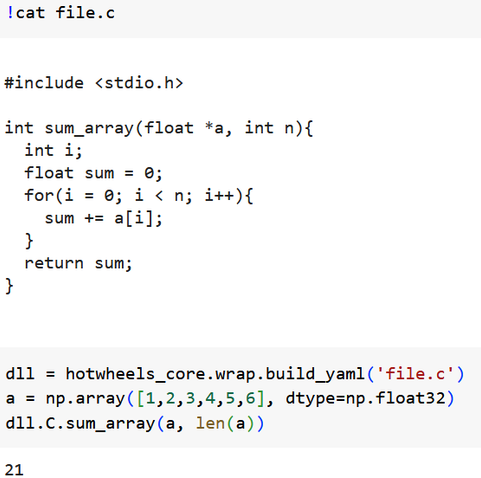
You can see how easy it is to use hotwheels C kernels in Python:
https://colab.research.google.com/drive/1EObmEt7XK56EpwHh7PQ-viR7PHZ5H0pl
Google Colab

After years of collaborating with HPC facilities and GPU vendors, I’ve learned that modular, mini-app-friendly scientific codes are the way forward. Partnering with HPC engineers unlocks the full power of GPUs! Inspired by my experience with Gadget, I’m developing a cutting-edge code for cosmological hydrodynamic simulations: https://www.ict.inaf.it/gitlab/hotwheels 🚀
hotwheels · GitLab

A new, modular, mini-app friendly, highly testable, GPU-friendly code for N-body cosmological hydrodynamic simulations.

GitLab
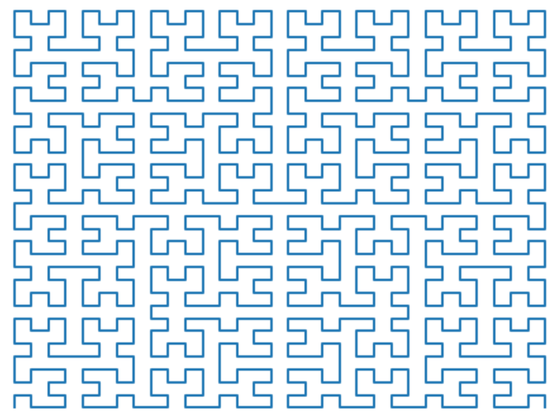
I'm writing a new code for n-body simulations, built on my 10+ years of experience with galaxy clusters and HPC. Has a strong focus on modularity and mini-apps. I couldn't find any standalone octree which is GPU-friendly, Hilbert-ordered, and multi-particle-leafed. So, I am building one from scratch. (Image: Hilbert 3d ordering)
In writing a modern code for cosmological hydrodynamic n-body simulations, I couldn't find any standalone oct-tree that is (1) GPU friendly, (2) supports the option of multiple particles per leaf, (3) and both Hilbert and Morton order. So I am writing mine. It will be a module of hotwheels numerical simulation code (image: testing of the 2D Hilbert ordering)
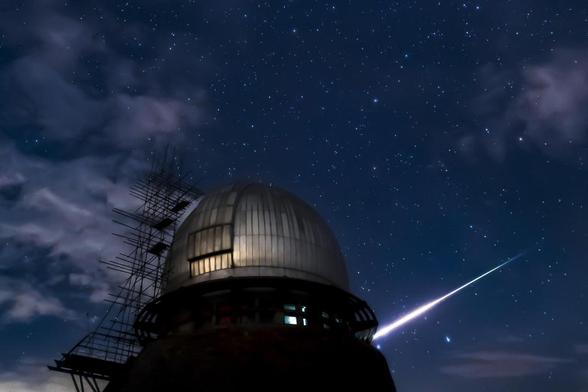
Xuyi Station and the Fireball

Image Credit & Copyright: Hao Liu (Stanford University)

https://apod.nasa.gov/apod/ap241206.html #APOD
APOD: 2024 December 6 - Xuyi Station and the Fireball

A different astronomy and space science related image is featured each day, along with a brief explanation.

Cosmic Latte: The Average Color of the Universe

Image Color Credit: Karl Glazebrook & Ivan Baldry (JHU)

https://apod.nasa.gov/apod/ap241201.html #APOD
APOD: 2024 December 1 – Cosmic Latte: The Average Color of the Universe

A different astronomy and space science related image is featured each day, along with a brief explanation.

After 10 years of collaborating with HPC facilities and GPU vendors, I’ve embarked on an exciting journey to develop my own code for #cosmology simulations: hotwheels (@HotWheelsSims). This new n-body #hydrodynamic Gadget-like code is designed for CPU/GPU parallelism, modularity, and mini-apps building at its core - key for seamless collaboration with #HPC facilities and GPU engineers.