Andrew Warkentin

23 Followers
12 Following
21 Posts

OS/emulator developer and OS historian. Curator of the world's largest collection of runnable operating system images (or at least the largest of which I'm aware). Writing my own QNX-like OS.

YouTube: https://www.youtube.com/@AndrewsOSLab/
Blog: https://andreww591.blogspot.com/
Linktree: https://linktr.ee/andreww591
@thomholwerda @nina_kali_nina There are partial English localizations for both Chokanji 4 and V (you can see it in the screenshot of Chokanji 4 that I posted). Some of the bundled applications/utilities aren't translated though. The QEMU Chokanji 4 image I posted has it pre-installed

@bytex64 @nina_kali_nina
Here's the site for EOTA with source and boot images for the last version: https://www.rbt.his.u-fukui.ac.jp/~naniwa/comp/OS/

As for CTRON, the TRON variant for servers and networking equipment that seems to be even more obscure than BTRON, I'm not sure how many implementations there were. Fujitsu made a fault-tolerant server based on the TRON VLSI CPU, running a CTRON-based OS, but I'm not sure if there were ever any other implementations: http://tronweb.super-nova.co.jp/suresys2000.html

Making of EOTA

@bytex64 @nina_kali_nina There was an effort in the early 2000s to produce a free BTRON implementation independent of Panasonic and PMC, known at various points as B-free, BTRON386, and EOTA, although this only ever produced what amounts to a Unix with an ITRON microkernel and a weird Forth-like shell; they never got around to actually implementing the BTRON subsystem for it (this will of course be in my OS museum VM as well)
@bytex64 @nina_kali_nina There are many different TRON implementations that are completely independent of one another, although most of these are ITRON unikernels. AFAICT BTRON has only ever really had one lineage of implementations, specifically the Panasonic/PMC one consisting of BTRON286/1B, 3B/B-right/Chokanji, and T-shell (which is a port of much of Chokanji from a legacy ITRON kernel to T-kernel, intended mostly for embedded use)
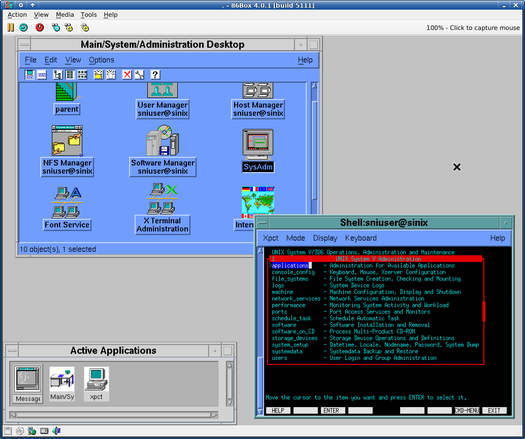
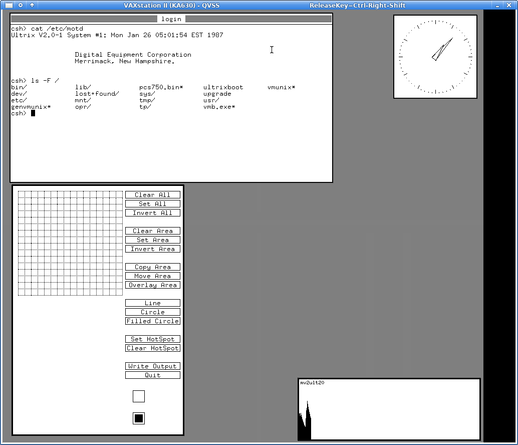
SINIX-Z 5.42, Ultrix-32 2.0 (with MIT X10R4)
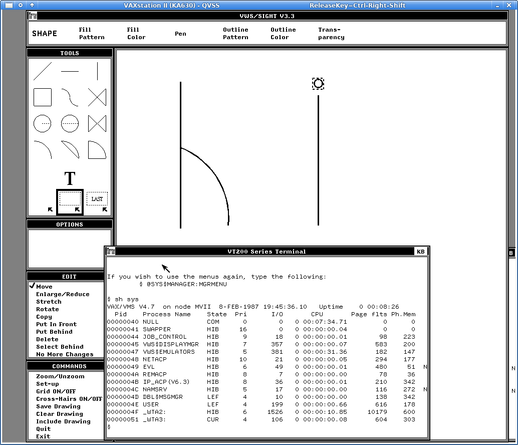
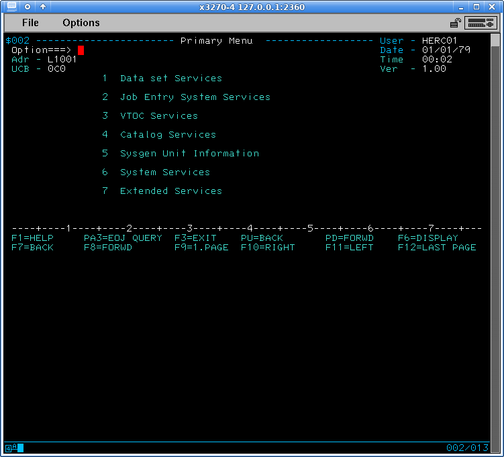
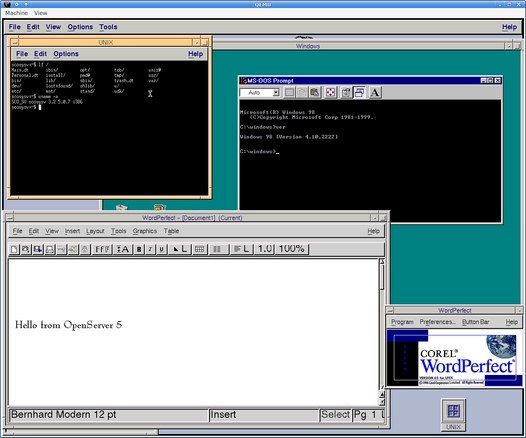
MicroVMS 4.7, NetWare 6.5, OS/VS1 6.7 (VTP), SCO OpenServer 5.0.7

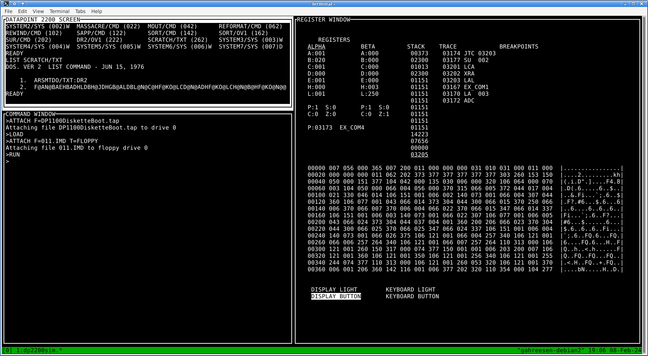
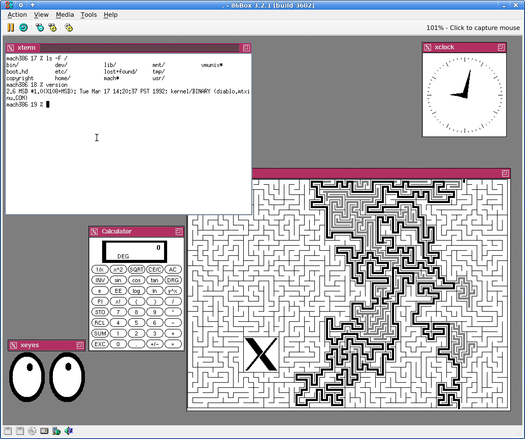
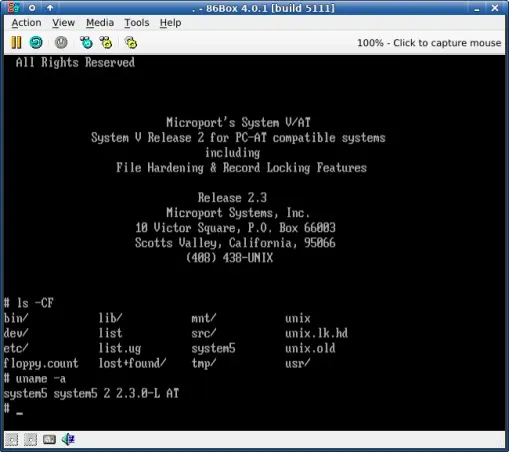
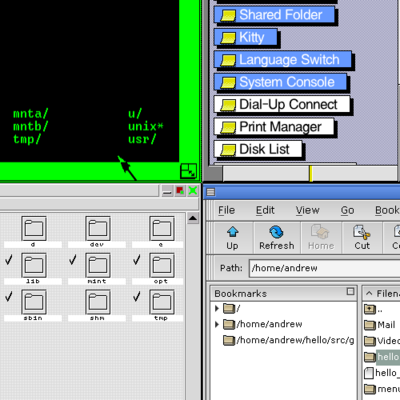
Still working on getting my OS museum VM ready for release. I may have gotten a bit carried away with installing OSes I thought to be particularly important/interesting. I'll be moving on to writing the launcher and cleaning up the scripts/metadata very soon. Here are just a few of the systems I've installed recently

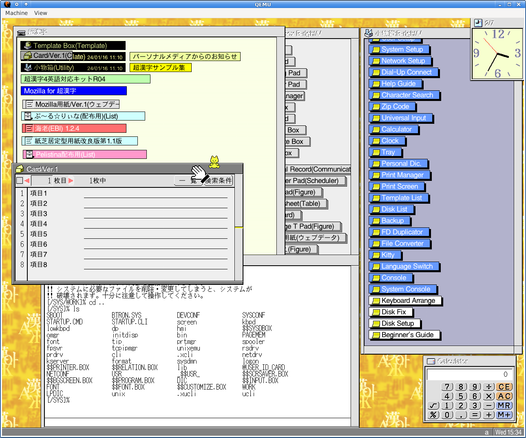
Chokanji 4, Datapoint DOS.C 2, Mt. Xinu Mach/386 2.6, Microport System V R2/AT 2.3.0l

@nina_kali_nina That's only counting OSes that already run in emulation though. I've also go a bunch that currently don't run in emulation but I plan to fix the appropriate emulators to get them working. The first of those is Atari Unix System V (which starts to boot in Hatari but crashes). I'll definitely be documenting this and all my future emulator development projects on my YouTube channel and blog
@nina_kali_nina I've still got a pretty significant backlog of install images as well, although I'm going to save most of that for later release. Pretty much anything I consider to be of particular historical significance will be in the initial version though. Much of my remaining backlog is hobby OSes, some of the more obscure 8-bit OSes, and other versions of some of the systems I already have installed.
@nina_kali_nina At least now I've only got a few things I want to install, and then I just have to write a simple GUI launcher, clean up some of the metadata/scripts, and actually package it as an image. The initial release will have over 1600 images representing over 600 distinct OSes for over 250 platforms (of course, both of these BTRON OSes are going to be included)