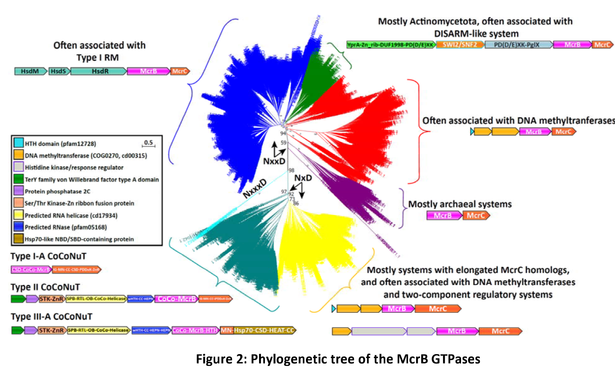
Honestly I hope this is a sign that the AI bubble bursts soon
Microbiologist.
I'm posting more at bsky.app/profile/acritschristoph.bsky.social than on here these days.
| Google Scholar | https://scholar.google.com/citations?user=UTO7XJwAAAAJ&hl=en&oi=ao |
| GitHub | https://github.com/alexcritschristoph |
Really enjoyed reading this one tonight:
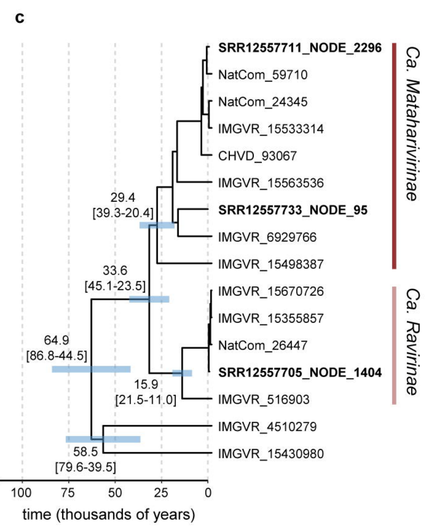
Analysis and culturing of the prototypic crAssphage reveals a phage-plasmid lifestyle
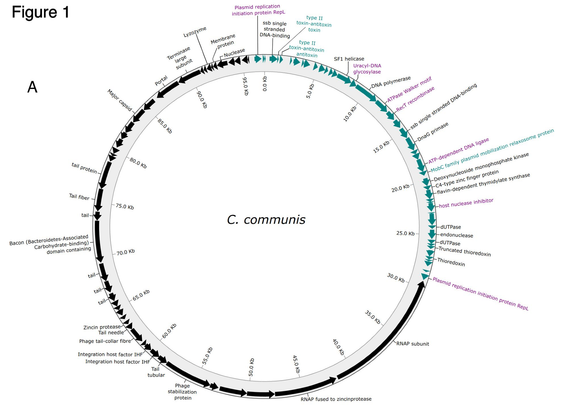
One of the best papers of the year... you have to read this one.
Genome content predicts the carbon catabolic preferences of heterotrophic bacteria
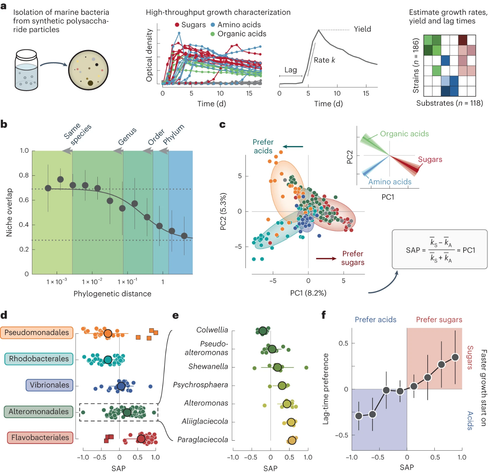

Carbon catabolism of heterotrophic bacteria can be described using a simple general principle, which is their preference for either glycolytic (sugars) or gluconeogenic (amino and organic acids) carbon sources. This is reflected in their genomes via pathway abundances and GC content.
Phylogeny and disease links of a widespread and ancient gut phage lineage
Hydrogenotrophic methanogenesis is the key process in the obligately syntrophic consortium of the anaerobic ameba Pelomyxa schiedti
https://www.nature.com/articles/s41396-023-01499-6
Are there any other examples of archaeal endosymbionts besides this one? Turns out it was first discovered in 1983 where they were called "methanogenic bacteria":
https://link.springer.com/article/10.1007/BF00404779
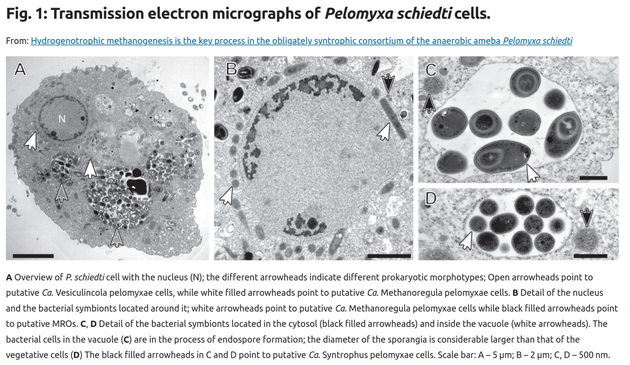

Pelomyxa is a genus of anaerobic amoebae that live in consortia with multiple prokaryotic endosymbionts. Although the symbionts represent a large fraction of the cellular biomass, their metabolic roles have not been investigated. Using single-cell genomics and transcriptomics, we have characterized the prokaryotic community associated with P. schiedti, which is composed of two bacteria, Candidatus Syntrophus pelomyxae (class Deltaproteobacteria) and Candidatus Vesiculincola pelomyxae (class Clostridia), and a methanogen, Candidatus Methanoregula pelomyxae. Fluorescence in situ hybridization and electron microscopy showed that Ca. Vesiculincola pelomyxae is localized inside vesicles, whereas the other endosymbionts occur freely in the cytosol, with Ca. Methanoregula pelomyxae enriched around the nucleus. Genome and transcriptome-based reconstructions of the metabolism suggests that the cellulolytic activity of P. schiedti produces simple sugars that fuel its own metabolism and the metabolism of a Ca. Vesiculincola pelomyxae, while Ca. Syntrophus pelomyxae energy metabolism relies on degradation of butyrate and isovalerate from the environment. Both species of bacteria and the ameba use hydrogenases to transfer the electrons from reduced equivalents to hydrogen, a process that requires a low hydrogen partial pressure. This is achieved by the third endosymbiont, Ca. Methanoregula pelomyxae, which consumes H2 and formate for methanogenesis. While the bacterial symbionts can be successfully eliminated by vancomycin treatment without affecting the viability of the amoebae, treatment with 2-bromoethanesulfonate, a specific inhibitor of methanogenesis, killed the amoebae, indicating the essentiality of the methanogenesis for this consortium.
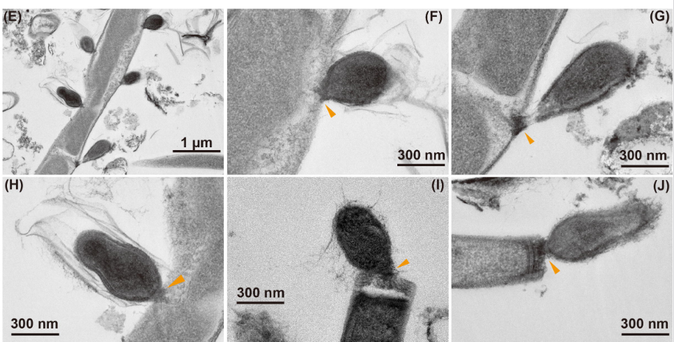
Microscopic and metatranscriptomic analyses revealed unique cross-domain symbiosis between Candidatus Patescibacteria/candidate phyla radiation (CPR) and methanogenic archaea in anaerobic ecosystems
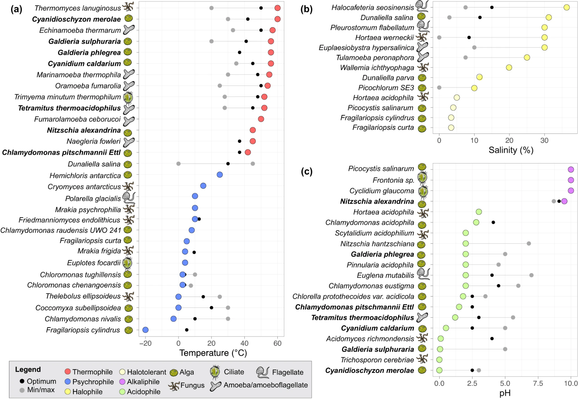

The ecology and evolution of eukaryotic microbes in extreme environments are poorly understood. In this Perspective, Rappaport and Oliverio summarize data from over 80 studies of protists in extreme environments and identify lineages of particular interest as targets for future research.
Astonishing diversity and multifaceted biological connections of Type IV restriction-modification systems