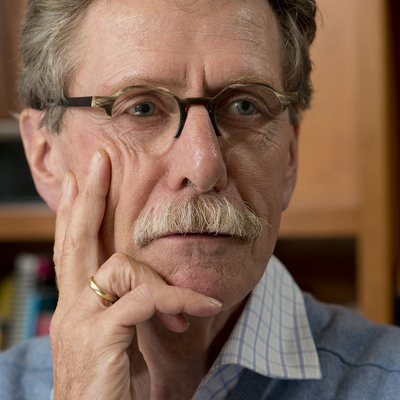
 Peter Moleman
And that’s a wrap! Free Agents audiobook is in the can! 😊 Thanks to Sound Understanding and Tinpot Productions 🙏

Kevin Mitchell
- 1.2K Followers
- 246 Following
- 443 Posts
Neurogeneticist interested in genes, brains, and minds. Author of INNATE (2018), upcoming book FREE AGENTS (2023). kjmitchell.com
@NicoleCRust
You may want to read Juarrero, Alicia. Context Changes Everything.
She explains rather convincingly top-down causation in all kinds of systems, including biological, without laws of physics being violated. A deep understanding of complex dynamical systems is the basis. In fact causation is not the central issue, but context independent and context dependent constraints are. The "old school" idea of interventionist causation in fact vanishes! Kendler and Woodward write
" Some external event happened to each individual ([...] which resulted in a major internal change in them which in turn impacted the risk or course of their disorder. [...] Common clinical (and indeed ‘human’) intuition suggests that these changes were causal." But they do not show or prove that this is not by way of changes at the bottom level. (which I do not belief by the way, see our previous discussion of Kendel's 2005 book).
 katejjeffery
Glasgow Psychology/Neuroscience is hiring! Four tenured lectureships in Behavioural Neuroscience (animal x 3 and human x 1) Closing Date: 20th July 2023 Please boost https://www.nature.com/naturecareers/job/12800829/senior-lecturer-lecturer-research-and-teaching-track-4-posts-/

 Shoq
ShoqA gen-Z told me today that his generation has largely accepted that they live in a plutocracy, everything is corrupt, and the Musks, Zuckerbergs, and Trumps are just a fact of existence. They accept it as SOP. It's pretty dark, and exactly what GOP wants them to feel: totally hopeless and disinterested in voting. If they let that despair keep them from voting in 2024, they will learn the hard way just how much more there was and is to lose. We need to change their minds. For their sakes.
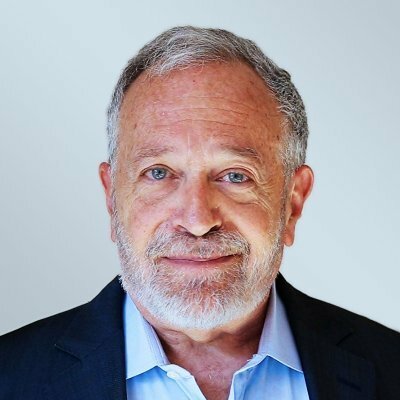 Robert Reich
Thirteen years ago the Supreme Court decided corporations are people under the First Amendment.
Today, sold-out politicians block progress on all fronts to appease their corporate donors.
Citizens United is among the worst decisions in history. It corrupts our system every day.
 Daniel Lakens
Understanding p-values is not difficult, but it does take more time (say 2 hours initially, rehearsing it 4 times for 30 minutes) than people invest, which is the only barrier to getting people to understand them. This material should be all you need. https://lakens.github.io/statistical_inferences/01-pvalue.html
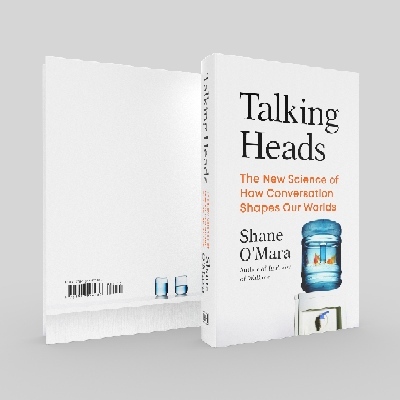 Shane O'Mara
One cheer for this - a new drug for Alzheimer’s that kinda works a bit (if I understand things correctly, Lecanemab slows disease progression, with a delay of c. five months over an 18-month timeframe; this doesn’t seem like much, but it is the first really positive signal in this area since forever. The hope is that this will trigger a bout of new research - often new treatments are not so good, but improve dramatically over time.
#alzheimer #lecanemab
#alzheimer #lecanemab
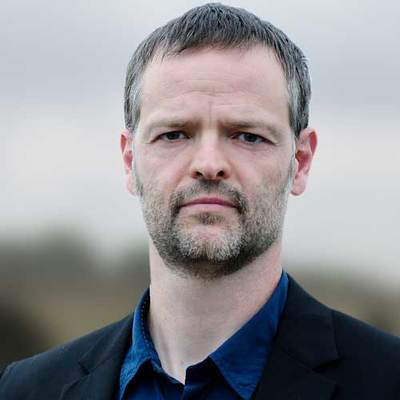 Björn Brembs
Just in case you ever wondered what a "cooperation" with #Elsevier looks like:
"Elsevier publishes many journals 'in cooperation' with different societies and these aim to bring reciprocal benefits; however this does not give those organisations a role in the appointment of journal editors."
https://www.designresearchsociety.org/articles/the-future-of-design-studies-journal

I've seen many of the reasons why #Elsevier is called #Evilsevier by virtually everybody.
But this really takes the cake:
https://www.designresearchsociety.org/articles/the-future-of-design-studies-journal
If you ever needed a single, 5min explanation of one of the many reasons why we need to replace academic journals,, this is the one.
Here are the other reasons:
https://doi.org/10.5281/zenodo.5526634
 Earl K. Miller
Intrinsic timescales in the visual cortex change with selective attention and reflect spatial connectivity
https://www.nature.com/articles/s41467-023-37613-7
https://www.nature.com/articles/s41467-023-37613-7

Intrinsic timescales in the visual cortex change with selective attention and reflect spatial connectivity - Nature Communications
Not much is known about how intrinsic timescales, which characterize the dynamics of endogenous fluctuations in neural activity, change during cognitive tasks. Here, the authors show that intrinsic timescales of neural activity in the primate visual cortex change during spatial attention. Experimental data were best explained by a network model in which timescales arise from spatially arranged connectivity.