@AngelicAura people who are interested in 1920's Japanese anarchist Fumiko Kaneko's prison writing might want to check out https://theanarchistlibrary.org/library/kaneko-fumiko-the-prison-memoirs-of-a-japanese-woman
Up to this time I had been attending day school, but I now switched to night classes where I made friends with a woman by the name of Niiyama Hatsuyo. Hatsuyo is probably the only woman of her sort that I will come across in my lifetime. How many things I learned from her! But it is not only what she taught me; thanks to Hatsuyo, I gained the warmth and strength of true friendship. After Park and I were arrested, one of the people at police headquarters evidently asked Hatsuyo who her closest woman friend was. Without a moment’s hesitation it seems, she gave my name. She was certainly my closest friend, too. Hatsuyo, however, is no longer of this world. Oh, how I would like to reach out my hand to her right now! But I know there is no one there any longer to take it.
…Up until then the true shape of reality had been thinly veiled, but now it all began to become clear. I understood why someone poor like myself could never study and get ahead in this world, why, too, the rich got richer and the powerful were able to do anything they liked. I knew that what socialism preached was true.
But I could not accept socialist thought in its entirety. Socialism seeks to change society for the sake of the oppressed masses, but is what it would accomplish truly for their welfare? Socialism would create a social upheaval “for the masses,” and the masses would stake their lives in the struggle together with those who had risen up on their behalf. But what would the ensuing change mean for them? Power would be in the hands of the leaders, and the order of the new society would be based on that power. The masses would become slaves allover again to that power. What is revolution, then, but the replacing of one power with another?
Hatsuyo ridiculed the movements of people like the socialists, or at best’ viewed them coolly. “I can’t,” she said, “hold a fixed philosophy about human society. What I do is gather people around me who feel like I do and live the kind of life that feels right. That is the kind of life that is most realistic and has the greatest meaning.”
One member of our group called that view “escapism,” but I did not agree. I, too, believed it was impossible to change the existing society into one that would be for the benefit of all; neither could I espouse any given ideal for society. But in one thing I differed from Hatsuyo. I felt that even if one did not have an ideal vision of society, one could have one’s work to do. Whether it was successful or not was not our concern; it was enough that we believed it to be a valid work. The accomplishment of that work, I believed, was what our real life was about. Yes. I want to carry out a work of my own; for I feel that by so doing our lives are rooted in the here and now, not in some far-off ideal goal.


 Auschwitz Memorial

 Duchess of Umbrage
 emsenn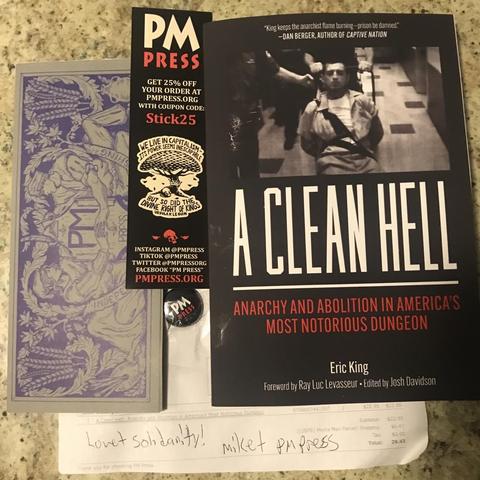
 @GottaLaff
 elilla&, famigerada travesti