@Posth

222 Followers
510 Following
85 Posts
Building Liccium, sign-up via liccium.com; ISO 24138 ISCC
Websitehttps://posth.me
Licciumhttps://liccium.com
Bluekskyhttps://bsky.app/profile/posth.me

Der Vorteil an digitalen Werken ist, dass sie von den UrheberInnen digital signiert werden können. ISCC liefert hier die eindeutige Referenz zum Original-Werk und erlaubt eine Bindung zum Claim der UrheberInnen/Verlage. Diese Signatur benötigt jedoch ein Zertifikat, um sie verifizieren zu können.

Das Vertrauen in das gedruckte Werk fußt m.E. allein auf der Identität des Lieferanten des Pflicht-Exemplars, geprüft durch die Biblitohek.

@awinkler @EzellaGarnie

@monsieurbecker Es ist in der Tat total erstaunlich, dass Wikipedia den ISO Standard nicht einmal erwähnt.

@v_i_o_l_a @EzellaGarnie

In der aktuellen Ausgabe der ABI Technik durfte ich die Technik-Frage "Der International Standard Content Code (ISCC) – noch ein neuer Identifier oder relevant für Bibliotheken und Archive?" kurz und knapp beantworten.
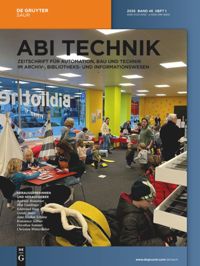
https://doi.org/10.1515/abitech-2026-0014

#ABITechnik #ISCC #GLAM #DHD

Der International Standard Content Code (ISCC) – noch ein neuer Identifier oder relevant für Bibliotheken und Archive?

Article Der International Standard Content Code (ISCC) – noch ein neuer Identifier oder relevant für Bibliotheken und Archive? was published on March 1, 2026 in the journal ABI Technik (volume 46, issue 1).

De Gruyter Brill
@EzellaGarnie
Of course, you can use the Liccium system to sign any kind of digital object. CommonsDB is only one possible registry implementation for this particular use case: Public domain or openly licensed content.

@EzellaGarnie

To answer your question. Data suppliers use the private key to sign the declarations. The did:key is the public key of their key pair. Data suppliers can also use did:web or other DID methods. The JWT is the encoding of the signed declaration. If you have the public key (DID), you can verify it and resolve the payload.

@EzellaGarnie

For your interest, this is the CommonsDB feasibility study pt. 1, which explains the model on a high level.
https://www.commonsdb.org/blog/commonsdb-feasibility-study-part-2-from-design-to-deployment/

CommonsDB Feasibility Study part 2: from Design to Deployment

Key findings from building a prototype rights registry

CommonsDB
@EzellaGarnie
Dear Gerrit, apologies for my *very* late reply. Just saw this. Feel free to reach out to me.

Introducing CommonsDB Explorer
CommonsDB Explorer — the first public interface to the CommonsDB registry — is now live.

Blog post: https://www.commonsdb.org/blog/introducing-commonsdb-explorer/

Registry explorer:
https://registry.commonsdb.org

Introducing CommonsDB Explorer

CommonsDB Explorer — the first public interface to the CommonsDB registry — is now live.

CommonsDB

Our partners at Wikimedia Sverige present #CommonsDB - the registry for checking image licensing status – to the Wikimedia Movement.

📹 Don't miss Jan Ainali's video explaining how we use ISCC and metadata to improve digital content verification.

https://diff.wikimedia.org/2025/07/31/introducing-commonsdb/

Introducing CommonsDB

What could you do if you had access to a registry with all the public domain and openly licensed images in the world? Get your imagination flowing, because an ambitious project has been started and…

Diff
@raffaele @Lambo @EzellaGarnie
You may also be interested in https://Commonsdb.org, which is an application based on the nee standard.
CommonsDB

We are building a public registry for Public Domain and openly licensed works

CommonsDB