
Paul Medvedev 

419 Followers
151 Following
134 Posts
Algorithmic Bioinformatics Researcher and Teacher. Tweets about research results and educational/mentorship topics (for details, see http://bit.ly/380vX22).

From our News&Views with @rayanchikhi and @yoanndufresne

"[I]t is a good time to reinforce the standard that the output produced by a bioinformatics tool should be well defined...[W]hen a user has a pangenome reference in their hands, they should know what properties it has .... [P]angenome tool developers should ... minimize ad hoc heuristics and arbitrary parameters..."

@rayanchikhi @yoanndufresne

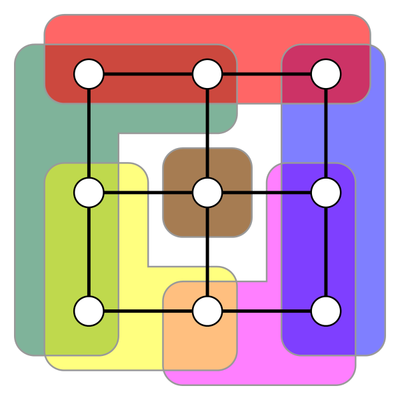
"On the one hand, a population pangenome graph faithfully represents the complete variation of haplotypes present in some population of interest. On the other hand, an application-specific pangenome graph reflects only some of the population variability and is instead tailored toward maximizing the performance of application-specific downstream tools."

In https://rdcu.be/dXA1e, @rayanchikhi, @yoanndufresne and I comment on the decoupling of ‘population’ pangenome graphs from ‘application-specific’ pangenome graphs (1/2)
The longer I teach CS, the stronger I feel that the move away from C & toward Java (& Python) in intro sequences was a mistake. I don’t think the intro lang has to be C, but I think it should be one that fosters building a useful mental model of the machine & OS.
I just came across a cool old talk from @ctb. A sci-fi talk: supposedly given in 2039 about the history of bioinformatics. Fun listen: https://youtu.be/uwsjwMO-TEA?si=5HkaEuhTpTTmormZ #algorithmicbioinformatics
A History of Bioinformatics (in the Year 2039)

YouTube

Gasarch on what counts as "closed form" and what does not, using the Ordered Bell numbers as an example: https://blog.computationalcomplexity.org/2024/05/what-is-closed-form-horse-numbers-are.html

He asks, in the form of a Platonic dialogue: is \(\tbinom{n}{i}\) or \(\tfrac{n!}{i!(n-i)!}\) closed form? What, if anything, makes that sort of formula different from the formula \(H(n)\), denoting the \(n\)th ordered Bell number?

What is Closed Form? The Horse Numbers are an illustration

In the book Those Fascinating Numbers  by Jean-Marie De Konick they find interesting (or `interesting') things to say about many numbers. I ...

GitHub - shenwei356/perfect-bioinformatic-tools: What should perfect bioinformatic tools be like?

What should perfect bioinformatic tools be like? Contribute to shenwei356/perfect-bioinformatic-tools development by creating an account on GitHub.

GitHub
For long-term sustainable software in bioinformatics

Efficient High-Quality Metagenome Assembly from Long Accurate Reads using Minimizer-space de Bruijn Graphs http://biorxiv.org/cgi/content/short/2023.07.07.548136v1?rss=1

A collaboration work, during my time at Penn State, is published: https://bmcbioinformatics.biomedcentral.com/articles/10.1186/s12859-023-05223-1

Triggers many wonderful memories! 😀

Snapshot: a package for clustering and visualizing epigenetic history during cell differentiation - BMC Bioinformatics

Background Epigenetic modification of chromatin plays a pivotal role in regulating gene expression during cell differentiation. The scale and complexity of epigenetic data pose significant challenges for biologists to identify the regulatory events controlling cell differentiation. Results To reduce the complexity, we developed a package, called Snapshot, for clustering and visualizing candidate cis-regulatory elements (cCREs) based on their epigenetic signals during cell differentiation. This package first introduces a binarized indexing strategy for clustering the cCREs. It then provides a series of easily interpretable figures for visualizing the signal and epigenetic state patterns of the cCREs clusters during the cell differentiation. It can also use different hierarchies of cell types to highlight the epigenetic history specific to any particular cell lineage. We demonstrate the utility of Snapshot using data from a consortium project for ValIdated Systematic IntegratiON (VISION) of epigenomic data in hematopoiesis. Conclusion The package Snapshot can identify all distinct clusters of genomic locations with unique epigenetic signal patterns during cell differentiation. It outperforms other methods in terms of interpreting and reproducing the identified cCREs clusters. The package of Snapshot is available at GitHub: https://github.com/guanjue/Snapshot .

BioMed Central