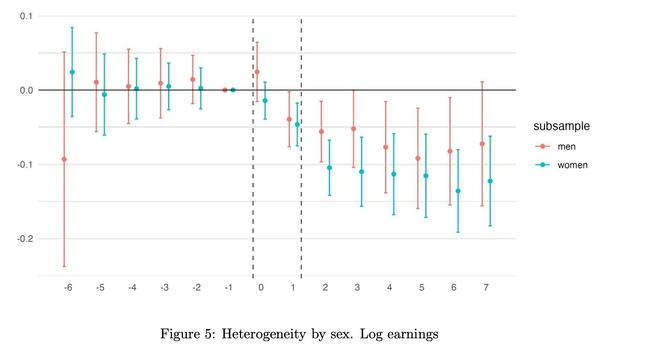
Both the effects on employment and on earnings are stronger for women and migrants, sometimes strikingly so.
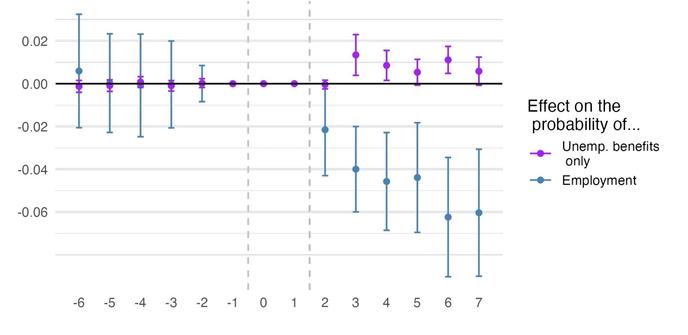
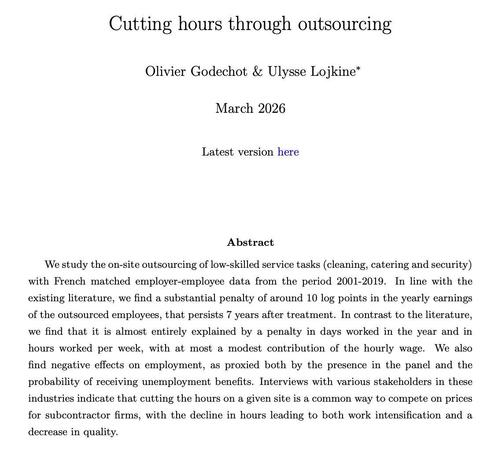
We also find a negative effect on employment (as proxied by the presence in the panel) and a positive effect on the probability of receiving unemployment benefits
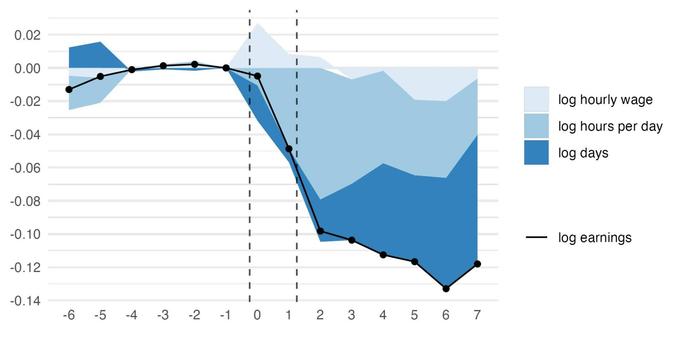
We find an important and persistent penalty in earnings for outsourced workers (around 10 log points). Remarkably, that penalty is driven by days worked per year and hours per week, with at most a modest role for the hourly wage.
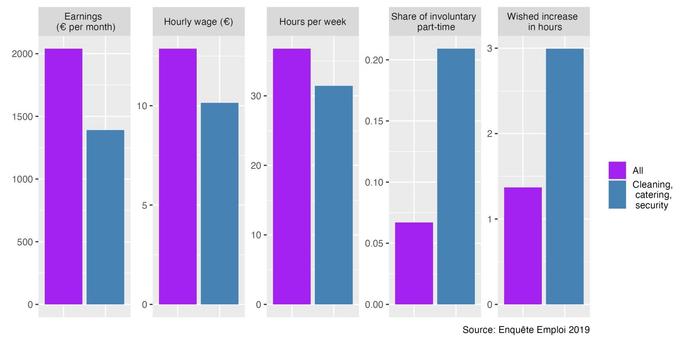
The French Labour Force Survey shows that workers from the cleaning, catering or security industries receive low earnings relative to average, because of both a low hourly wage and a high share of involuntary part-time.
New World Inequality Lab working paper with Ulysse Lojkine (who did the bulk of the work)
I copy here his bluesky thread (
https://bsky.app/profile/ulojkine.bsky.social/post/3mj2rpjnwu225)
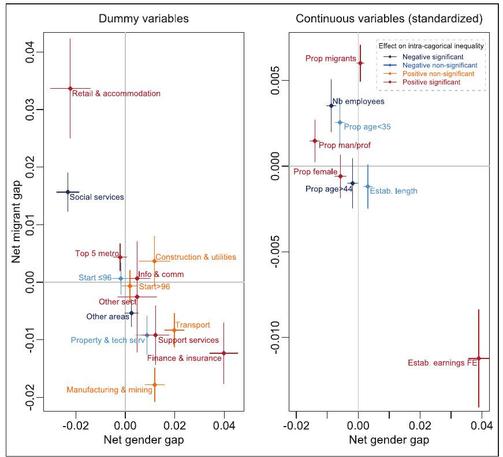
French firms tend to specialize in certain types of inequalities. Firms in the finance sector have a larger gender gap but a smaller migrant gap. In contrast, firms in the retail, accommodation, and social services sectors have smaller gender gaps but larger migrant gaps.[n/n]
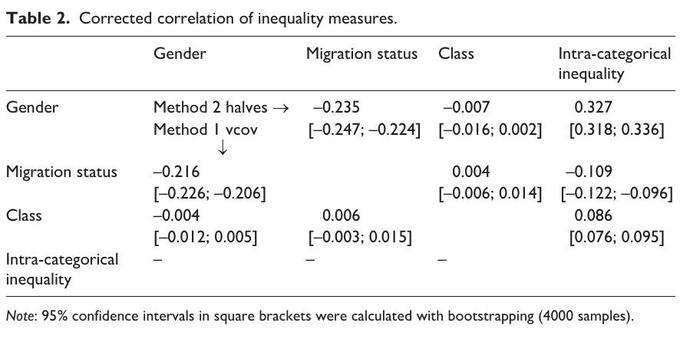
Using DADS admin data from France (1996-2021), we find that firms with higher gender gaps have lower migrant gaps, and vice versa. Firms with high gender gaps are also highly unequal within gender/migrant categories. In contrast, firms with high migrant gapsare less unequal.[5/n]
He missed the Goncourt, but he was finally awarded.
Squid Game Season 3 (now in DC).
Et aussi, petite pique (à réfléchir)