 Ben Waber
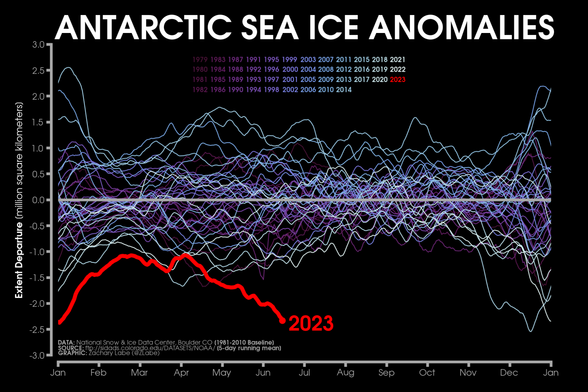
 Zack Labe
Uh.
Graphic from https://zacklabe.com/antarctic-sea-ice-extentconcentration/.

| Website | neillewisjr.com |

Joseph chats with Neil Lewis, Jr., Assistant Professor of Communication and Social Behavior at Cornell University, and Assistant Professor of Communication Research in Medicine at Weill Cornell Medicine. Neil also co-directs Cornell’s Action Research Collaborative, an institutional hub that brings together researchers, practitioners, community members, and policymakers to collaborate on projects and initiatives to address pressing equity issues in society. Neil’s research examines how people’s social contexts and identities influence how they make sense of the world around them, and the implications of those meaning-making processes for their motivation to pursue a variety of goals in life. In this episode Neil and I chat about his recent publication “What Counts as Good Science? How the Battle for Methodological Legitimacy Affects Public Psychology”. We explore the history behind the different methods used in basic and applied science, how the methods influence perceptions of legitimacy, and what lessons we can draw to address the current crisis of confidence in psychology. Links: Lewis Jr, N. A. (2021). What counts as good science? How the battle for methodological legitimacy affects public psychology. American Psychologist, 76(8), 1323. https://doi.org/10.1037/amp0000870 Neil's website https://neillewisjr.com/ Joseph’s Twitter @outa_joseph Podcast Twitter @StanfordPsyPod Let us know what you thought of this episode, or of the podcast! :) [email protected]
Uh.
Graphic from https://zacklabe.com/antarctic-sea-ice-extentconcentration/.
This is the introduction to a four-part series of posts detailing evidence of fraud in four academic papers co-authored by Harvard Business School Professor Francesca Gino. In 2021, we and a team of anonymous researchers examined a number of studies co-authored by Gino, because we had concerns that they contained fraudulent data. We discovered evidence...
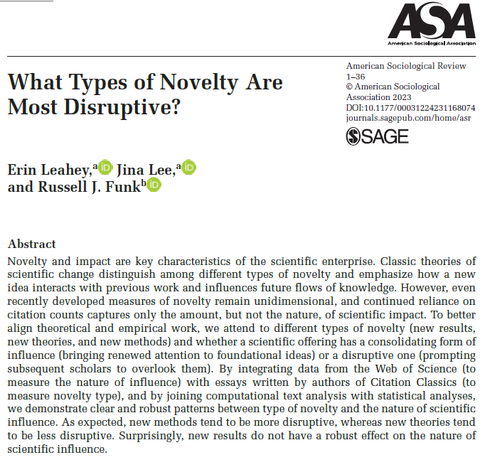
New study finds “articles that develop and present a new method tend to be more disruptive.” https://doi.org/10.1177/00031224231168074
Reminds me of Greenwald (2012): “An analysis of the recent history of Nobel Prizes in science unexpectedly revealed that these awards were given much more often for creation of methods and for method-based discoveries than for developments of new theory”: https://doi.org/10.1177/1745691611434210
Within tech, there's a script of (especially) men seeking fame from hyping a system to gain resources/power, then warning people about its dangers once they face criticism over the dangers.
Back in (checks) 2019, I called this the "evilbrag":
When a powerful man makes a hairshirt apology in a national magazine, to manage reputational risks and also acquire even more resources, even though they helped create the problem in the first place.
It's like a humblebrag for the harms you caused
I'm not arguing w the fact that AI poses risks. I AM ceaselessly annoyed by the pattern
This is not new or novel. It was women -
@timnitGebru, @mmitchell_ai, me, et al - who rang the AI alarm years ago & were retaliated against, pushed out for doing so.
https://www.nytimes.com/2023/05/01/technology/ai-google-chatbot-engineer-quits-hinton.html
I wrote this 5 months ago.
It’s still relevant now.
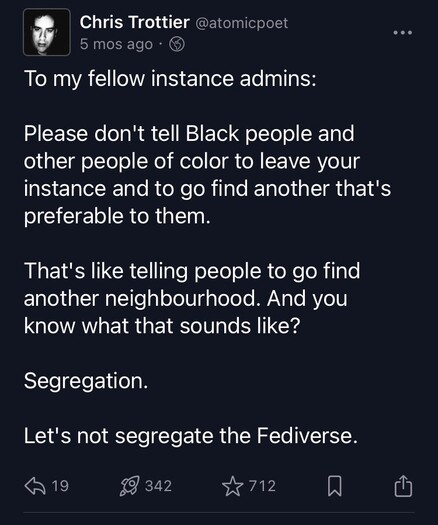
Mastodon is a case study for why software and protocols built to help one marginalized community may end up alienating another marginalized community.
This is why intersectional examination of prejudice is so important.

 Brian Nosek
 Judd Legum
 Mark Rubin
 J. Nathan Matias 🦣
 Meredith Whittaker
 Chris Trottier